My Essay “Thirty-Five Years Later, I Raise My Hand” is featured on Alison McGhee’s excellent Words by Winter podcast.

I’m delighted to report that this essay is featured in Alison McGhee’s Words by Winter podcast.

If you haven’t listened to Alison’s podcasts, you’re in for a treat! Yes, they focus on poetry, but there’s much more. Spend some time with her.

Thirty-Five Years Later, I Raise My Hand

In spring 1983 I enrolled in a poetry writing course thinking it might help improve my short fiction. I was a history major by default, had never taken a course in poetry, but believed, with absolutely no evidence, that I could write fiction. At the time I would have been hard-pressed to name five contemporary poets, even counting my professor. To be honest, the class struggled to hold my attention. Only about a quarter of the students seemed interested in writing, and the instructor was a bit, uh, tired. But for the first time in my life I read, really read, poetry. I fell in love with Galway Kinnell, Ai, James Wright and Carolyn Forche, to name just a few of my early enthusiasms. I wanted to write like them. So I wrote. And wrote. And wrote. Most of it was laughably bad, but somehow I managed to win an undergraduate poetry contest, which suggested that hope existed. Maybe someday, I thought, one of my poems will be published. This radical idea had never occurred to me before. Publication seemed to be the privilege of special people, and a lifetime of gathered fact revealed that I was unequivocably nothing special.

Early on in the semester, perhaps even in the first class, the professor asked how many of us thought we’d still be writing poetry in twenty years. I didn’t raise my hand. I didn’t know where I’d be in six months, much less what I’d be doing in twenty years. Since I’d realized late in the game that teaching was not for me, I had no job prospects, and few marketable skills, despite experience in chugging beer, manning sound-powered phones on a ship’s helicopter tower, scraping barnacles and bending rules. The world was limited. The world was limitless.

Another gray day

dividing the old and young

Oh, this aching hip!

* * *
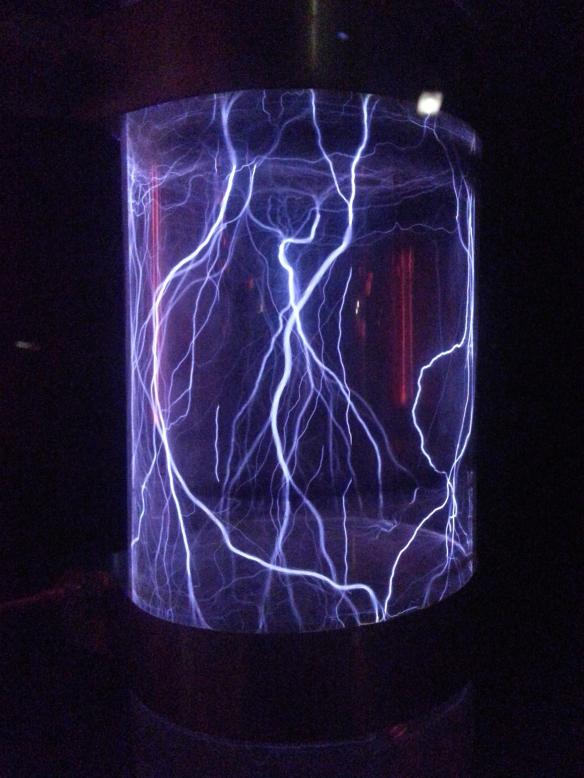
Inheritance

lightning jar

Inheritance

All this is mine and I praise the sky
offering surcease
in the form of vapor and a darkening

of its measure, accrued
in the way of interest owed,

increasing like vermin, circling back
then beginning anew.

I count each drop delivered.

The window’s eye blinks
and a lone flash stitches the day.

Each rumble is a coffin’s lid slammed shut.
Wanting nothing, I demand more
and receive only what I want,
a reckoning of desire and
needs ignored.

I have buried your demands.
I have delivered each counted drop.

All this is mine.

* * *

“Inheritance” first appeared in The Closed Eye Open, a publication focusing on consciousness. Many thanks to editors Daniel A. Morgan, Maya Highland and Aaron Lelito for taking this piece.

A Musical Prayer

Yesterday I received an email, completely out of the blue, from Peter Campbell-Kelly, a musician and writer from the UK. We’ve never met, never corresponded, but somehow he saw fit to send me a link to a “little film,” as he calls it, that he put together during the lockdown. “It is a sort of musical prayer, intended somehow for the well-being of all of us, in this desperately difficult pandemic,” he says. And indeed it is: 10 minutes of bliss, Peter playing Biber’s Mystery Sonata No. 16 ‘Passacaglia.’ I’m grateful that he shared this with me, and hope that you find it as peaceful and beautiful as I do. 

When to Say Goodbye (with recording)

dried


When to Say Goodbye

 If all goes well it will never happen.
The dry grass in the shade whispers

while the vines crunch underfoot,
releasing a bitter odor. A year ago

I led my dog to his death, the third
in five years. How such counting

precedes affection, dwindles ever
so slowly, one star winking out after

another, till only the morning gray
hangs above us, solemn, indefinite.

Voiceless. If I could cock my head
to howl, who would understand? Not

one dog or three, neither mother nor
mentor, not my friend’s sister nor her

father and his nephews, the two boys
belted safely in the back seat. No.

I walk downhill and closer to the creek,
where the vines are still green.

In the shade of a large cedar, a turtle
slips into the water and eases away.


* * *


“When to Say Goodbye,” drafted during the August 2015 Tupelo Press 30-30 challenge, was published by Oxidant | Engine in May 2017, and subsequently nominated for a Best of the Net 2017 award.


Why I Hate Mowing the Lawn

lawnmower

Why I Hate Mowing the Lawn

The unmowed green reveals its secrets
blade by blade, shadowed and fresh.
Don’t look, it says, whisper deep
into my chlorophyll. Save this blue.
It unveils other nuances, confiding in
contrast and symmetry, employing
your eyes and their measures. The quiet,
all-encompassing and subtle. So true.

* * *

“Why I Hate Mowing the Lawn” was first published at Buddhist Poetry Review.Thank you, Jason Barber, for taking this poem.

Poem Up at Vox Populi


My poem “Something Felt” is featured at Vox Populi. I am grateful to Michael Simms for his support, and am thrilled to be a regular contributor to this lively publication.


It was 10 A.M. When the Angel Said You Have to Go Now

OLYMPUS DIGITAL CAMERA

It was 10 A.M. When the Angel Said You Have to Go Now

Forgive me for seeking clarity, but do you have a specific
destination in mind, or are you saying, with a little less
force, get lost, go away, I’m done with you, or might you
merely be suggesting that I go forth? And what exactly is
your position on, oh, let’s just say the afterlife and the
journey there? As for turning, you certainly did,
offering both in sequence, again and yet again, to my
great appreciation. Butter. You must explain your fetish
and how the room exuded pale gold and sweet after
one little death, as if a honeyed light had oozed in beneath
the door, and, in kissing the carpet, released endorphins
and cool warmth, and love-moths frantically flapping
to dry our sweat without the slightest chill. It’s the little
things, my mother always said, never considering size,
but meaning those thoughtful touches, the fresh flowers,
a plate of cheese and fruit, and yes, the tenor sax moaning
in the alcove. I’ll go, but you know this is my apartment.


“It was 10 a.m. When the Angel Said You Have to Go Now” was originally drafted during the August 2016 Tupelo Press 30-30 fundraiser, thanks to d. ellis phelps, who sponsored and provided the title. It was subsequently published in Atlanta Review in May 2020. 

The Pleasure of the Right Tools

drill

The Pleasure of the Right Tools

Roasting peppers on the grill, I inhale
the odors of freshly sawed lumber
and turned earth. My back and knees
recall the doing, as I rejoice in the memory
of the new maul pounding rebar through
the timber’s holes into the ground.
I place the blackened peppers into a
paper wine bag where they’ll steam.
The saw rests on its shelf next to the
drill. The beer tastes bitter. Perfect.


“The Pleasure of the Right Tools” first appeared in Winnow Magazine in July 2020. I am grateful to Rachael Crosbie, Tristan Cody and friends for taking this poem.

Black Lilies


Black Lilies

Flensing words, slicing deeper: all, nothing,
red to redder. Their skin, paling to nothing.

I speak today but you hear yesterday.
Black lilies in the chill of nothing.

Drifted apart, the two halves reconcile.
Yellowed, whitened. Older. Both stitched in nothing.

How many words have we lost to morning? Shredded
syllables sparring for sound. The nothing of nothing.

A coated voice, turquoise and calm, spreading across the room.
Buttered light. Pleasantries, unfolding. You, being nothing.

The language of night sleeps unformed in my bed.
I remember your hand on my cheek; flesh forgets nothing.


* * *

A near-ghazal, “Black Lilies” first appeared in ISACOUSTIC* in January 2018.

Helsinki (with recording)

Helsinki

Helsinki

An editor said never start a poem at a window,
so instead I’m looking at the door,

which is made of glass. We are to avoid rain,
too, but it streaks the pane in such delicious

patterns that I can’t help but pretend to be someone else
in a foreign city, perhaps Helsinki, sipping black coffee

with a mysterious woman younger than my daughter
(who also does not exist), whose interests

in me are purely literary, although she straightens
my collar with lingering, scented fingers. Garden

memories and birds must never populate our lines,
but corpses are fine, as are tube tops and bananas

and any combination thereof. I finish my coffee
and wander alone through cobblestone streets,

stepping over clichés when possible, kicking them
aside when my hip joint argues, or simply accepting

their useful limitations when nothing else works.
Unknown and lacking credentials, I shrug, go on

past the closed doors behind which unseen bodies
perform the most bizarre and sensual solo dances,

or not, and shadows cook sausages over fire
and the grease spattering onto the tiled counters

issues a fragrance that awakens neighborhood dogs
and maybe a dozing stall-keeper at the market

where cloudberries are sometimes found.
I know little of Finland, and less of myself,

and then there’s poetry, which remains a blank
frame, a frosted pane I’ll never truly unlatch.

* * *

My poem “Helsinki” was first published at Panoply. It was inspired in part by a Facebook thread on which editors commented on what caused them to instantly reject poems. One said beginning a poem at a window was cause for rejection. Hence the first line.