Fifty-Word Review: Forth a Raven, by Christina Davis

(Originally appeared in December 2013)

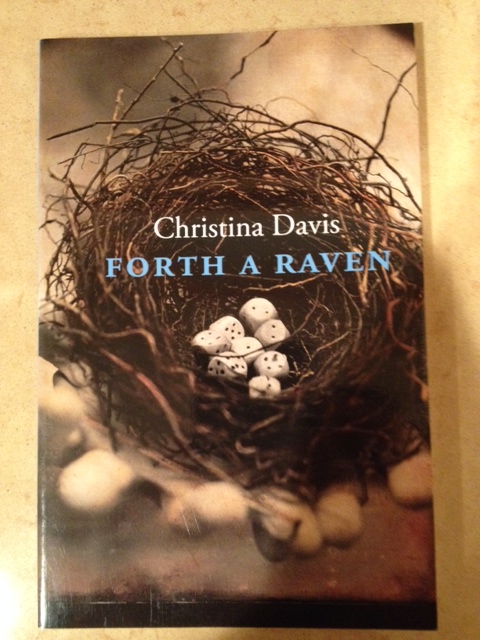
Christina Davis’s Forth a Raven offers stark, textured, intelligent and lyrical pieces in a stripped-down yet ultimately complex, reflective language. Encompassing the tension of different realms – the spiritual and the secular, the extraordinary and the mundane, her work, quite simply, astounds. Read this book. Seek out her work. It’s sublime.

photo(7)

White Mules and a Column of Smoke

vinyl


White Mules and a Column of Smoke

I am thinking of a place I’ve never seen or visited,
much like Heaven or Jot ‘Em Down, Texas, but with better
beverages and the advantage of hindsight and seasoning,
a glance back or to the peripheral, with a side of memory
and sliced, pickled jalapeños topping a pile of imagination.

And how do we so clearly remember what never occurred?
That book I read in 1970 was first published three years
later. A drowned childhood acquaintance ordered a beer
and sat next to me at a party in college. The open fields
I recall from the garden walls in France, where homes stood.

If only we carried with us slide shows or grooved vinyl
to trace back our lives – photos and recordings of those daily
remembrances – detailed notes indexed on cards, or data
embedded in our palms and accessed by eye twitches.
Would such evidence improve our lives?

Which filters shutter moments and thoughts, twist them
into balloon animals we no longer recognize? False
accusations and convictions aside, can we trust what we
know to be true? That oak stands where it has for four
decades. I bleed when cut. The sky still leers above us.


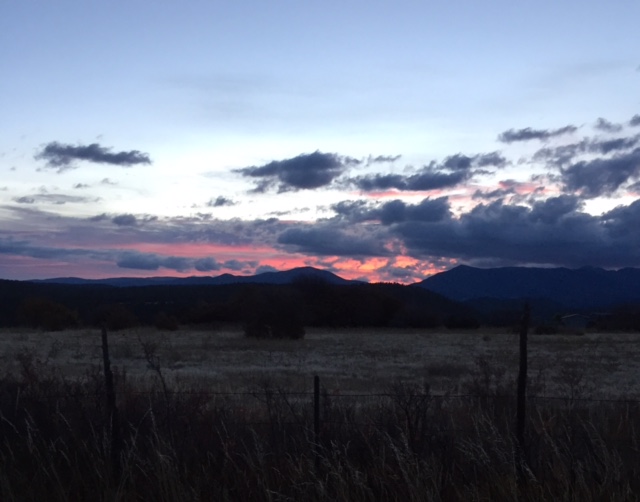
“White Mules and a Column of Smoke” was drafted during the August 2016 Tupelo Press 30/30 challenge. I am grateful to Natalie Butler, who sponsored the poem and whose photo inspired me.


Tell it Slant: How to Write a Wise Poem, essay by Camille Dungy

OLYMPUS DIGITAL CAMERA


Few essays on writing poetry grab me by the collar, slam me against the wall, and say “Listen, dammit!” But this one did.

Camille Dungy’s words sear through the fog. She tells it slant. She tells it true. She explains how some masters have done it. If you’ve not read her poetry, seek it out. You’re in for a treat. If you have the good fortune to attend a lecture or reading by her, do so. She’s energetic, wise and kind. She knows.

http://www.poetryfoundation.org/article/247926

FIrst posted here in 2014..


Cedar Grove (after Wang Wei)

file000675350848

Cedar Grove (after Wang Wei)

I sit alone among the cedars,
play my guitar and hum.
In this dark forest
no eye spies me but the moon’s.

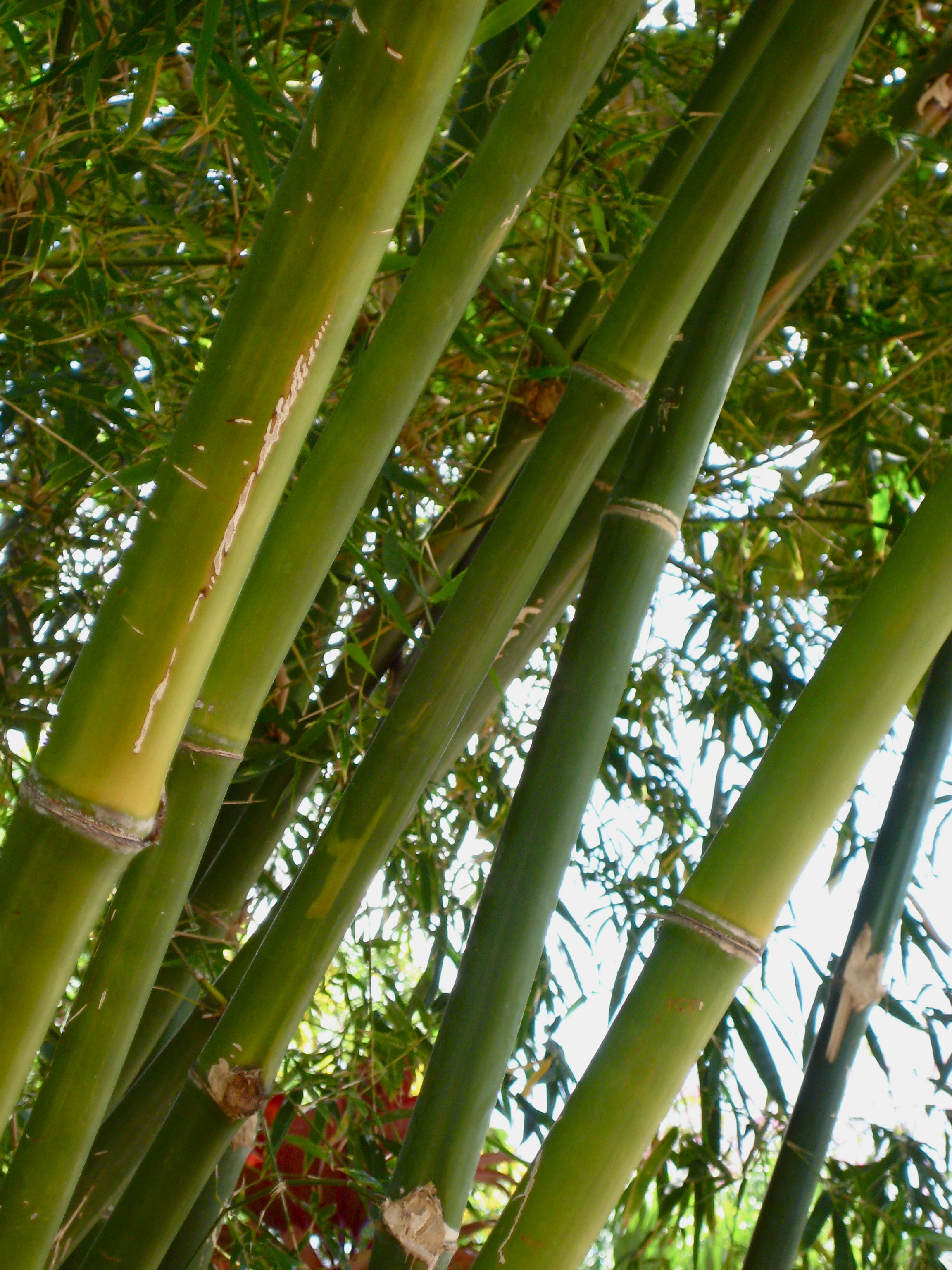
My take on Wang Wei’s “Bamboo Grove,” from this transliteration copied somewhere along the way:

alone sit dark bamboo among
strum lute again long whistle
deep forest man not know
bright moon come mutual shine

IMG_1533

“Cedar Grove” made its first appearance here in March 2014. I adapted it to fit my circumstances…

You might find the Wikipedia entry on Wang Wei of interest.

Echo Charm

Echo Charm

Right on left, or returned

what circles back, unbroken
yet opened?

Your mouth centers me.

Diminished, I rise, listening.

Grass rubbing against grass.
The lizard’s scarlet throat, swelling.

Not refusal, but denial.

Eyes the color of blood.

You practice your words carefully,
repeating each special phrase.

Blood the color of sky.

Sky the color of eyes.

And always the warm shade.

Success, Pancetta-Scrambled Eggs and Evergreen Review

Lyra and Baraka

How do we poets measure success? When I first started writing I believed that getting a handful of poems published in journals would provide that measure. Within a couple of years that belief morphed into publishing in better journals, and perhaps someday having editors ask to see my work. Then I thought chapbook publication would indicate achievement, as would having work accepted by a few “unattainables” — those journals that publish “THE GREATS,” not mere mortals like us. And of course winning contests and prizes would prove real success, as would full-length book publication. I’ve checked off all of those standards but one — full-length book publication — and still feel, well, lacking. The goal line keeps shimmering ahead, and likely always will. All this is to say that I have three poems up at Evergreen Review, an unattainable if ever there was. I must admit to feeling a moment of panic when Evergreen Review poetry editor Jee Leong Koh’s announcement email arrived this morning. “Are these poems good enough?” I asked myself. “Who am I, and how the hell did I ever think my work belonged there?” As I said, the goal line keeps moving, and I don’t know if true success in the poetry world, whatever that is, will ever welcome me. But this morning’s breakfast of pancetta-scrambled eggs and toast was delicious, if I say so myself. So I have that!

Moths

image


Moths

Small moths stir
in the darkness.
I feel their

wings brush my
face, my hands,
remembering the cry

of something unseen.
It is windy
again this morning.


* * *

“Moths” first appeared here in July 2015.

image


Still Hands (Cento)

image


Still Hands (Cento)

I let it burn, rooted as it is. Now
nothing else keeps my eyes

in the cloud – get close to a star,
and there you are, in the sun.

What about all the little stones,
sitting alone in the moonlight?

Silence complicates despair.
I have believed so long in the magic

of names and poems,
and I know that you would take

the still hands to dryness and
loose rocks, where the light

re-immerses itself. It’s not the story
I want. We cannot live on that.


* * *

Credits:
Sharon Wevill, Julia de Burgos, Francis Ponge, Mary Oliver,
Alberto de Lacerda, Robert Hass, HD, Jacques Dupin, Francesca Abbate, George Oppen.

image

Late Night (after Li Po)

file0001588704472


The moon smiles upon my bed.
I consider frost and ice,
and raising my head, the bright sky.
Lying back, I think of home.


Once again, I’ve attempted to shiver myself into a timeless piece. I can only hope that my version does not offend.


The transliteration from Chinese-Poetry.com follows:

Bed before bright moon shine
Think be ground on frost
Raise head view bright moon
Lower head think home


file000656391838(1)

This originally appeared here in March 2014.

Numbers numbers numbers: NINE

file0002037739398

Numbers numbers numbers: NINE

Early on in my other life I was hand-picked and hired to assist with budgets, to work with numbers. One of the higher-ups remarked that my spelling score was quite good for a “numbers person.” This amused me to no end, as I’d no inkling that a) anyone in the world considered me fluent with numbers, or b) that the mundane labor that comprised my livelihood had been noticed, much less evaluated, by someone beyond my small, three-person office (certainly no one noticed the writing I’d produced and published). More than a quarter century later, I’m still amused. And still working with numbers, which even now remain mysterious, magical, and even inspiring.

Take the number nine. Multiply it by two, and you get 18. Add the two digits that comprise 18, one and eight, and you get 9. Multiply it by three: 27. Total the two digits forming 27, and you get, yes, 9. Multiply it by four, by five, by six, by seven, eight or nine. Add the digits that comprise the sum and you return to nine. Interesting, no?

It appears everywhere. In Islamic cosmology, the universe is built of nine spheres. In Ancient Mexico, the netherworld consisted of nine layers. The magic square consists of nine parts. Beijing was designed as a center with eight streets. Hindu temple foundations contain jewels and nine distinct grains. The human body has nine openings. The number also appears in both sacrificial and healing rites. The River Styx bends nine times. I could go on (we haven’t scratched the surface), but will refrain.

And if this piece piques your curiosity, you might find this poem inspired by zero (a truly fascinating subject) of interest:

http://www.cladesong.com/okaji.withtheseninefigures.html

Or this one, “That Number upon Which the Demand Lieth,” which takes up the number three.

This first appeared on the blog in February 2014.