Self-Portrait as Compost


Self-Portrait as Compost

Beneath the surface find warmth,
the fruit of decay and mastication,
of layered mixes and intermingled
juices. Disintegrated or whole,
still I strive to speak. Bits of me
meld, to be absorbed slowly; I
process and am processed: here,
within the pepper bush’s deep red
berries, there among the dianthus.
Scattered, deliberately placed,
having been, I shall emerge again,
forever changed, limitless, renewed.


* * *


“Self-Portrait as Compost” was first published in Issue 125 of Right Hand PointingThank you to editors Dale Wisely, Laura M. Kaminski, F. John Sharp and José Angel Araguz for taking this piece.


Empty Cup

I wrote this last year, a week after my father died.

Empty Cup

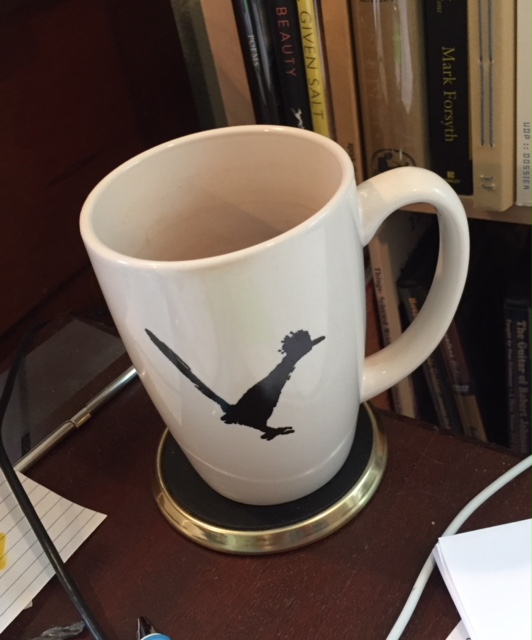
I set down my cup, pour
tea and think this day, too,
may never end.

With what do we quantify love? How does grief measure us? Nine days ago I wrote “My father is dying and I’m sipping a beer.” More words followed, but I did not write them, choosing instead to let them gather where they would – among the darkening fringe at light’s edge, in that space between the shakuhachi’s notes, in the fragrance of spices toasting in the skillet. In unwept tears. Everywhere. Nowhere.

Seven days ago I wrote “My father is dead.” Again, I chose to let the unwritten words gather and linger, allowing them to spread in their own time, attaching themselves to one another, long chains of emptiness dragging through the days.

If experience reflects truth, sorrow’s scroll will unravel slowly for me, and will never stop. I feel it beginning to quiver, but only the tiniest edge emerges. I am nothing, I say. I am voice, I am loss, I am name. I am memory. I am son.

I have fifty-nine years
and no wisdom to show for it.
Never enough. Too much.

* * *


My father died one year ago today.  We miss you, Dad.


Every Wind (with recording)


Every Wind

Every wind loses itself,
no matter where

it starts. I want
a little piece of you.

No.

I want your atmosphere
bundled in a small rice paper packet
and labeled with strings of new rain
and stepping stones.

I want
the grace of silence
blowing in through the cracked
window, disturbing only
the shadows.

Everywhere I go, bits of me linger,
searching for you.

Grief ages one thread at a time,

lurking like an odor
among the lost
things,

or your breath,
still out there,

drifting.


* * *

Music: “Gymnopedie No. 1” Kevin MacLeod (incompetech.com)
Licensed under Creative Commons: By Attribution 3.0 License
http://creativecommons.org/licenses/by/3.0/


“Every Wind” first appeared in The Lake in July 2016, and is included in my chapbook, From Every Moment a Second, available for order now via Amazon.com and Finishing Line Press.


Forced By This Title to Write a Poem in Third Person About Himself, the Poet Considers the Phenomena of Standing Waves, Dreams Involving Long-Lost Cats (Even If He Has Not Had Such a Dream Himself), And the Amazing Durability of Various Forms of Weakness


Forced By This Title to Write a Poem in Third Person About Himself, the Poet Considers the Phenomena of Standing Waves, Dreams Involving Long-Lost Cats (Even If He Has Not Had Such a Dream Himself), And the Amazing Durability of Various Forms of Weakness

Five White cat always made sure no rats gnawed my books.
— Mei Yao-ch’en

His brain is squirming like a toad.
— Jim Morrison


Standing by the water, the poet wonders if,
as in this dream, his dead dog and Five White

might seize the separate ends of a rope and blend
their tugs, matching highs and lows, growls and purrs,

with near stillness, dawn to dusk and back again,
always equal, sharing through death their love

of work and honor. He throws a small branch
and asks the dog’s ghost to fetch, but it remains

at his side, as if reluctant to leave. How to release
what you no longer hold? Shadows disappear in direct

light, but always return at its departure. The
raindrop remains intact through its long plummet.

Words, though unspoken, hang like lofted kites
awaiting a new wind, a separate rhythm,

beyond compassion. He cannot hear it
but joins his dog in singing. The cat yowls along.

 

This piece first appeared in deLuge in fall 2016, and was drafted during the August 2015 30-30 challenge. Thanks to Jeff Schwaner for providing the title (which I edited for publication).



Even the Light


Even the Light

You look out and the sunbeam blinks –
a difference in brightness
on the drooping seeds.

Some days nothing gets done.
We live with the unwashed,
with stacks of mail, the unfolded,

the incomplete. Phrases pop out
only to crawl away, and later,
reincarnated in other forms,

embed themselves just under
the skin, calcifying. Scratch
as you might, no relief appears.

Your tongue grows heavy
from shaping these words.
Even the light subtracts.

* * *


“Even the Light” was published in the May 2017 issue of La Presa.


Countdown, #3: Thirty-Five Years Later, I Raise My Hand

My last five posts of 2018 are reruns of five of the most viewed posts on this site during the year.


Thirty-Five Years Later, I Raise My Hand

In spring 1983 I enrolled in a poetry writing course thinking it might help improve my short fiction. I was a history major by default, had never taken a course in poetry, but believed, with absolutely no evidence, that I could write fiction. At the time I would have been hard-pressed to name five contemporary poets, even counting my professor. To be honest, the class struggled to hold my attention. Only about a quarter of the students seemed interested in writing, and the instructor was a bit, uh, tired. But for the first time in my life I read, really read, poetry. I fell in love with Galway Kinnell, Ai, James Wright and Carolyn Forche, to name just a few of my early enthusiasms. I wanted to write like them. So I wrote. And wrote. And wrote. Most of it was laughably bad, but somehow I managed to win an undergraduate poetry contest, which suggested that hope existed. Maybe someday, I thought, one of my poems will be published. This radical idea had never occurred to me before. Publication seemed to be the privilege of special people, and a lifetime of gathered fact revealed that I was unequivocably nothing special.

Early on in the semester, perhaps even in the first class, the professor asked how many of us thought we’d still be writing poetry in twenty years. I didn’t raise my hand. I didn’t know where I’d be in six months, much less what I’d be doing in twenty years. Since I’d realized late in the game that teaching was not for me, I had no job prospects, and few marketable skills, despite experience in chugging beer, manning sound-powered phones on a ship’s helicopter tower, scraping barnacles and bending rules. The world was limited. The world was limitless.

Another gray day

dividing the old and young

Oh, this aching hip!


A song from that time:

Two Poems Up at Defuncted

file0001138262091

I’ve two poems up at Defuncted, a journal dedicated to reprinting pieces from defunct publications. All too often our work simply disappears when a publication ceases operating, so I’m particularly grateful to editor Roo Black for providing writers with the opportunity to rejuvenate their work.

Jackboy’s Lament

Jackboy’s Lament

We define ourselves in movement,
in the uncertain light and forms

shuddering by: fences, the nameless
wave, odors, dark water.

Look at the hills, their lines stretched taut like
smiles, or voices torn from the earth.

Or the creek below us – how its mouth never closes
yet nothing emerges but a shadow

on the wind. Two questions arise,
leaving only the abandoned to consider.

In our solitude, only my self is missing.

“Jackboy’s Lament” made its first appearance here in October 2015. I started the poem about a dozen years ago, after a drive through the Texas hill country with Jackboy the cattledog, who was quite the philosopher and humorist. This is what emerged after several conversations and much reflection over his circumstances (abused, abandoned, rescued). Jack didn’t talk much, but he thought. Oh, how he thought.

vultures

Summer 1966: After France & Remembering Bobby, Who One Day Would Learn to Multiply and Divide, Write Love Poems, Define Home, Fight Unfairly and Live with as Much Gusto as a 7-Year Old. Perhaps.

Summer 1966: After France & Remembering Bobby,
Who One Day Would Learn to Multiply and Divide,
Write Love Poems, Define Home, Fight Unfairly and
Live with as Much Gusto as a 7-Year Old. Perhaps.

From left coast to right, or the wide arc between,
which place claimed you? In New York you marveled
at the building’s backs scratched by clouds, and all your
pale cousins in Baltimore spoke strangely and couldn’t fathom
your nuclear family’s private lingo, while the drive to Texas
and its red ants and iced tea blossomed into adventures between
pages in the back seat of the VW bug. By the second week you
learned that Texans sweat as much as the French, and swear even
more, that you couldn’t fight one twin without taking on the other,
sometimes both at once. There was no question of fairness then,
just brotherhood, but the librarian would slip you the choicest
donated fiction, and you played baseball every day in the vacant lot
until sundown called the players home to black and white body
counts and cigarette commercials on the three channels received.
Sometimes you lay in bed under the half-light of the whirring
fan blades, and dreamt of heroes and ornithopters, zebras
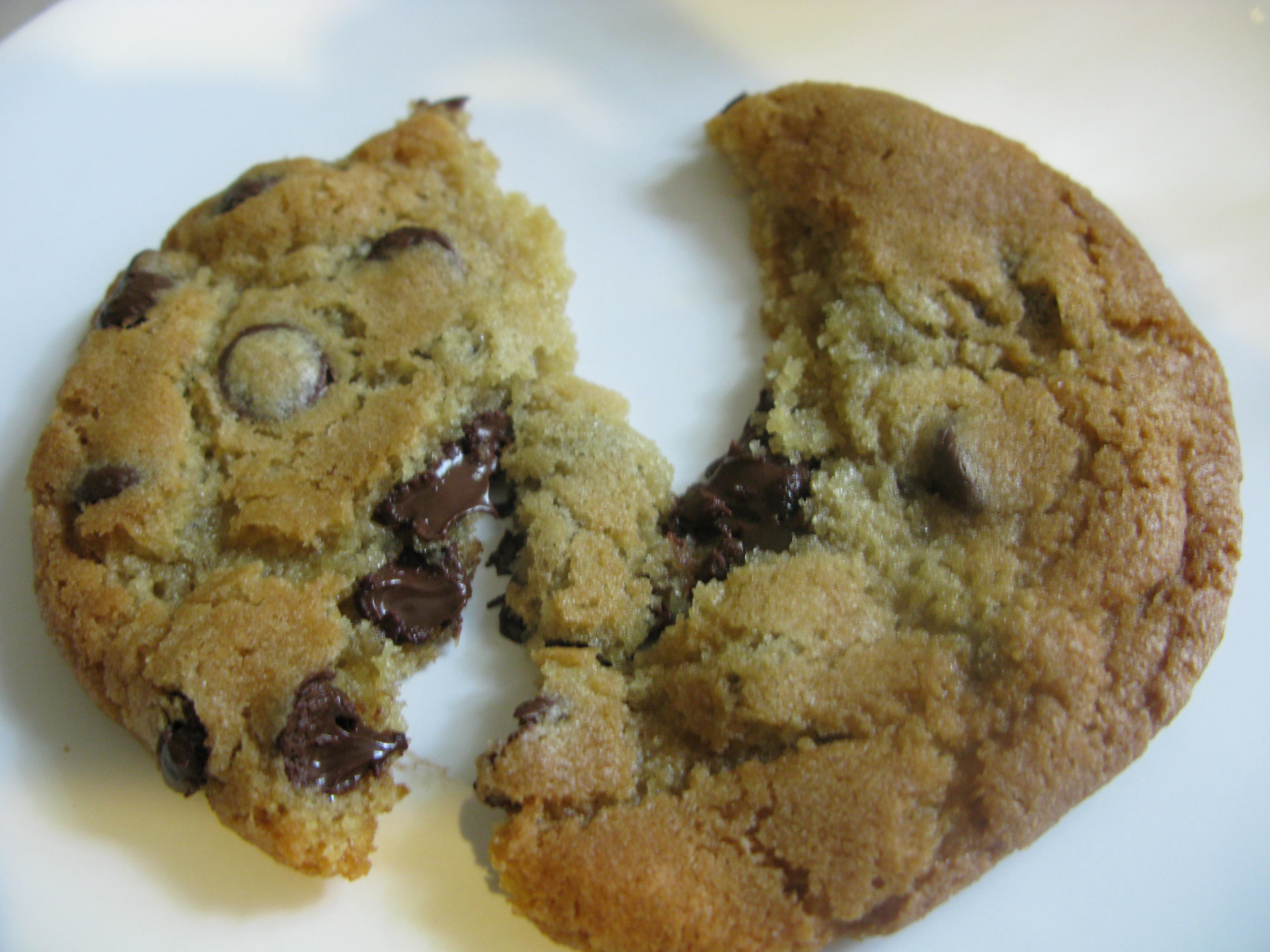
and the scent of chocolate chip cookies in the oven. Other nights
you wondered how words could rest so calmly on one page yet
explode off the next, or why a man would climb a tower in Austin
to kill fourteen people when opportunities for mayhem and murder
burgeoned across the sea. Wasn’t living a matter of simple
subtraction? One by one the days parted and you walked through
that dwindling heat, eyes squinting, questions in hand, emerging
fifty years later having suffered additions and division and the
cruelties of love and success, honor and truth, still asking why
and how, home or house, where it went, your shoulders slumping
under the heft of those beautiful, terrible summers stacked high
like so many life-gatherings of unread books awaiting a bonfire.

This was first published in theSilver Birch Press “Moving” series, and an earlier version titled “Bonjour, Texas” appeared on the blog A Holistic Journey.

Chill (Cento)

silhouette


Chill (Cento) 

I shiver a little, with the evening,
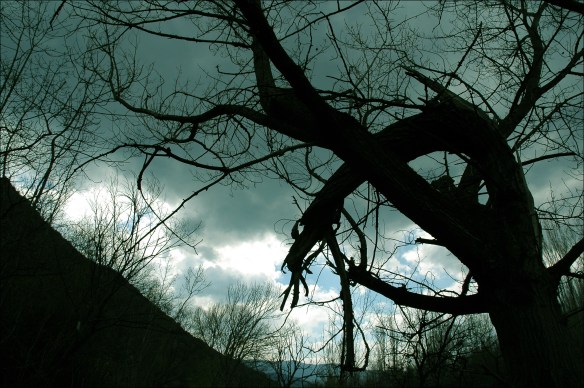
and you print a shadow like a thin twig.

Wait for my death, then hear me again.
He believes a pomegranate is a thesaurus,

the thundercloud, tomorrow’s puddle. Is
this hunger unlike that of others?

When a drowning man calls out,
his voice follows him downstream.

Why am I grown so cold?

A cento is composed of lines borrowed from other poets. “Chill” owes its existence to: James Wright, H.D., Ingeborg Bachmann, Eduardo C. Corral, Blaga Dimitrova, Forrest Gander, Yusuf Komunyakaa, and Adelaide Crapsey.

pom.jpg

“Chill” first appeared on the blog in March, 2016, and was subsequently published in Long Exposure in October 2016.