Summer 1966: After France & Remembering Bobby, Who One Day Would Learn to Multiply and Divide, Write Love Poems, Define Home, Fight Unfairly and Live with as Much Gusto as a 7-Year Old. Perhaps.


Summer 1966: After France & Remembering Bobby,
Who One Day Would Learn to Multiply and Divide,
Write Love Poems, Define Home, Fight Unfairly and
Live with as Much Gusto as a 7-Year Old. Perhaps.

From left coast to right, or the wide arc between,
which place claimed you? In New York you marveled
at the building’s backs scratched by clouds, and all your
pale cousins in Baltimore spoke strangely and couldn’t fathom
your nuclear family’s private lingo, while the drive to Texas
and its red ants and iced tea blossomed into adventures between
pages in the back seat of the VW bug. By the second week you
learned that Texans sweat as much as the French, and swear even
more, that you couldn’t fight one twin without taking on the other,
sometimes both at once. There was no question of fairness then,
just brotherhood, but the librarian would slip you the choicest
donated fiction, and you played baseball every day in the vacant lot
until sundown called the players home to black and white body
counts and cigarette commercials on the three channels received.
Sometimes you lay in bed under the half-light of the whirring
fan blades, and dreamt of heroes and ornithopters, zebras
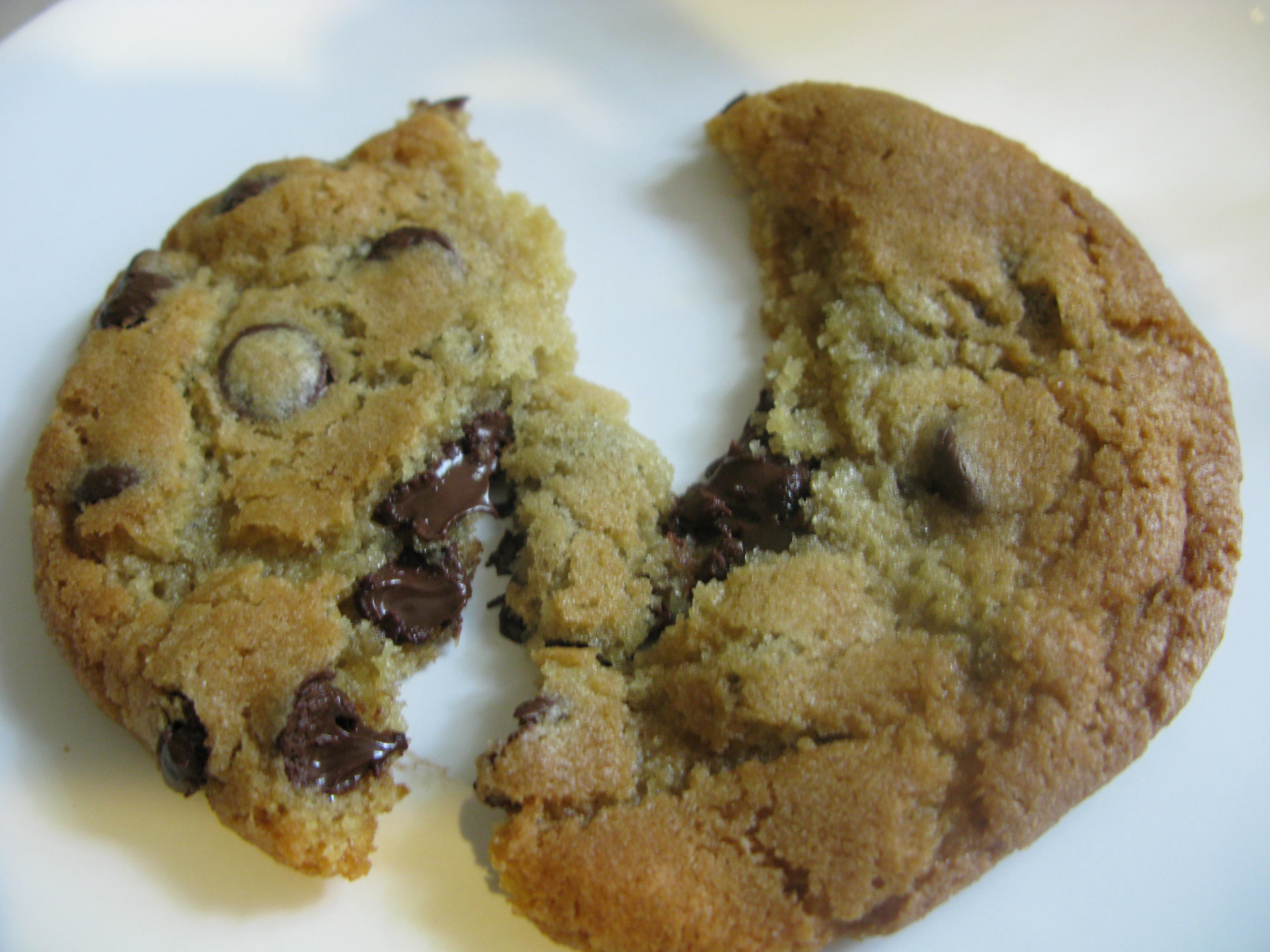
and the scent of chocolate chip cookies in the oven. Other nights
you wondered how words could rest so calmly on one page yet
explode off the next, or why a man would climb a tower in Austin
to kill fourteen people when opportunities for mayhem and murder
burgeoned across the sea. Wasn’t living a matter of simple
subtraction? One by one the days parted and you walked through
that dwindling heat, eyes squinting, questions in hand, emerging
fifty years later having suffered additions and division and the
cruelties of love and success, honor and truth, still asking why
and how, home or house, where it went, your shoulders slumping
under the heft of those beautiful, terrible summers stacked high
like so many life-gatherings of unread books awaiting a bonfire.


This was first published in theSilver Birch Press “Moving” series, and an earlier version titled “Bonjour, Texas” appeared on the blog A Holistic Journey.


And: A Mythology


And: A Mythology

Balancing the chair on two legs,
you claim no past,
and gravity,
though complicit in the future,
aligns itself with the mass.
No connections fuse the two.
Or, lying there, you bridge gaps,
clasping hands with distant cousins,
awake in the moment
yet ready to drift and continue,
a solitary seed awaiting nourishment,
steady, existing only between.


“And: a Mythology” first appeared in May 2020 at Literati Magazine. Many thanks to editor Renée Sigel for taking this and several other pieces.

.

Poet’s Pantry

file3911233869642

In my sliver of the world, poetry and cooking share many qualities. When I step into the kitchen, I often have only a vaporous notion of what’s for dinner. A hankering for roasted poblano peppers, the need to use a protein languishing in the refrigerator, the memory of an herbal breeze wafting down a terraced hill near Lago d’Averno, Hell’s entrance, according to Virgil, or even a single intriguing word, may spark what comes next. But the success of what follows depends upon the ingredients at hand, on how we’ve stocked the pantry. Good products beget better results. Let’s take my desire for roasted poblanos. What to do with them? Poking around, I uncover an opened package of goat cheese, a bit of grated grana padano and some creme fraiche, and I immediately think pasta! Looking further I spot arugula, a lemon, a handful of pecans, some cherry tomatoes. Dinner: Pappardelle with a roasted poblano and goat cheese sauce, garnished with toasted pecans, served with an arugula and cherry tomato salad dressed with a lemon vinaigrette. Simple, when you’ve stocked a solid base of quality components.

My writing employs a similar process. Anything – a vague sense of uneasiness, a particular word, the sunlight slanting through the unfortunate dove’s imprint on my window, articles or books I’ve read or perused on a myriad of subjects – may launch a poem. But what truly makes the poem, what bolsters, fills and completes, what ignites and catapults it arcing into the firmament? The pantry’s contents.

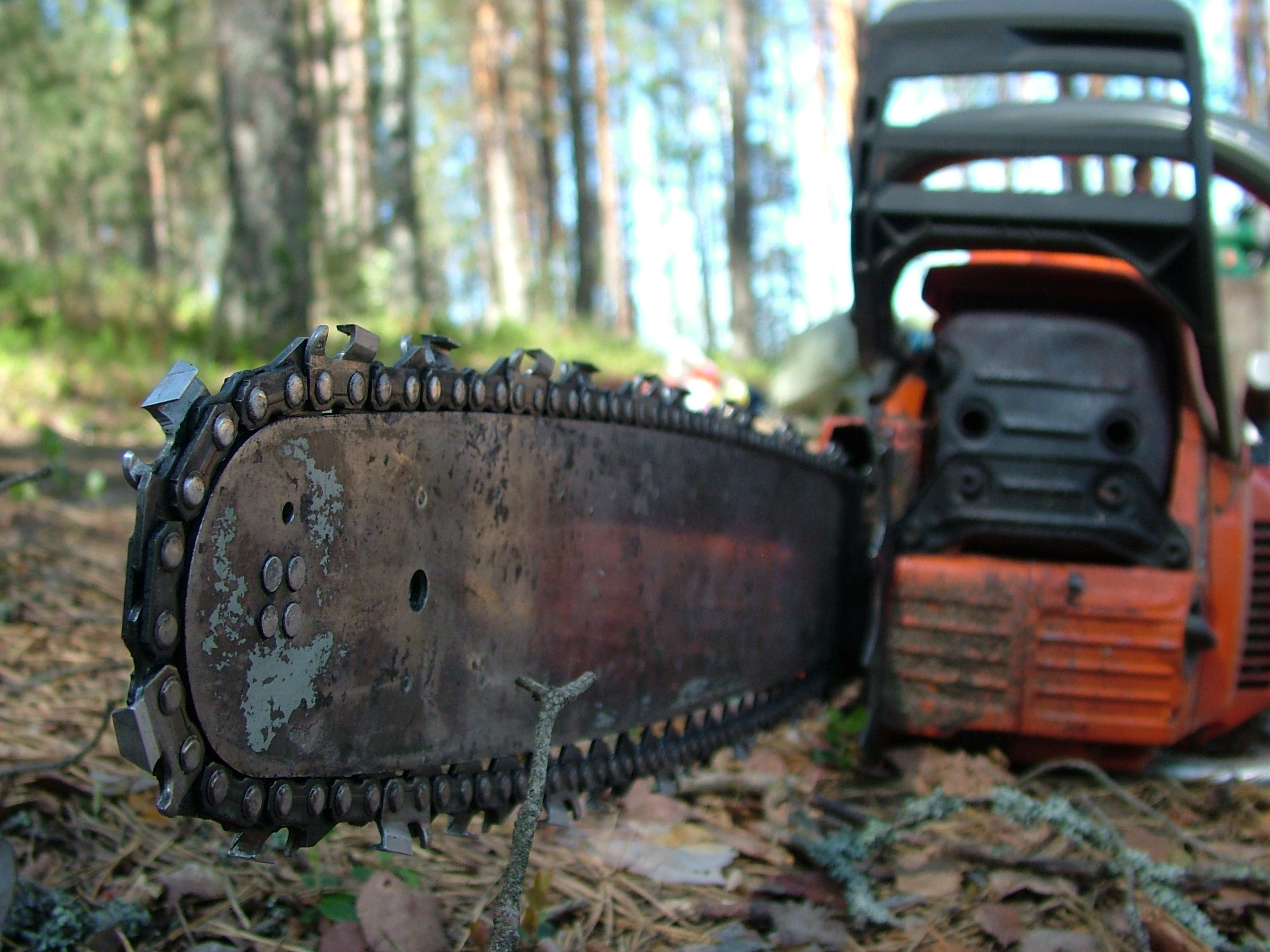
Everyone’s needs differ, and I wouldn’t presume to inflict my peculiar sensibilities on anyone, but if you cracked open my burgeoning poetry pantry’s door, you’d certainly unearth dictionaries and a thesaurus, fallen stars, books on etymology and language, curiosity, a guitar or mandolin, at least one window (sometimes partially open), conversations floating in the ether, various empty frames, wind, dog biscuits and dirty socks, a walking stick, sunlight and shadows, more books on such subjects as ancient navigation, the history of numbers, the periodic table, alchemy and olives. You might also spy reams of paper, unspoken words, coffee cups, a scorpion or two, scrawled notes on index cards, wandering musical notes, a pipe wrench, wood ear mushrooms and salvaged fragments of writing, failed ideas moldering in clumps on the floor, a few craft beers and empty wine bottles, a chain saw, and most important of all, a bucketful of patience.

(I cannot over-emphasize the bucket’s contents…)

This is just to say (no, I didn’t eat the plums) that the best equipped poets stock their pantries with the world and all its questions, with logic, with faith, persistence, emotion, science, art, romance and yes, patience. Line your kit with every tool you can grasp or imagine. Keep adding to it. Read deeply. Listen. Breathe. Listen again. Converse. Look outward. Further, past the trees, around the bend and beyond the horizon’s curve, where the unknown lurks. Look again. Don’t stop. Continue.

And if after all this you’re wondering what basks in my kitchen pantry:

photo(13)

This first appeared here in January  2014.

A Word Bathing in Moonlight (with recording)

mind


A Word Bathing in Moonlight

You understand solitude,
the function of water,
how stones breathe
and the unbearable weight
of love. Give up, the voice says.
Trust only yourself.
Wrapped in light, you
turn outward. Burst forth.


“A Word Bathing in Moonlight” first appeared in Eclectica in July 2017.

moonlight

“Thinking Music” Kevin MacLeod (incompetech.com)
Licensed under Creative Commons: By Attribution 3.0 License
http://creativecommons.org/licenses/by/3.0/

Interview Up at Tistelblomma

Quote


Jenny Enochsson, editor of Tistelblomma, an online journal based in Sweden, asked me a few questions


Scarecrow Considers the Afterlife (with recording)

Scarecrow and Friends


Scarecrow Considers the Afterlife

Gathering threads, I join them with a central
knot, producing a sunburst flower or constellation
of ley lines spreading forth and connecting their
tenuous truths – megalith to fjord, solstice to
dodmen and feng shui, suppositions entwined
and spat out. And who’s to say which alignment
stands taller than the next, which rut, which energy,
defines our direction? When I cease to be, will I
remain or dissipate, return in another form or
explode and scatter throughout the universe, the
residue of me sizzling along the starways for eternity
or perhaps just the next twenty minutes. It is clear
that I possess no heart, no internal organs. My spine
is lattice, my skin, fabricated from jute. Eviscerate
me and straw will tumble out. I do not bleed. Yet
the crows consult me in secret and conduct their
daily mercies, and I think and dance and dream
and wonder and hope. Oh, what I hope.


* * *

This was first published at Eclectica in July 2016, with two companion pieces.

How to Write a Poem (with recording)


How to Write a Poem

Learn to curse in three languages. When midday
yawns stack high and your eyelids flutter, fire up

the chain saw; there’s always something to dismember.
Make it new. Fear no bridges. Accelerate through

curves, and look twice before leaping over fires,
much less into them. Read bones, read leaves, read

the dust on shelves and commit to memory a thousand
discarded lines. Next, torch them. Take more than you

need, buy books, scratch notes in the dirt and watch
them scatter down nameless alleys at the evening’s first

gusts. Gather words and courtesies. Guard them carefully.
Play with others, observe birds, insects and neighbors,

but covet your minutes alone and handle with bare hands
only those snakes you know. Mourn the kindling you create

and toast each new moon as if it might be the last one
to tug your personal tides. When driving, sing with the radio.

Always. Turn around instead of right. Deny ambition.
Remember the freckles on your first love’s left breast.

There are no one-way streets. Appreciate the fragrance
of fresh dog shit while scraping it from the boot’s sole.

Steal, don’t borrow. Murder your darlings and don’t get
caught. Know nothing, but know it well. Speak softly

and thank the grocery store clerk for wishing you
a nice day even if she didn’t mean it. Then mow the grass,

grill vegetables, eat, laugh, wash dishes, talk, bathe,
kiss loved ones, sleep, dream, wake. Do it all again.


* * *

“How to Write a Poem,” is included in Indra’s Net: An International Anthology of Poetry in Aid of The Book Bus, and has appeared on the blog as well.

All profits from this anthology published by Bennison Books will go to The Book Bus, a charity which aims to improve child literacy rates in Africa, Asia and South America by providing children with books and the inspiration to read them.

Available at Amazon (UK) and Amazon (US)

When to Say Goodbye (with recording)

dried


When to Say Goodbye

 If all goes well it will never happen.
The dry grass in the shade whispers

while the vines crunch underfoot,
releasing a bitter odor. A year ago

I led my dog to his death, the third
in five years. How such counting

precedes affection, dwindles ever
so slowly, one star winking out after

another, till only the morning gray
hangs above us, solemn, indefinite.

Voiceless. If I could cock my head
to howl, who would understand? Not

one dog or three, neither mother nor
mentor, not my friend’s sister nor her

father and his nephews, the two boys
belted safely in the back seat. No.

I walk downhill and closer to the creek,
where the vines are still green.

In the shade of a large cedar, a turtle
slips into the water and eases away.


* * *


“When to Say Goodbye,” drafted during the August 2015 Tupelo Press 30-30 challenge, was published by Oxidant | Engine in May 2017, and subsequently nominated for a Best of the Net 2017 award.


All the Little Pieces

broken-glass


All the Little Pieces

How to rewind
broken,

the subtle shift of shard
and floor

laid between night’s
fall

and the morning’s first
glow. Take this

lantern. Set it
on the wall. Remove

the glass. Do not
light the candle.

Wait.


lantern


Nocturne with a Line from Porchia

bureau


Nocturne with a Line from Porchia

Everything is nothing, but afterwards.
I rise and the moon disturbs the darkness,
revealing symbols, a few stolen words
on the bureau. Tomorrow I’ll express
my gratitude by disappearing be-
fore I’m found, which is to say goodbye
before hello, a paradigm for the
prepossessed. Compton tells us to imply
what’s missing, like Van Gogh or Bill Monroe,
but why listen to the dead before they’ve
stopped speaking? Unfortunately we throw
out the bad with the good, only to save
the worst. I return to bed, and the floor
spins. Nothing is everything, but before.


* * *

This first appeared in The Blue Hour Magazine in December 2014, and is also included in my chapbook, If Your Matter Could Reform. The line “Everything is nothing, but afterwards” comes from Antonio Porchia’s Voices, translated by W.S. Merwin. Porchia wrote one book in his lifetime, but what a book it was! Often described as a collection of aphorisms, Voices is so much more – each time I open the book, I find new meaning in old lines.

Vincent