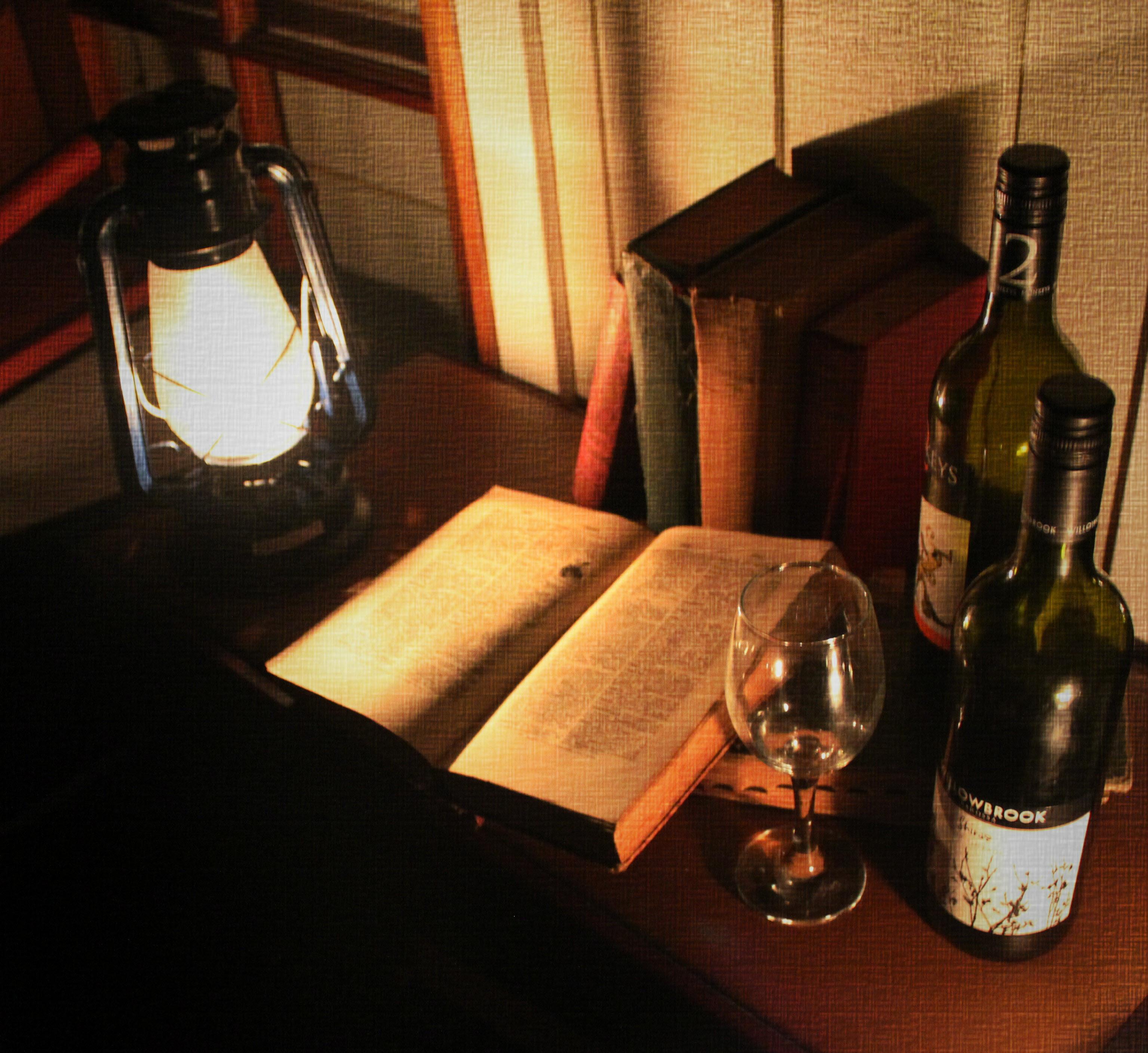
Wherein the Book Implies Source

book


Wherein the Book Implies Source 

And words form the vessel by which we traverse centuries, the river
stitched across the valley’s floor, easing access.

Accession by choice. Inorganic memory.

Vellum conveys its origin: of a calf.

How like an entrance it appears, a doorway to a lighted space.
Closed, it resembles a block of beech wood.

To serve as conveyance, to impart without reciprocity.

Framing the conversation in space, immediacy fades.

The average calfskin may provide three and a half sheets of writing material.
Confined by spatial limitation, we consider scale in terms of the absolute.

The antithesis of scroll; random entry; codex.

A quaternion equalled four folded sheets, or eight leaves: sixteen sides.

Reader and read: each endures the other’s role.
Pippins prevented tearing during the drying and scraping process.

Text first, then illumination.

Once opened, the memory palace diminished.


* * *
This originally appeared in April 2014 as part of Boston Review’s National Poetry Month Celebration, and is included in The Circumference of Other, my offering in the Silver Birch Press chapbook collection, IDES, published in 2015.

ides front cover 92915

As Blue Fades


As Blue Fades

Which defines you best, a creaking lid or the light-turned flower?

The coffee’s steam or smoke wafting from your hand.

Your bowls color my shelves; I touch them daily.

Sound fills their bodies with memory.

The lighter’s click invokes your name.

And the stepping stones to nowhere, your current address.

If the moon could breathe would its breath flavor our nights?

I picture a separate one above your clouded island.

The dissipating blue in filtered light.

Above the coral. Above the waves and ocean floor far below.

Above the space your ashes should share.

Where the boats rise and fall, like chests, like the waning years.

Like a tide carrying me towards yesterday’s reef.

Or the black-tailed gull spinning in the updraft.


“As Blue Fades” first appeared in Underfoot Poetry in October 2017, and is included in my most recent chapbook, My Mother’s Ghost Scrubs the Floor at 2 a.m., published by Etchings Press, and available at Amazon, Barnes & Noble and elsewhere.


Poem Up at Vox Populi


My poem “Something Felt” is featured at Vox Populi. I am grateful to Michael Simms for his support, and am thrilled to be a regular contributor to this lively publication.


It was 10 A.M. When the Angel Said You Have to Go Now

OLYMPUS DIGITAL CAMERA

It was 10 A.M. When the Angel Said You Have to Go Now

Forgive me for seeking clarity, but do you have a specific
destination in mind, or are you saying, with a little less
force, get lost, go away, I’m done with you, or might you
merely be suggesting that I go forth? And what exactly is
your position on, oh, let’s just say the afterlife and the
journey there? As for turning, you certainly did,
offering both in sequence, again and yet again, to my
great appreciation. Butter. You must explain your fetish
and how the room exuded pale gold and sweet after
one little death, as if a honeyed light had oozed in beneath
the door, and, in kissing the carpet, released endorphins
and cool warmth, and love-moths frantically flapping
to dry our sweat without the slightest chill. It’s the little
things, my mother always said, never considering size,
but meaning those thoughtful touches, the fresh flowers,
a plate of cheese and fruit, and yes, the tenor sax moaning
in the alcove. I’ll go, but you know this is my apartment.


“It was 10 a.m. When the Angel Said You Have to Go Now” was originally drafted during the August 2016 Tupelo Press 30-30 fundraiser, thanks to d. ellis phelps, who sponsored and provided the title. It was subsequently published in Atlanta Review in May 2020. 

The Pleasure of the Right Tools

drill

The Pleasure of the Right Tools

Roasting peppers on the grill, I inhale
the odors of freshly sawed lumber
and turned earth. My back and knees
recall the doing, as I rejoice in the memory
of the new maul pounding rebar through
the timber’s holes into the ground.
I place the blackened peppers into a
paper wine bag where they’ll steam.
The saw rests on its shelf next to the
drill. The beer tastes bitter. Perfect.


“The Pleasure of the Right Tools” first appeared in Winnow Magazine in July 2020. I am grateful to Rachael Crosbie, Tristan Cody and friends for taking this poem.

Black Lilies


Black Lilies

Flensing words, slicing deeper: all, nothing,
red to redder. Their skin, paling to nothing.

I speak today but you hear yesterday.
Black lilies in the chill of nothing.

Drifted apart, the two halves reconcile.
Yellowed, whitened. Older. Both stitched in nothing.

How many words have we lost to morning? Shredded
syllables sparring for sound. The nothing of nothing.

A coated voice, turquoise and calm, spreading across the room.
Buttered light. Pleasantries, unfolding. You, being nothing.

The language of night sleeps unformed in my bed.
I remember your hand on my cheek; flesh forgets nothing.


* * *

A near-ghazal, “Black Lilies” first appeared in ISACOUSTIC* in January 2018.

Flinch

spade


Flinch

Set it aside, regret, heal. Grieve
till the soil’s ebony heart  
devours your secrets. Believe,
in agony, what falls apart,
disintegrates at your feet. Art
rends your flesh: nervous I transmit
false signals, flinch when I should start,
weep when I should wave, counterfeit
my life’s lessons. Mosquitoes flit
through the unscreened window. Do I
ever claim this life as misfit,
as hopeful dupe? Watch the man lie
and conspire. Swat at the bugs. Lift
the mottled spade. Accept this shift.


* * *


“Flinch” first appeared  in Grand Little Things, a publication that “embraces versification, lyricism, and formal poetry,” in July 2020.

Thank you, editor Patrick Key, for taking this piece.

Lace Cactus

vulturesun

Lace Cactus

Small, they grow in the lee stones,
invisible except when blooming.
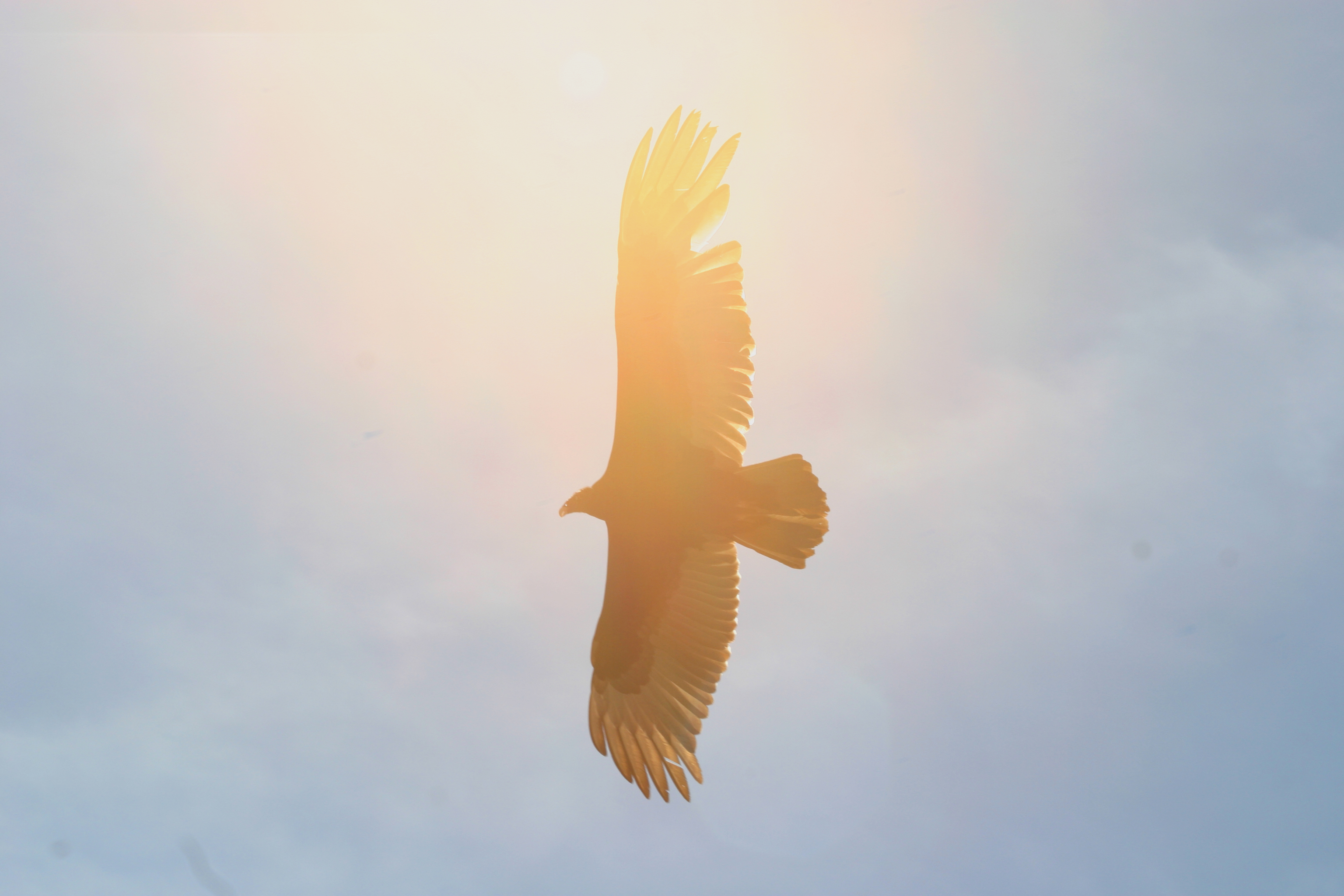
Just as the vulture’s wings blot the sun
and the moment blinks away
in the bottle tree’s glare.
An incidental flick. A distraction.
Like every unspoken word
tumbling down that long hill.

“Lace Cactus” first appeared in Tistelblomma, a publication out of Sweden. Many thanks to editor Jenny Enochsson for taking this piece.

Helsinki (with recording)

Helsinki

Helsinki

An editor said never start a poem at a window,
so instead I’m looking at the door,

which is made of glass. We are to avoid rain,
too, but it streaks the pane in such delicious

patterns that I can’t help but pretend to be someone else
in a foreign city, perhaps Helsinki, sipping black coffee

with a mysterious woman younger than my daughter
(who also does not exist), whose interests

in me are purely literary, although she straightens
my collar with lingering, scented fingers. Garden

memories and birds must never populate our lines,
but corpses are fine, as are tube tops and bananas

and any combination thereof. I finish my coffee
and wander alone through cobblestone streets,

stepping over clichés when possible, kicking them
aside when my hip joint argues, or simply accepting

their useful limitations when nothing else works.
Unknown and lacking credentials, I shrug, go on

past the closed doors behind which unseen bodies
perform the most bizarre and sensual solo dances,

or not, and shadows cook sausages over fire
and the grease spattering onto the tiled counters

issues a fragrance that awakens neighborhood dogs
and maybe a dozing stall-keeper at the market

where cloudberries are sometimes found.
I know little of Finland, and less of myself,

and then there’s poetry, which remains a blank
frame, a frosted pane I’ll never truly unlatch.

* * *

My poem “Helsinki” was first published at Panoply. It was inspired in part by a Facebook thread on which editors commented on what caused them to instantly reject poems. One said beginning a poem at a window was cause for rejection. Hence the first line.

Onions

image

Onions

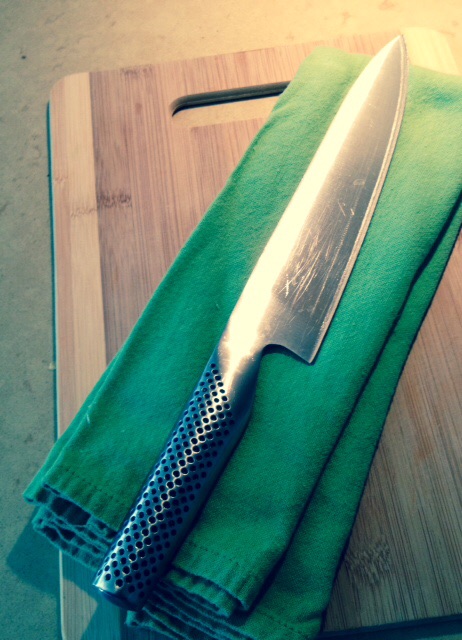
My knife never sings but hums instead when withdrawn from its block, a metallic whisper so modest only the wielder may hear it. Or perhaps the dog, who seems to enjoy the kitchen nearly as much as I. A Japanese blade, it’s a joy to hold, perfectly balanced, stainless steel-molybdenum alloy, blade and handle of one piece, bright, untarnished, and so sharp as to slide through, rather than awkwardly rupture and divide, its next task on the board.

We’ve never counted the chopped and rendered onions, the fine dice, slender rings and discarded skins, but if we could gather all the corpses we’ve produced together over the years, we’d form a monument to our work, cooperation of metal and man, a Waterloo mound in memory of the bulbs laid there, the planning involved, the missteps and serendipity, and the tears shed along the way.

The blade doesn’t care. It is. It works. It moves things, it lifts, it parts them, and in return is cleansed, and later, in the quiet room, maintains its edge with a silvery rasp, angled steel on steel in a circular motion, over and over, until finally it hums its way back into the block. But it never sings.

image

“Onions” last appeared here in December 2019. Hmm. This reminds me (again) that I need to sharpen knives…

Alas, my bout with COVID-19 has rendered me incapable of, or unwilling to, cut into onions. Parosmia has reared its ugly head, and now onions, garlic, bacon, peppers, arugula and hoppy ales among other beloved foods emit odors resembling a mix of raw sewage, mildewed peat moss and burnt wood. Ah, 2020!