Uccello

file000687759623(1)


Uccello

the wind is what
the stillness
desires to say
each instant
collapsing into itself
like a bud
returning
to the seed

listen
the birds in my tree
are silent
as echoes
before their brief
lives are
silent

something thrashes
in the leaves
the feather
spiraling
slowly
is not only what
it is

as the candle
is more
than flame
or a moment

curling
to darkness

the question
is of clarity

I built a frame
but placed
nothing in it

the wind
blows through
quietly as if
between silences
there exists
only silence or

light
the familiar embrace

unfolding


IMG_0602

Originally published in 1987 in a short-lived publication called The Balcones Review, this is the opening of a longer work. When I last looked out my window at that same tree, I heard the birds, no longer silent.


Recording of “Balance”

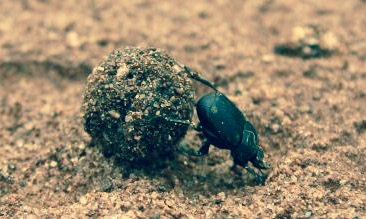
star lights


Balance

Navigating
by stars,

one ball
buried,

another
gathering,

the dung
beetle

straight-lines,
maintains

position,
forever

looking forward
and up.


image


“Balance” first appeared here in February 2016, and is included in my micro-chapbook Only This, available for free download from Origami Poems Project.

“Nightdreams” Kevin MacLeod (incompetech.com)
Licensed under Creative Commons: By Attribution 3.0 License
http://creativecommons.org/licenses/by/3.0/


Down and Away


Down and Away

How soon we lose the scent
of our first love’s

body, that odor of perfume
over sweat and uncertainty

and the overwhelming surge
into what will never again

be new. You shake yourself
back, wondering

if falling stars could choose
to rise again, whether

they would rejoin the firmament
or simply retreat deeper into the

ocean’s black, cooling, sliding
down and away, slipping

free of regret, evading forever
the sun’s long fingers.


“Down and Away” was first published in August 2019 at Trestle Ties. Many thanks to Juleen Eun Sun Johnson and Aaron Schuman for taking this piece.


Chill (Cento)

silhouette


Chill (Cento) 

I shiver a little, with the evening,
and you print a shadow like a thin twig.

Wait for my death, then hear me again.
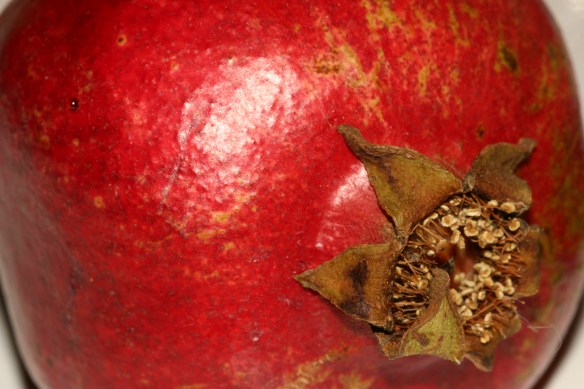
He believes a pomegranate is a thesaurus,

the thundercloud, tomorrow’s puddle. Is
this hunger unlike that of others?

When a drowning man calls out,
his voice follows him downstream.

Why am I grown so cold?


A cento is composed of lines borrowed from other poets. “Chill” owes its existence to: James Wright, H.D., Ingeborg Bachmann, Eduardo C. Corral, Blaga Dimitrova, Forrest Gander, Yusuf Komunyakaa, and Adelaide Crapsey.

pom.jpg

“Chill” first appeared on the blog in March, 2016, and was subsequently published in Long Exposure in October 2016.


Sheng-yu’s Lament (after Mei Yao-ch’en)

DSC_1243


Sheng-yu’s Lament (after Mei Yao-ch’en)

First heaven took my wife,
and now, my son.
These eyes will never dry
and my heart slowly turns to ash.
Rain seeps far into the earth
like a pearl dropped into the sea.
Swim deep and you’ll see the pearl,
dig in the earth and you’ll find water.
But when people return to the source,
we know they’re gone forever.
I touch my empty chest and ask, who
is that withered ghost in the mirror?


* * *

“Sheng-yu’s Lament” is included in my micro-chapbook, No Eye But The Moon’s, available via free download at Origami Poems Project.

The transliteration on Chinese-poems.com reads:

Heaven already take my wife
Again again take my son
Two eyes although not dry
(Disc) heart will want die
Rain fall enter earth in
Pearl sink enter sea deep
Enter sea can seek pearl
Dig earth can see water
Only person return source below
Through the ages know self (yes)
Touch breast now ask who
Emaciated mirror in ghost


SAM_0841

Before September

Before September

In that before-September haze I knew
the birds’ names but not their language,
I saw green in the distance while grass
grew tall and light never lingered.
Questions cratered my moons. Answers
hid between sunbursts. My lips formed
soundless words and glass crunched
underfoot everywhere I walked.
Nothing sparkled under the skies.
Even gemstones and feathers in morning
dew dulled the day’s arc, printing
their notes of lonesome protest in rock
shade and tree droop, in acquiescence,
in quietude. And then you spoke.

* * *

“Before September” first appeared in The Field Guide Poetry Magazine. Thank you to editor Amanda Marrero for taking this piece.

On Parting (after Tu Mu)

file000736221785

On Parting (after Tu Mu)

This much fondness numbs me.
I ache behind my drink, and cannot smile.
The candle too, hates parting,
and drips tears for us at dawn.

A non-poet friend asked why I’m dabbling in these adaptations. After all, she said, they’ve already been translated. Why do you breathe, I replied, admittedly a dissatisfying, snarky and evasive answer. So I thought about it. Why, indeed. The usual justifications apply: as exercises in diction and rhythm, it’s fun, it’s challenging. But the truth is I love these poems, these poets, and working through the pieces allows me to inhabit the poems in a way I can’t by simply reading them. And there is a hope, however feeble, of adding to the conversation a slight nuance or a bit of texture without detracting from or eroding the original.

The transliteration on Chinese-poems.com reads:

Much feeling but seem all without feeling
Think feel glass before smile not develop
Candle have heart too reluctant to part
Instead person shed tear at dawn

red_coat

This first appeared on the blog in October 2014.

Letter to a Ghost

box2


Letter to a Ghost

Had I not dreamed your death, I would have praised this day.
Your name rests in a wooden box on a desk

in a room far away and twice as old as we were then.
My penance in this phase: to continue.

I gather words close and refrain from admissions.
The clock on the wall seldom chimes,

like one whose vows circumvent convenience, or
a shade allowing the barest sliver of light

through the window. That tock preceding
a long silence. Snow blanketing the mounded earth.

Your scent never lingers past sleep, where you remain.
At last I no longer covet those sheets you’ve shared.

Your name rests in a box. I gather words and refrain.


ghost

“Letter to a Ghost” last appeared herein 2017.

Cracked


Cracked

When you say smile, I hear footsteps.
When you say love, I think shortened breath,
an inner tube swelling in the abdomen,
and the magic of tension and elasticity.
Decision, indecision. Bursting
points. The child’s hand clenching
a pin. I tell myself this, too,
will pass, that life’s gifts
balance hurt with pleasure. One
kiss lands in softness. Another twists
into bruises and cracked ribs. Two
nights in intensive care, perpetual
nerve-shredding. When you say quiet,
I see headstones. When you say
please, I feel fingers at my throat.


“Cracked” first appeared in Noble Gas Quarterly. I’m grateful to the Noble Gas team for taking this piece.


Poet’s Pantry

file3911233869642

In my sliver of the world, poetry and cooking share many qualities. When I step into the kitchen, I often have only a vaporous notion of what’s for dinner. A hankering for roasted poblano peppers, the need to use a protein languishing in the refrigerator, the memory of an herbal breeze wafting down a terraced hill near Lago d’Averno, Hell’s entrance, according to Virgil, or even a single intriguing word, may spark what comes next. But the success of what follows depends upon the ingredients at hand, on how we’ve stocked the pantry. Good products beget better results. Let’s take my desire for roasted poblanos. What to do with them? Poking around, I uncover an opened package of goat cheese, a bit of grated grana padano and some creme fraiche, and I immediately think pasta! Looking further I spot arugula, a lemon, a handful of pecans, some cherry tomatoes. Dinner: Pappardelle with a roasted poblano and goat cheese sauce, garnished with toasted pecans, served with an arugula and cherry tomato salad dressed with a lemon vinaigrette. Simple, when you’ve stocked a solid base of quality components.

My writing employs a similar process. Anything – a vague sense of uneasiness, a particular word, the sunlight slanting through the unfortunate dove’s imprint on my window, articles or books I’ve read or perused on a myriad of subjects – may launch a poem. But what truly makes the poem, what bolsters, fills and completes, what ignites and catapults it arcing into the firmament? The pantry’s contents.

Everyone’s needs differ, and I wouldn’t presume to inflict my peculiar sensibilities on anyone, but if you cracked open my burgeoning poetry pantry’s door, you’d certainly unearth dictionaries and a thesaurus, fallen stars, books on etymology and language, curiosity, a guitar or mandolin, at least one window (sometimes partially open), conversations floating in the ether, various empty frames, wind, dog biscuits and dirty socks, a walking stick, sunlight and shadows, more books on such subjects as ancient navigation, the history of numbers, the periodic table, alchemy and olives. You might also spy reams of paper, unspoken words, coffee cups, a scorpion or two, scrawled notes on index cards, wandering musical notes, a pipe wrench, wood ear mushrooms and salvaged fragments of writing, failed ideas moldering in clumps on the floor, a few craft beers and empty wine bottles, a chain saw, and most important of all, a bucketful of patience.

(I cannot over-emphasize the bucket’s contents…)

This is just to say (no, I didn’t eat the plums) that the best equipped poets stock their pantries with the world and all its questions, with logic, with faith, persistence, emotion, science, art, romance and yes, patience. Line your kit with every tool you can grasp or imagine. Keep adding to it. Read deeply. Listen. Breathe. Listen again. Converse. Look outward. Further, past the trees, around the bend and beyond the horizon’s curve, where the unknown lurks. Look again. Don’t stop. Continue.

And if after all this you’re wondering what basks in my kitchen pantry:

photo(13)

This first appeared here in January  2014.