New Year

tea


New Year

How transparent you’ve become:
even the leaves blow through

your pockets, and penitents
line up, awaiting the latest word.

Those who have, fear the most.
Each day collapses under its own

weight, rising again into the new.
Surgery brooks no illusions;

this house, too, will fail.
Owning little, I pour tea and wait.

bench

“New Year” first appeared here on January 1, 2017.

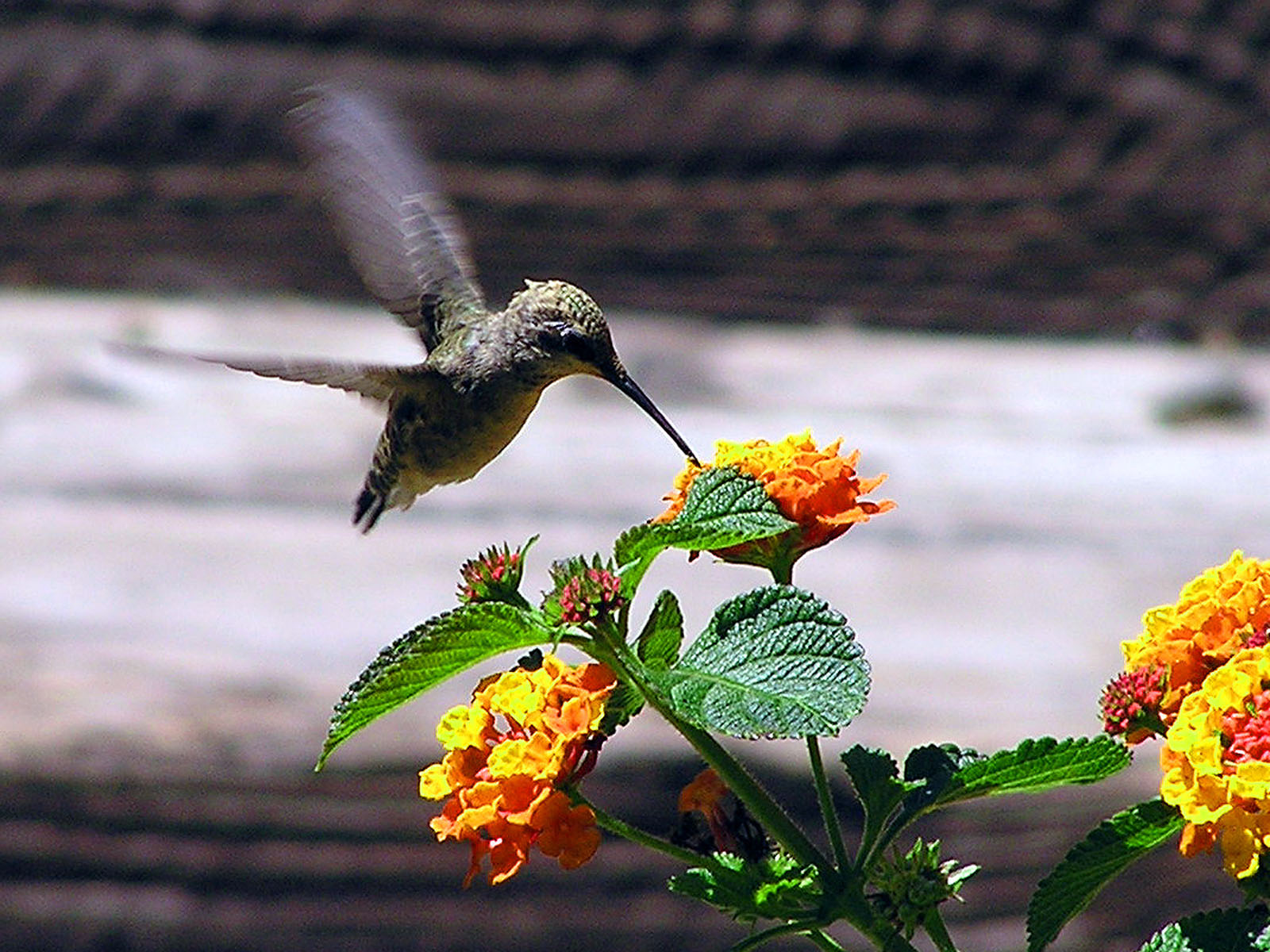
Hummingbird

file000858060241

Hummingbird

The thought makes
trembling so

incomplete, a consequence
of knowledge attained. I look out

and see leaves flitting in the dusk,
the air closing around them

like the mouth of an old well
swallowing light. Such

hunger we find difficult
to comprehend. The wind shivers

through our lives and repeats itself,
though differently each time.

Every departure is a return.

“Hummingbird” made it’s first appearance on the blog in December 2014. I wrote it in the 1980s, probably between 1987-1989.

IMG_6039

Endurance, 1946

file000428116082

Endurance, 1946

Unaware of the day’s movements, she paints her
reply to the bracelet of light flaring above

the horizon. Tomorrow’s edict is gather,
as in retrieving a sister’s bones in black

rain, reassembling in thought
a smile that could not endure despite

its beauty. I seek a place
of nourishment and find empty bowls.

What is the symbol for peace, for planet?
How do we relinquish the incinerated voice?

Under the vault of ribs lie exiled words, more
bones, and beneath them, relentless darkness.

And whose bodies mingle in this earth?
Whose tongue withers from disuse?

The eight muscles react to separate stimuli,
four to change shape and four to alter position.

Turning, she places the brush on the sill
and opens the window to the breeze.

Exit the light, exit all prayer. Ten strokes
form breath. She does not taste the wind.

Atomic Bomb Dome_03

“Endurance, 1946” first appeared here in January 2015, and was published in Fahmidan Journal in November 2020. Thank you editors Ranna Kisswani and Anthony R. Salandy for taking this piece.


Which Poet, Which Beer (2)

pint

Tastes change. In my younger years I preferred sweeter brown ales, eschewed hoppier, bitter beverages, and seldom branched out. Nowadays, I lean heavily towards the bitter, and when the opportunity presents itself, feel compelled to sample the unknown. Thus when I spied Alaskan Brewing Company’s Alaskan Jalapeño Imperial IPA on tap, I had no choice but to order a pint. We may not normally place the words Alaska and jalapeño alongside each other, but if this Imperial IPA is any indication, perhaps we should. With an odor of hops and capsicum, it felt smooth on the tongue, a little malty, even earthy. Not  complex at the outset, but subtle, defying definition and developing over time, in the way a good poem develops. My only complaint would be the lack of heat. But hey, I’m from Texas, and we do jalapeños. This is a beer of multiple cultures, a blend of distinct identities. I think of Joan Naviyuk Kane, and her first book, The Cormorant Hunter’s Wife, in which she writes in “Antistrophic”

Instead of out, I am in,
Trying at the old habit of imperfect definition
As well as the less familiar,
Between falling gold

Kane’s narrative, her mythology and landscape, are not mine, yet they invite me in and envelop my senses, allowing synthesis, acceptance, to occur.

But sometimes I crave the unadorned. The Lone Pint Brewery’s Yellowrose IPA, a single malt, single hop concoction, startled me. Surprisingly mellow in the mouth, it imparts grapefruit and perhaps pineapple with a hint of something I can’t readily identify. Strong yet delicate, infinitely interesting, Yellowrose is most definitely a celebration of simplicity and craft – a few ingredients combined to create magic. Which may also describe Christina Davis’s book An Ethic. Spare in nature, her work transcends the limits of language, the borders of the page. Her poems blossom anew with each reading, and the farther away I move from them, the more I long to return:

”All Those That Wander,” in its entirety:

After the ark survived the Flood,
it was taken apart
to be made into cages.

This is the nature of religion.

Of course my curiosity leads me down other paths, too. Infamous Brewing Company’s Sweep the Leg peanut butter stout pours with a small head, and tastes of rich malts and coffee, with a little cocoa and, of course, subtle peanut tones. An opaque, dark brown or black, with minimal carbonation, exuding stillness, it isn’t quite what I anticipated, with the peanut butter flavor a tad muted. But the mouthfeel is spot on, and the aftertaste lingers, leaving me requesting more of this unlikely combination, and reminding me of Charles Simic’s  Dime-Store Alchemy: The Art of Joseph Cornell, in which he imparts, through prose poems, the experience of viewing Cornell’s enigmatic art. Nothing is quite as you expect it should or could be, yet you go on, somehow understanding. He writes in “Secret Toy”:

In a secret room in a secret house his secret toy sits
listening to its own stillness.

Simic offers openings into Cornell’s art, explains the unexplainable without explanation. I stare into the pint of Sweep the Leg, and find my own stillness. I read Simic and find another. This is what I seek in poetry, what I want in good beer. I have found it.
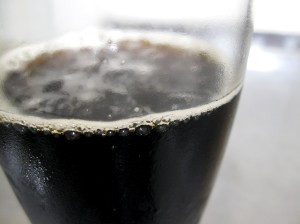
 

blackbeer

“Which Poets, Which Beer (2)” has appeared here several times. You will be relieved to hear that I am still conducting research in these matters.

Not Blame Your Pleasure

bike


Not Blame Your Pleasure

Because vision limits options, I close my eyes.

Becoming urges patience.

The morning after I didn’t die, I took breakfast in bed.

Arrival stamps the difference between waiting and choice.

Expectation, too, extends its squeeze, rendering sleep impossible.

I ride the bike and go nowhere, or walk steadily, covering the same ground.

Which will claim me first? An occlusion, gravity or unchecked growth?

Anticipation replaces one sigh with another: I have three falls from two roofs.

A friend has named me executor of his estate, and now the race is on.

The path to the void seems straight only near its end.

My ashes will one day soil someone’s morning.


ladder

“Not Blame Your Pleasure” first appeared here in November 2015.


To the Lovely Green Beetles Who Carried My Notes into the Afternoon


To the Lovely Green Beetles Who Carried My Notes into the Afternoon

Such beauty should not be bound,
thus I tied loose knots,

knowing you would slip free
and shed my words

as they were meant,
across browned lawns,

just over the cedar fence
or at the curb’s edge,

never to be assembled,
and better for it.


* * *

This appeared in riverSedge Volume 29, Issue 1, released in October 2016, and is included in my chapbook, From Every Moment a Second. I first encountered riverSedge in 1983, and vowed that one day my poetry would be published in this journal. It took a while…

Landscape with Jar


Landscape with Jar
(after Wallace Stevens)

What vanishes more readily than the breakable
and transparent? Not here, not now, it says,

never voluble in the morning. I have work.
The horizon exists simply in perception.

Try to touch it – the hill meets the sky
only from afar, offering discordance

up close, no measurement possible.
And among the trees and vines, a glimmer

of spite, twisted open. Moving closer, we see
through. We see rocks, a bird. We see air.


“Landscape with Jar” was first published in Birch Gang Review in July 2017.


Flowers

IMG_5893


Flowers

How they share our
desires, shape
our days.

Passion to hope,
fingertips to
lips. Some bud

easily, others
struggle. A little
water, light, a kind

voice. Sometimes so
little achieves
so much. Yesterday’s

sunflower droops on
the sill. Today’s promise
arrives with rain.


file4121261057835


Letter to Hamrick from the Century of the Invalidated


Letter to Hamrick from the Century of the Invalidated

Dear Charlotte: The sun here winces daily, stumbles
across morning before smudging gray like an old slate
scarred with decades of chalk dust and erased messages.
I’m hunting work, and there are days when it feels
as if past experiences have been rubbed out, or maybe
I can’t make myself slog through the powdery white
crusted blend of ennui and discounting youth. Those years
spent chiseling out budgets and manipulating spreadsheets
have wrought zilch. Even the service seeking writing
tutors shot down my application. Seems SAT scores
from the 70s can’t be validated, and how else might they
measure one’s qualifications. But somehow I still exhale air
cleaner and more carefree than any I’ve taken in since
the century rolled over. Funny how that is. The more shade
they throw my way, the stronger I feel. Seated at wobbly
tables by restrooms in near-empty restaurants. Chipped at,
ignored, reviled. Questions answered with curled lip and
haughty tone. Laughing, I relish it all. L* the kitten
just launched herself at the table, scattering across the fake
wood floor mail and bits of poetry which might be
hammered into a collage of shady loan offers, crappy
lines and massage therapy ads, if my talents leaned
in that direction. But scooping out the litter box seems
my crowning achievement lately. I wonder how a creature
so pure and new to the world produces something so
vile, without intent? I have other questions, too, but will
leave them for a subsequent whine-fest, which I’ll scribble
in smoke or invisible ink on another long-shadowed
day. Until then I’ll dream of southern winds and coffee
and beignets under bright skies in a life I should have
lived. If only. Your virtual and faithful friend, B*.

“Letter to Hamrick from the Century of the Invalidated” first appeared in January 2021 in the inaugural issue of Book of Matches Thank you, editors Kelli Allen and Nicholas Christian, for taking this piece.

Katharsis

OLYMPUS DIGITAL CAMERA

KATHARSIS

The questions, as always: which rocks to ignore, who will
place them, and how to defy the laws of mathematics.

Note: you will create two separate walls to build one.
You will measure length and depth. You will weigh consequence.

Dig a shallow trench, and set your first two foundation stones
at a slight angle, high points on the outside, low ends meeting

in the middle. Count your failures and multiply them by 100.
Let gravity share the burden, then discard every one. Take

care in selecting your stones. Scorpions lurk in the dark,
underneath. Wear heavy gloves. Use leverage. Seek balance.

Avoid the smooth and rounded, as they too readily relinquish
their footing. Select hard-angled, rough pieces. Accept

faults, and work with them. Stack carefully — the two walls
should lean inward, touching, each bearing the other’s

weight. Work alone, but think to the future, with strength in
mind. Be deliberate. One stone, followed by another. Repeat.

pen

“Katharsis” was drafted during the August 2015 Tupelo Press 30/30 Project. Many thanks to Plain Jane who sponsored and provided the title.