It may interest you to know that I have, in some small way, aided and abetted a poetry-writing bot. It’s fascinating to read how the bot learned to write poetry.
To a Poem is a Bott the Stranger
14

It may interest you to know that I have, in some small way, aided and abetted a poetry-writing bot. It’s fascinating to read how the bot learned to write poetry.
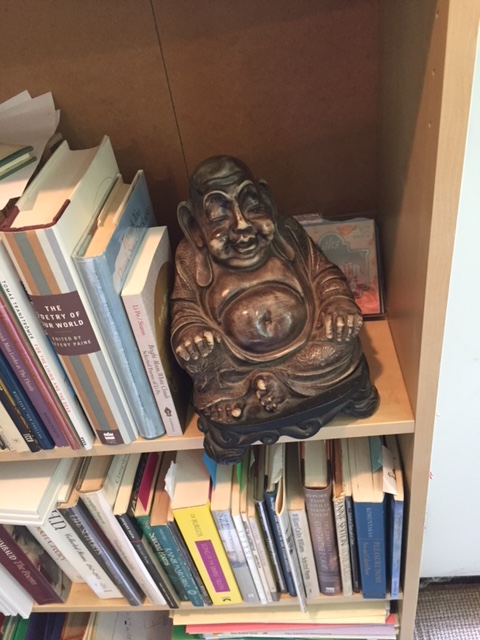
Buddha’s Not Talking
He looks out from the shelf while I consider
manure, sharp knives and the hagfish’s second
heart, or whether odors differ in texture when a dog
retraces his steps through the park, and do they really
lose themselves or just quickly shed their pasts,
forever moving towards now. Sometimes I say hello,
but truthfully we seldom interact, unless I bump his
shoulder when retrieving one of the books leaning
against him, and then it’s only a quick “sorry” on my
part, and a stare on his, perhaps a slight nod if
I’ve not yet had coffee. I fear I’ll never grasp
the difference in having and being, that my true
nature has splattered on a trail and the dogs will
sniff it and lift their legs in acknowledgment,
or perhaps acceptance of the infinite, with wisdom
far beyond my reach, before moving on to disquisitions
about soil and fragrance and the need to justify art
with decimal points. Yesterday I roasted chicken, moved
books, sipped ale. Today I’ll sweep, discard papers and
wonder if I’ll become what I think, whether reincarnation
will be cruel or kind. Either way, Buddha’s not talking.
* * *
“Buddha’s Not Talking” first appeared in July 2017 at Blue Bonnet Review.
With gratitude to editor Cristina Del Canto for taking this piece.

Memorial Day, 2015
I turn away from the sun, and drink.
Every window is dark.
No one hears my song, not even the guitar.
When the rain pauses the grackle rests on the cedar picket.
Etymology: from Latin memorialis, of or belonging to memory,
leading to home and family, their connotations.
Remembering is simple, she says. But forgetting…
The coral snake slips by, unseen.
Nothing lives in my shadow.
“Memorial Day, 2015” first appeared at Picaroon Poetry in July 2017. Many thanks to editor Kate Garrett, for taking this piece.


My poem “Sometimes Love is a Dry Gutter” is featured at Vox Populi. I’m grateful to editor Michael Sims for taking this piece.
Biography (Cento)
I am becoming
one of the old
men, but you,
you are earth.
Where is the moment
that lingers,
the static of lost
voices and the feel
of the cleft in the bark.
Ask me anything.
Why am I
grown so cold?
Have you been here?
Thinking
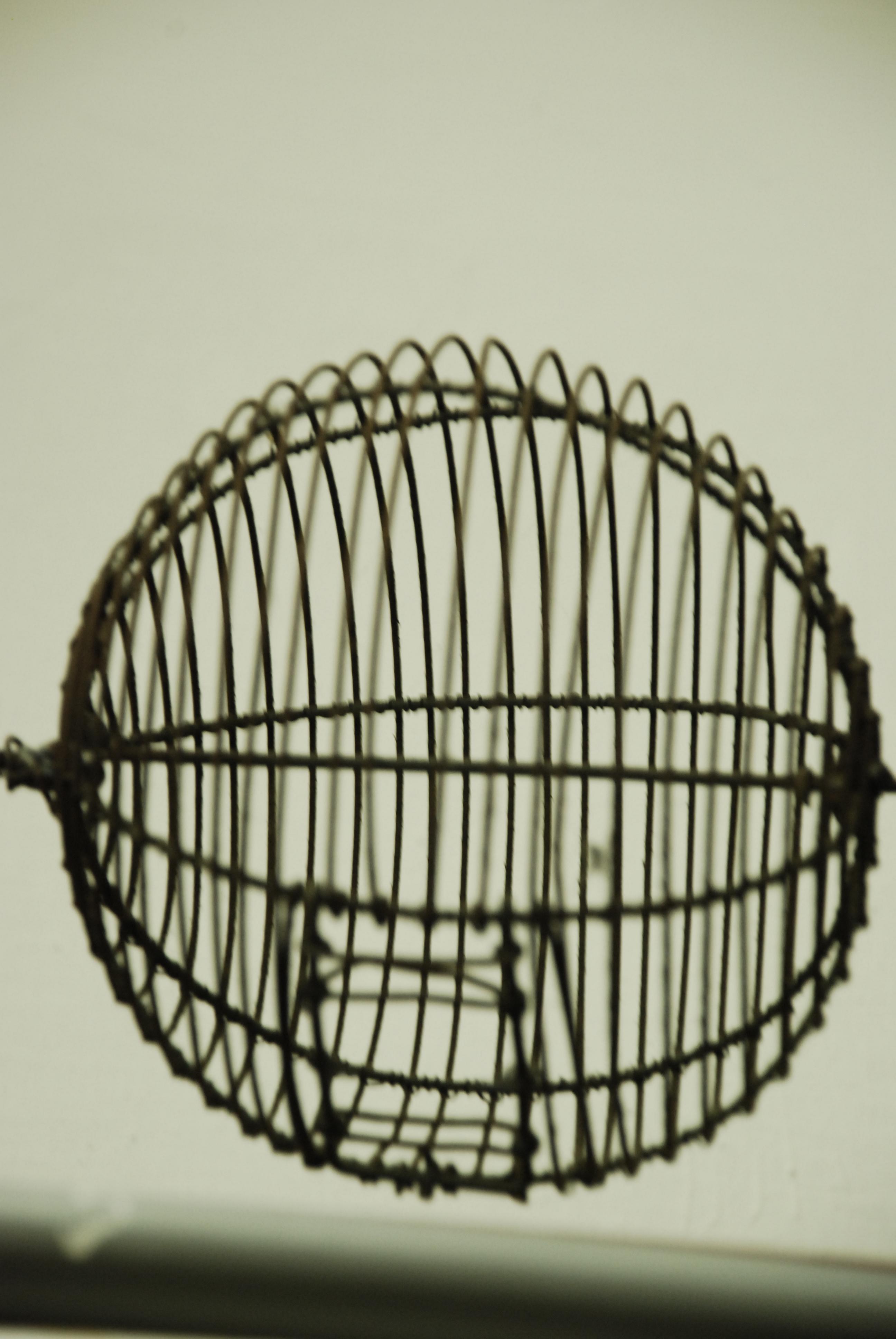
is wind in a cage;
it does not say anything.
* * *
Credits:
James Wright, Cesare Pavese, Ruth Ellen Kocher, HD, Eduardo C. Corral,
Adelaide Crapsey, Denise Levertov, Blaga Dimitrova, Jacques Roubaud,
* * *
A cento is composed of lines from poems by other poets.
For further information and examples of the form, you might peruse the Academy of American Poets site: http://www.poets.org/poetsorg/text/poetic-form-cento

This first appeared here in September 2016.

Cantilever
1
Night skitters over the mounds,
avoiding the blue flowers
She bears the horizon’s gold.
2
No one stands alone.
Our sky is of earth, dark
soil packed with the living.
3
I do not seek mercy.
The cliff frog chirps its song
and the fog closes in.
4
Suspended, hope
wraps around her,
one foot on the ground.

Mole (Pipian)
Always the search beneath texture,
layers captured in subsidence,
the drift to interpretation: a mixture, meaning
sauce, and its journey from seed to mouth,
the careful blend of herb and fire,
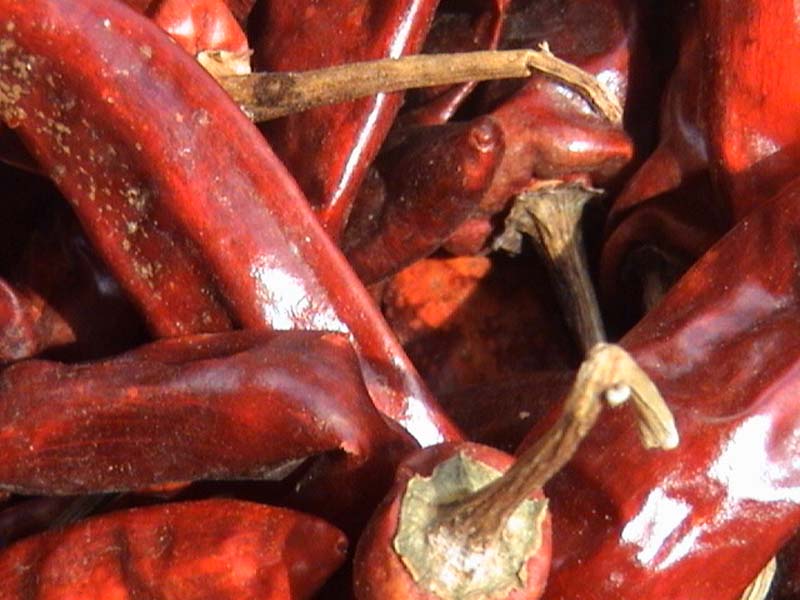
dismembered chiles,
the crushed and scorched fruit
rendered to preserve for consumption
the most tender qualities
and their enhancement towards art.
* * *
This is of course not about the mammal with the subterranean lifestyle, but rather a version of the Mexican sauce, pronounced “mo-lay,” which includes, as a main ingredient, pumpkin seeds. It takes a while to put together, but is well worth the effort. “Mole (Pipian)” last appeared here in September 2016.

Scarecrow Sings the High Lonesome
Nothing about me shines or sparkles. If asked,
I would place myself among the discarded —
remnant cloth and straw, worn, inedible,
useless, if not for packaging intended to
convey a certain message, which I of course
have subverted to “Welcome, corvids!” Even
my voice lies stranded in the refuse, silent
yet harmonious, clear yet strangled, whole
and unheard, dispersed, like tiny drops of
vapor listing above the ocean’s swell, enduring
gray skies and gulls and those solemn rocks
bearing their weight against the white crush.
Why do I persist? What tethers a shadow
to its body? How do we hear by implication
what isn’t there? Bill Monroe hammered
his mandolin, chopping chords, muting,
droning, banging out incomplete minors
to expectant ears, constructing more than
a ladder of notes climbing past the rafters
into the smoky sky. What I sing is not
heard but implied: the high lonesome, blue
and old-time, repealed. Crushed limestone
underfoot. Stolen names, borrowed sounds.
Dark words subsumed by light, yellowed,
whitened, faded to obscurity, to obscenity.
“Scarecrow Sings the High Lonesome” first appeared in Crannóg, in June 2017.

Memoir (Cento)
Your hands touched
everything. Will you
be a fountain
or a sea?
A woman sleeps next to me
on the earth. Now
nothing else keeps my eyes
in the cloud.
Each rock is news.
* * *
A cento is composed of lines from poems by other
poets. This cento originated from pieces in:
77 Poems, Alberto de Lacerda
Because the Sea is Black, Blaga Dimitrova
Body Rags, Galway Kinnell
Song of the Simple Truth, Julia de Burgos
Love Poems, Anne Sexton
For further information and examples of the form, you might peruse the Academy of American Poets site: http://www.poets.org/poetsorg/text/poetic-form-cento

This last appeared on the blog in May 2016.

Shadow’s Tale
If I call,
will you
reply?
Questions
left unwritten
shape
themselves
like words
we see
but don’t
read. Signs
fade then
reappear,
and the oaks
droop
in the still
heat.
No rain
again. If
you call,
will I
reply?

“Shadow’s Tale” first appeared here in June 2015.

