Poet’s Pantry

file3911233869642

In my sliver of the world, poetry and cooking share many qualities. When I step into the kitchen, I often have only a vaporous notion of what’s for dinner. A hankering for roasted poblano peppers, the need to use a protein languishing in the refrigerator, the memory of an herbal breeze wafting down a terraced hill near Lago d’Averno, Hell’s entrance, according to Virgil, or even a single intriguing word, may spark what comes next. But the success of what follows depends upon the ingredients at hand, on how we’ve stocked the pantry. Good products beget better results. Let’s take my desire for roasted poblanos. What to do with them? Poking around, I uncover an opened package of goat cheese, a bit of grated grana padano and some creme fraiche, and I immediately think pasta! Looking further I spot arugula, a lemon, a handful of pecans, some cherry tomatoes. Dinner: Pappardelle with a roasted poblano and goat cheese sauce, garnished with toasted pecans, served with an arugula and cherry tomato salad dressed with a lemon vinaigrette. Simple, when you’ve stocked a solid base of quality components.

My writing employs a similar process. Anything – a vague sense of uneasiness, a particular word, the sunlight slanting through the unfortunate dove’s imprint on my window, articles or books I’ve read or perused on a myriad of subjects – may launch a poem. But what truly makes the poem, what bolsters, fills and completes, what ignites and catapults it arcing into the firmament? The pantry’s contents.

Everyone’s needs differ, and I wouldn’t presume to inflict my peculiar sensibilities on anyone, but if you cracked open my burgeoning poetry pantry’s door, you’d certainly unearth dictionaries and a thesaurus, fallen stars, books on etymology and language, curiosity, a guitar or mandolin, at least one window (sometimes partially open), conversations floating in the ether, various empty frames, wind, dog biscuits and dirty socks, a walking stick, sunlight and shadows, more books on such subjects as ancient navigation, the history of numbers, the periodic table, alchemy and olives. You might also spy reams of paper, unspoken words, coffee cups, a scorpion or two, scrawled notes on index cards, wandering musical notes, a pipe wrench, wood ear mushrooms and salvaged fragments of writing, failed ideas moldering in clumps on the floor, a few craft beers and empty wine bottles, a chain saw, and most important of all, a bucketful of patience.

(I cannot over-emphasize the bucket’s contents…)

This is just to say (no, I didn’t eat the plums) that the best equipped poets stock their pantries with the world and all its questions, with logic, with faith, persistence, emotion, science, art, romance and yes, patience. Line your kit with every tool you can grasp or imagine. Keep adding to it. Read deeply. Listen. Breathe. Listen again. Converse. Look outward. Further, past the trees, around the bend and beyond the horizon’s curve, where the unknown lurks. Look again. Don’t stop. Continue.

And if after all this you’re wondering what basks in my kitchen pantry:

photo(13)

This last appeared here in July  2017.

Patience


Patience

How time collapses
even the longest
held dream – that

trip to Italy
or the stilted
studio to the

barn’s rear, or
even the first
book and its

publication to early
acclaim by age
forty, fifty, sixty…

Truchas (Elevation 8,000 Feet)

trout

Truchas (Elevation 8,000 Feet)

Climbing
these stairs,

I resemble
a trout

flopping
in dry air,

another gasp
and a ratcheting

heart rate, up,
out, and through

that opening,
into the pale glow.

steep

I spent a glorious four days in New Mexico, in the company of poets. The Tupelo Press Truchas Conference outdid itself again.

Tell it Slant: How to Write a Wise Poem, essay by Camille Dungy

OLYMPUS DIGITAL CAMERA

Few essays on writing poetry grab me by the collar, slam me against the wall, and say “Listen, dammit!” But this one did.

Camille Dungy’s words sear through the fog. She tells it slant. She tells it true. She explains how some masters have done it. If you’ve not read her poetry, seek it out. You’re in for a treat. If you have the good fortune to attend a lecture or reading by her, do so. She’s energetic, wise and kind. She knows.

http://www.poetryfoundation.org/article/247926

Last posted in April 2017.

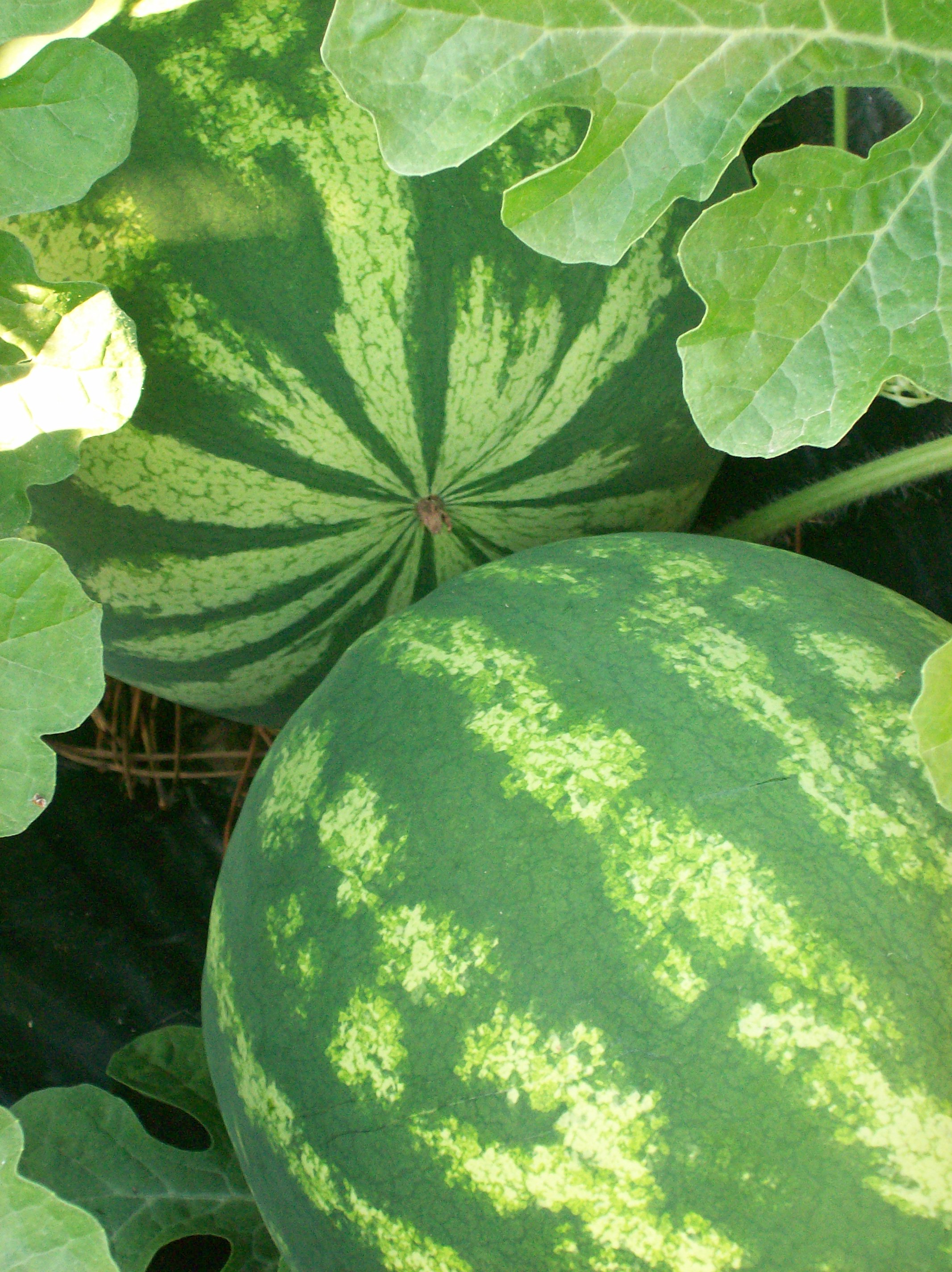
A Herd of Watermelon

A Herd of Watermelon

My work tools include rubber boots, a hydraulic
jack and snake tongs. Prevention over cure, always.

A helicopter’s shadow crosses the yard.
I sweat in cold weather; today even the shade burns.

Ants swarm a dead bat on the gravel.
No keys for these locks, no fire for that place.

Stepping inside, the city welcomes me.
We drain coffers for this grass, and hope for rain.

This morning two deer jumped the east fence while I
updated software. The significance eludes us.

A dream of watermelons rising from their viny beds,
lumbering through the field to the creek. Rebellion!

How many have sat at this desk before me, plotting
murders and rumors or rhymes. Die, mosquito. Die!

“A Herd of Watermelon” was drafted during the August 2016 Tupelo Press 30-30 Challenge. Thank you to Plain Jane for sponsoring the poem and providing the title.

Parting from Wang Wei (after Meng Haoran)

P1010508


Parting from Wang Wei (after Meng Haoran)

These quiet days are ending
and now I must leave.

I miss my home’s fragrant grasses
but will grieve at parting – we’ve

eased each other’s burdens on this road.
True friends are scarce in life.

I should just stay there alone, forever
behind the closed gate.

* * *

“Parting from Wang Wei” is included in my micro-chapbook, No Eye But The Moon’s, available via free download at Origami Poems Project.

The transliteration on Chinese-poems.com reads:

Quiet end what wait
Day day must go return
Wish seek fragrant grass go
Grieve with old friend separated
On road who mutual help
Understanding friend life this scarce
Only should observe solitude
Again close native area door

file5971307479422

Prentiss Moore, 1947-1998

photo(22)

Prentiss Moore, 1947-1998

I’d been so busy with the bookstore that we’d not been in touch. I always thought we’d have time for that breakfast, for those drinks, for that laughter. I heard about his death only minutes before the memorial gathering was to begin. Stunned, and dressed in my standard bookseller’s uniform of jeans and wrinkled shirt, unshaven, I felt inadequate to the occasion, betrayed, embarrassed. The clear sky pressed uncomfortably close. How dare he die! Why did I not know? The ground shifted underfoot and I walked like a man underwater. I swatted at a buzzing wasp, not caring if it retaliated. And for the first time I realized that I, too, was dying. We all were. We all are. The gathering was lovely, memorable. Friends, family, acquaintances and even strangers spoke. I could not.

I once said that I hoped to become half the poet that Prentiss was. I may finally be approaching that elusive mark, but I’m still angry. How dare he die!

To read one of his most memorable poems, please look here:

And my poem for Prentiss can be found on this blog:

Earth’s Damp Mound

Yesenin

image

Yesenin

Respite, involuntary and gentle
circling one’s
collar, a touch barely felt, renewed.

Or, the other turns,
belying expression and the halted voice.

The recursive window, closing.
A final poem in blood.

And beyond the glass? The face behind
the indifferent mask
designs its own

smile, risking everything
as the chair’s leg tilts,

inertia become constriction,
the taut lapse begun.

* * *

A fascinating poet, Sergei Yesenin died nearly 90 years ago. You might check out his bio on wikipedia.

image

Karl Taro Greenfield on Being a ‘Minor’ Writer

In this essay on Lithub, Karl Taro Greenfield notes that not every writer is destined for greatness.

Jack Underwood’s Essay “On Poetry and Uncertain Subjects”

In his essay “On Poetry and Uncertain Subjects” in the May 2018 issue of Poetry, Jack Underwood discusses uncertainty and “the empathetic negotiation of meaning between poets and readers.” No wonder I so often feel uneasy yet somehow comforted before, after, and while writing…