Love, Scattered (Cento)

image


Love, Scattered (Cento)

I cull and offer this and this,
and these last definite whorls

or later star or flower, such
rare dark in another world,

outdistancing us, madness
upon madness, the crest

and hollow, the lift and fall,
ah drift, so soft, so light,

where rollers shot with blue
cut under deeper blue as the

tide slackens when the roar of
a dropped wave breaks into it,

and under and under, this
is clear—soft kisses like bright

flowers— why do you dart and
pulse till all the dark is home?

I am scattered in its whirl.


* * *

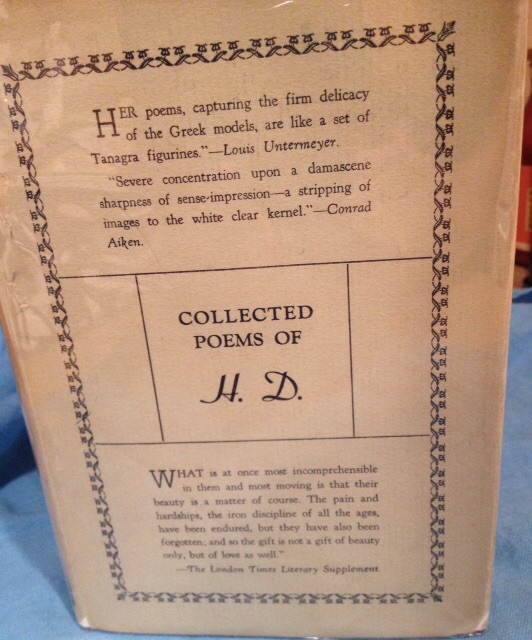
This cento is composed exclusively of lines taken from fifteen pages in the Collected Poems of H.D., 6th printing, 1945. Hilda Doolittle is a fascinating figure in 20th century American poetry. You might look at the Poetry Foundation’s biography for further information:

http://www.poetryfoundation.org/bio/h-d

image


In the Key of Your Hour

blueguitar


In the Key of Your Hour 

The words I sing are draped in silence,
wedged between notes yet flowing forward.

Stop-time presents the illusion of interrupted tempo and meter.

Perception informs our spirits.

The old guitar hangs on the wall and seldom speaks,
preferring instead to lightly hum when the wind blows just so.

The conceit of two right hands. A slamming door.

Music enters my room by subterfuge, but exits boldly.

If simultaneity is relative, how do we assign primacy
to an overtone? One voice, one whole.

We must respond to our bodies. In kind, with trust.

I ask you to listen without considering the requisite commitment.

The broken circle represents common time replete with imperfections,
linking the measurable to the internal well.

Gather what comes, no matter the source.

Mark time and repeat: harmonics, the quivering string. Breath.

* * *

“In the Key of Your Hour” appeared here in September 2016, and is also in my chapbook-length work, The Circumference of Other, which is included in IDES: A Collection of Poetry Chapbooks, published by Silver Birch Press in 2015.

OLYMPUS DIGITAL CAMERA


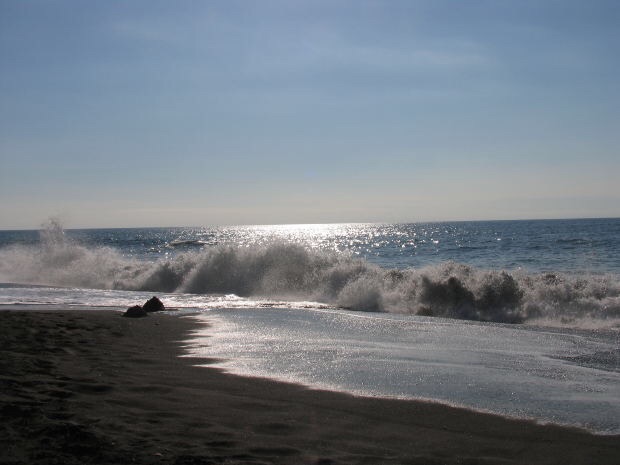
Saltwater


Saltwater

What if you close your eyes
and your throat relinquishes

the morning’s bright
fingers, freed from bruises.

Suppose that particular night
never happened, the way

a wave crashing ashore
empties itself and trickles

back in separate communities,
mingling yet aloof, a

diminishing cortege. What
is the question? Take this

spoon. Fill it with saltwater.
Upend it into the pail. Observe.


“Saltwater” was first published in Nine Muses Poetry in May 2018.


Happy Circuitry

circuit


Happy Circuitry

                        for Margaret Rhee

The body’s landscape defines its genealogy: my father was a board,
my mother, an integrated circuit, my great-grandmother, an abacus,
and her progenitors, tally sticks. In the third century the artificer
Yan Shi presented a moving human-shaped figure to his king, and
in 1206 Al-Jazari’s automaton band played to astonished audiences.
Nearly 300 years later Da Vinci designed a mechanical knight, and
four centuries after that Tesla demonstrated radio-control. Twenty-two
motors power my left hand; Asimov coined the term robotics” in 1941.
Pneumatic tubes line my right. Linear actuators and muscle wire,
nanotubes and tactile sensors, shape my purpose, while three brains
spread the workload. If emotion = cognition + physiology, what do I
lack? I think, therefore I conduct, process, route and direct. Though
I never eat, I chew and crunch, take in, put out, deliver, digest. Life is
a calculation. Death, a sum. No heart swells my chest, yet my circuits
yearn for something undefined. Observe the blinking lights, listen for
the faint whir of cooling fans. I bear no lips or tongue, but taste more
deeply than you. Algorithms mean never having to say you’re sorry.


* * *

This piece was originally drafted during the August 2015 Tupelo Press 30-30 Challenge, and is dedicated to Margaret Rhee, whose book Radio Heart; Or, How Robots Fall Out of Love inspired me. Thanks Kris, for sponsoring and providing the title!

The poem was published in October 2017 by Figroot Press.

Heroes

splash


Heroes

And the rain, again, takes up our day,
folds it into threes, and watches
as the world wraps up its gift,
first at the edges, then centered,
with more confidence and force
than justified. Who will forget
the hollow horse and its stifled
coughs, the stench of men too
long unbathed and drenched
in fear. Or the small girl running
naked, arms outstretched, skin
peeling, her life become a litany
of pain embroidered across
the unfeeling sky. Do not thank me
for your freedom, the mortgage
and its tax breaks, your designer
shoes. We didn’t bleed for you.


“Heroes” first appeared in Blue Fifth Review. Many thanks to editor Sam Rasnake for accepting this piece.


Vesuvius


Vesuvius

When the earth shrugs,
some warnings are better
heeded. A little

smoke, some ash.
A knife point held to the chin.

Why listen at all?
The man in the big house hides in its vastness.
Surrounded, he walks alone.
People speak, but he hears only himself.

Meanwhile,
the mountain
belches

and the birds fly north
seeking firm ground
upon which to land.


* * *

“Vesuvius” was first published in The Big Windows Review in December 2017. I’m grateful to editor Thomas Zimmerman for accepting this piece.


Meditation in White

lily


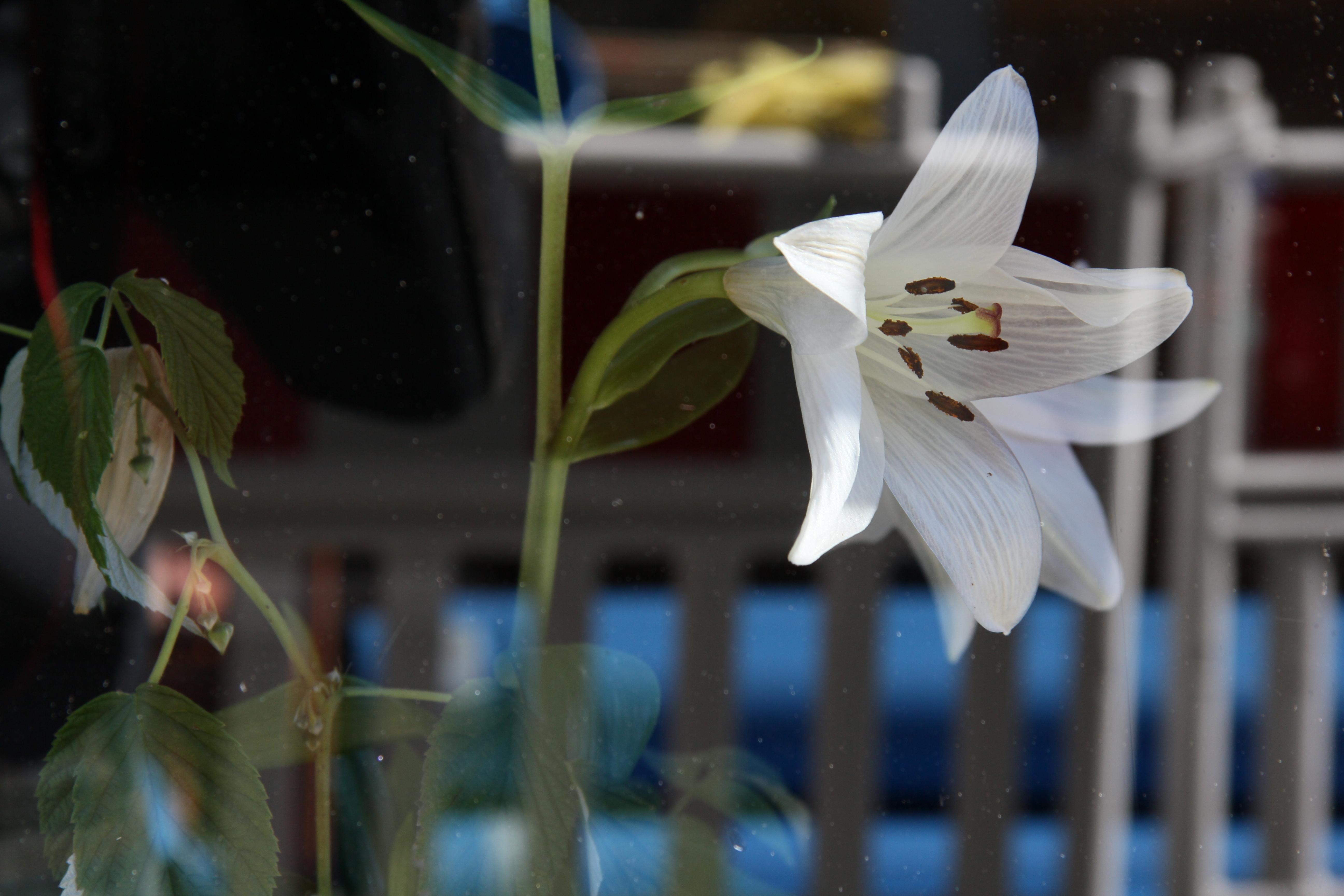
Meditation in White (Lilies)

Clouds pass my high window quickly, abandoning the blue.
Indefinite mass, indeterminate, impersonal

as only intimates may know.
Though you lay there, nothing remained in the bed.

Which is the blank page’s gift, the monotone
or a suggestion of mist and stripped bones.

The nurse marked the passage with pen on paper.
Renewal, departure. A rising.

I accept the ash of suffering
as I accept our destination, the morning

and its offerings, with you in synthesis,
complete and empty, shaded in contrast,

wilting, as another opens. Laughter eases the way.


***

page


This was first published in Shadowtrain, and made its first appearance here in March 2016.

Poems Up at ISACOUSTIC*


I have four poems up at ISACOUSTIC*. Many thanks to editor Barton Smock for his tireless efforts to promote poetry and poets


Elegy


Elegy  

1. Adrift

I count more graves than people in my sleep,
but nothing turns more quickly

than an empty wind
in a place whose memory has died.

And all manner of departure: What you have left is you
without you
. As if it could be different, as if decades

could withdraw and draft a blueprint of motive and action,
returning them, returning you, to that point

across the sea where the ship has not yet arrived.
If you ask she will say it does not matter. If you ask.


2. Parentheses

To be within, yet without, as in the unuttered phrase.

It is time the stone made an effort to flower,

to render the void clear and resolute, the diction of
separation divided by decades and your ocean.

The language of silence, drawn near.


3. From the Other Side

Sometime becomes never and steps around a desolate corner,
and all we have left is our field

awash in stone, remnants of the unspoken.
I have no memory of you. Nor you, of me,

but the strands do not lie, and unraveled,
expose the imperfect blends

that compose my love. A leaky roof. The last word.
A pity to put up at all

but there is rain.


4. Another Night

Of all the hours which were the longest?
The earth trembled around me

and I lay still, bearing witness to
the uncertain malice of its

shrug, shoulders brought to
fore, then returned,

and finally, released. If,
after this half-century, words

could reform in your mouth,
what denial would issue?

Ashes, washing ashore.


5. Bridge

And seeing you only as the shadow of an

ending whose voice lies
in an uncommon past, how
may we recognize the very shape we share?

The bridge’s fate is loneliness,
knowing that one side

decries the other’s
call, that separation affords new light:

they are between
comfort and space, between words and a smile,

between nothingness and sorrow,
two points, beginning and end,

reaching, in opposition, towards each other.


Notes:

“What you have left is you without you” is from Edmond Jabes’s “At the Threshold of the Book” in The Book of Questions: Volume I, translated by Rosemary Waldrop.

“It is time the stone made an effort to flower” is from Paul Celan’s poem Corona,” included in Poems of Paul Celan translated by Michael Hamburger.

“A pity to put up at all but there is rain” is from Basho’s Back Roads to Far Towns, translated by Cid Corman and Kamake Susumu.

Albert Huffsticklers poem “Bridges” which appeared in The Balcones Review in 1987, begins “They are between…”

“Elegy” first appeared on Underfoot Poetry in October 2017.


To the Light Entering the Shack One December Evening (with recording)


To the Light Entering the Shack One December Evening

No prayers exit here, nothing
limits you. I never knew
before.

The pear tree’s ghost shudders.

Water pools in the depression of its absence.

For years I have wandered from shadow to
source, longing. Now, at rest,
you come to me and fear
evaporates. I would like to count
the smallest distraction.
I would like to disturb.

You are the name
I whisper
to clouds.

Will you leave if I open the door?

A carnival germinates in my body.

You are not death, but its closest friend.

Darkness parts, folds around you.

I close my eyes and observe.

* * *

“To the Light Entering the Shack One December Evening” first appeared in Shantih in December 2016, and is included in my chapbook, From Every Moment a Second available  through Finishing Line Press and Amazon.com.