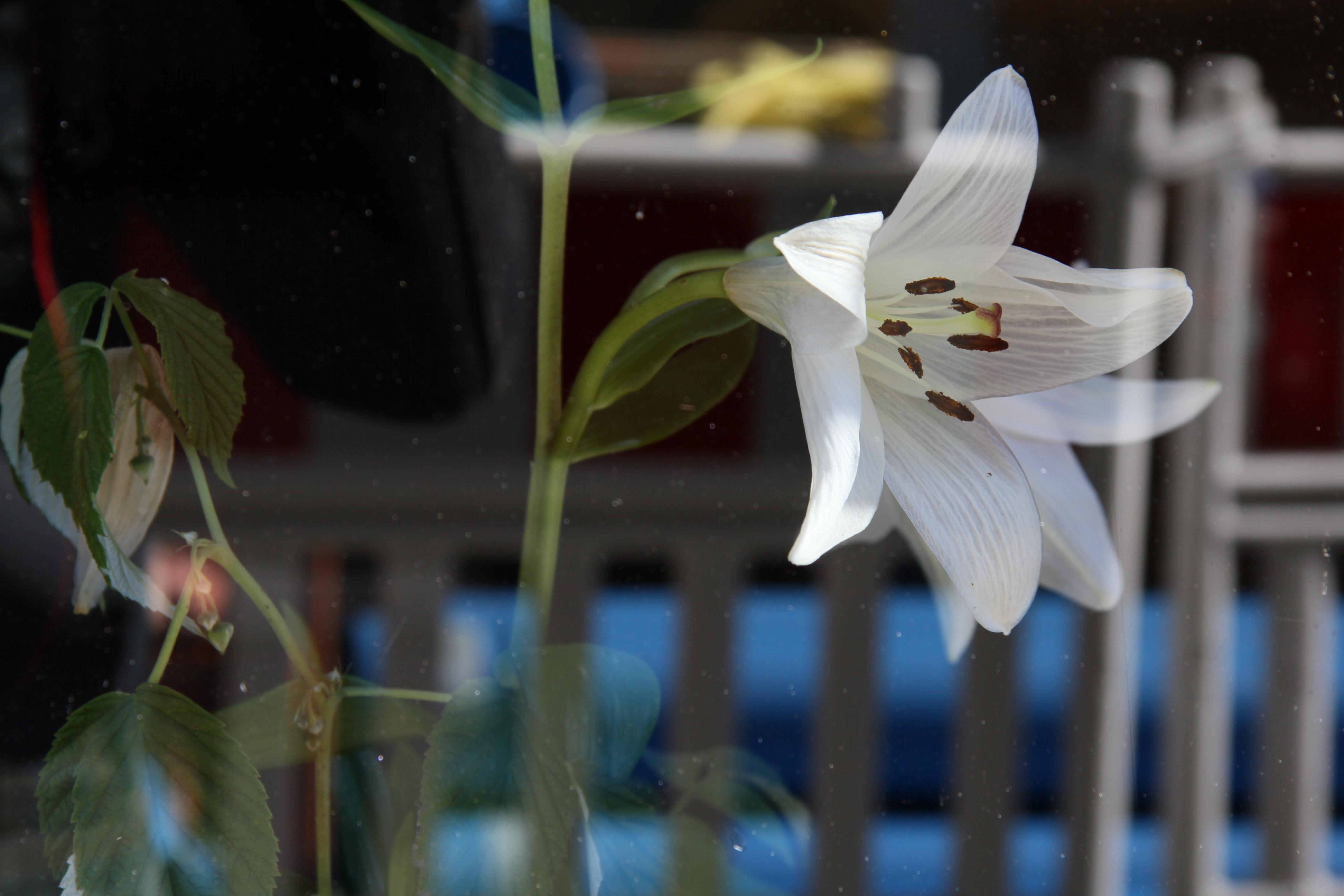
Meditation in White

lily

Meditation in White (Lilies)

Clouds pass my high window quickly, abandoning the blue.
Indefinite mass, indeterminate, impersonal

as only intimates may know.
Though you lay there, nothing remained in the bed.

Which is the blank page’s gift, the monotone
or a suggestion of mist and stripped bones.

The nurse marked the passage with pen on paper.
Renewal, departure. A rising.

I accept the ash of suffering
as I accept our destination, the morning

and its offerings, with you in synthesis,
complete and empty, shaded in contrast,

wilting, as another opens. Laughter eases the way.

***

page

This was first published in Shadowtrain, and made its first appearance here in March 2016.

ENTER THE NY TIMES TRUMP POETRY CONTEST

This could be fun!

tribrach's avatarTribrach: for those who love (or would like to love) poetry

giphy.gif

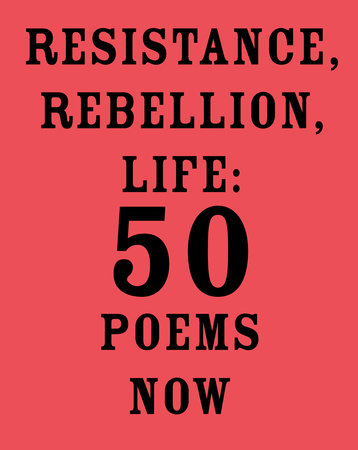
Nicholas Kristof held a Trump Poetry Contest at the New York Times earlier this year that lead to the publication of Resistance, Rebellion, Life: 50 Poems Now. 

9781524711320.jpg

He’s now teaming up with the Poetry Society of America to run a 2nd Trump Poetry Contest.

Announcing a Trump Poetry Contest – Nicholas Kristof – New York Times – 9/15/17

“No entry can be more than 22 lines. They can rhyme or not and can be haiku or sonnets or limericks or any other form — just no epics.

“One caution: The Times can’t publish vulgarities and profanities. The poems must be your work, and your submission means that you agree to let me publish them or excerpt them in The Times. Also, I’d like to make clear that whatever my politics, I welcome poems that defend President Trump or target the press. If you think we in the media are being…

View original post 39 more words

Recording of “Listening to Cicadas, I See Charlottesville (Ghazal)”

Listening to Cicadas, I See Charlottesville (Ghazal)

Shedding one coat, you live in the red, apart
from the rest. Never together, forever apart.

In this sun-drenched field, the cracks drill deeper,
wider, dribbling soil and small lives, expanding, apart.

What falls truer than any words released from this man?
Once divided, never again to touch, always apart.

The electric shrill fluctuates pitch, in unison. Hundreds
of tymbals, shredding dusk, now together, then apart.

You narrow your eye to a slit, but still see the entire
spectrum. Wing clicks, stridulation. Whole yet apart.

Shearing syllables, I learn the language of half-truth.
What is my name? I reach for that fragment. It falls apart.

Michael Simms: The Very American Poetry of Jose Padua

If you’re not familiar with Jose Padua’s work, you’re in for a treat!

Vox Populi's avatarVox Populi

What are poets for in destitute times? — Hölderlin

.

Every poem is a subversive act.

In an age when our senses are benumbed by competing media screaming for our attention, the radical quietism of a well-made poem is in itself revolutionary. Sitting quietly and listening to a person share his or her most important experiences expressed in a coherent form goes against our entire twenty-first century Western culture. Poetry is the only antidote for the insanity of post-modern life. This is the reason why poets have been in the vanguard of the contemporary progressive movement and also the reason why poetry’s small audience must be nurtured and expanded.

It is very difficult for a contemporary American to sit still and listen to a poem because the experience requires patient attentiveness to another person’s feelings. Having few chances to practice this kind of empathy, we are simply not very good at…

View original post 1,230 more words

Which Poet, Which Beer (4)

I come here to sit quietly, emerging from my shack, if only briefly, to eavesdrop and observe, to sip beer and participate in the world of commerce. Ah, yes. The grocery store. If only all of them housed craft-beer bars. I place cilantro and shallots in my basket, add arugula, asparagus and a lime, and wander over to the fish case where two small fillets of Chilean sea bass, the commercial name for Patagonian toothfish, catch my eye.

Finally at the bar, I order Lone Pint Brewery’s Zeno’s Pale Ale, and overhear a disquisition on hydration and landscaping, and a conversation on war and snipers and gratitude. The ale arrives with a light, lacey head, exudes a bready malt profile upfront, and a pine-citrus punch at the back. I can’t quite uncover the truth of the flavor, but enjoy the search, and amidst the swirling combination of voices and beer I somehow think of Veronica Golos’ “Snow in April,” a ghazal in her stunning book Vocabulary of Silence.

“Has my flock of flowers died? An ambush, a bullet-shot
of cold. Undone beneath the snow, what’s truth, in April?”

What is the sniper’s truth? What gratitude might we find within April’s layers? I have no answers, only more questions, and with more questions comes thirst.

My second beer is a curious blend of old and new – a Belgian-style quadrupel that, don’t laugh, smells a bit like a cola, but in a good way. Unibroue’s Trois Pistoles is dark brown, let’s call it mahogany, with a fruity but mellow flavor and a toasty malt finish. And well balanced – with an alcohol content of 9%, it’s strong, but not too strong. Historical undercurrents flow through this brew, yet it also brings with it an appreciation of the new and popular, which leads to thoughts of one of my favorite poets, Frank Bidart, whose work often refers to and resonates with historical figures (in the book at hand, Watching the Spring Festival, Tu Fu and Catullus come to mind), and his poem “Sanjaya at 17,” referencing an American Idol contestant:

“There is a creature, among all others, one,
within whose voice there is a secret voice
which once heard
unlocks the door that unlocks the mountain.”

Today the mountain does not swing open for me. Perhaps a second Trois Pistoles might have done the trick, but instead, knowing I have to prepare dinner, starting with a compound butter of shallot, cilantro, garlic and lime zest, I request a mere taste of Founder’s Breakfast Stout, because, well, the idea of stout for breakfast has a certain appeal, though in my case would not be practical, as it would likely put me to sleep. And yes, it contains both chocolate and coffee (Sumatra and Kona), tastes a bit smoky, is smooth and luxurious in the mouth, and makes me long for a lonely, cold winter’s night in a far-off country, a fire crackling with just a hint of madness, and the full moon leering down at all of us, but particularly the dead genius that was Thomas James, whose poem “Wild Cherries,” from his one and only book Letters to a Stranger, ends:

“I watch you eat, tasting yourself perhaps,
Some bitterness that is a part of you,
And I accept it gratefully. When you smile,
I see you dying in that single instant.
Walking back home, into ourselves, we enter
A far-off country neither of us wanted.”

Oh, those things we want and don’t want. To feel. To write. To cook, to sing. To share. To love. To be alone. To be numb. To do nothing. To do everything…

Three Cinquains under the Moon (for Adelaide Crapsey)

file0001462341793

These were originally written for a “Full Moon Social” celebration hosted by Jeff Schwaner in October 2014..

October 8, 1914

Listen…
three silences
none harsher than your breath
dissipating into the night’s
bright mouth.

Later

Rainfall
and wind. How I
would like to have touched you
if only with words trembling from
my lips.

October 8, 2014

A moon
that we might share
from mountain to the sea
a gift belonging to no one
but you.

Adelaide Crapsey’s last full moon lit the skies on October 4, 1914. She died four days later, at age 36. A poet well ahead of her time, she created the American cinquain, a five-line form of 22 syllables which I have followed in these three poems.

I discovered only after-the-fact that the Full Moon Social Jeff Schwaner hosted on October 8, 2014 fell on the 100th anniversary of Adelaide’s death. These poems were written with that particular evening still looming brightly in mind, to honor Adelaide Crapsey and the moon, whose separate but entwined lights we still share and celebrate.

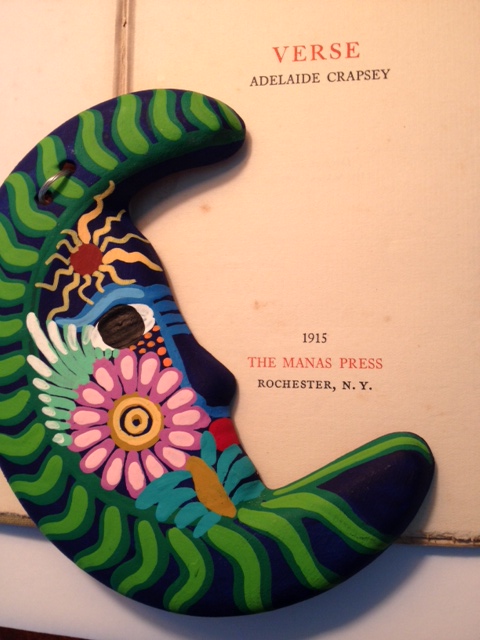
In my hand is a copy of a slim volume of her poetry, titled Verse and published posthumously in 1915. The following cinquain is from this book:

Moon-Shadows

Still as
On windless nights
The moon-cast shadows are,
So still will be my heart when I
Am dead.

Those interested in further details on Adelaide Crapsey might look here: http://www.poetryfoundation.org/bio/adelaide-crapsey

photo(21)

Inquisition

IMAG0153

Inquisition

1.
I breathe smoke
from the fire
warming our feet

Something is not right
but not wrong
yet

like the bones’ dance
on wires
in a bad dream

Fear’s sharp blade twists
burning with the slow
heat of coals

2.
I cannot read ashes
the message
of cracked stones in desert light

nor the poetry
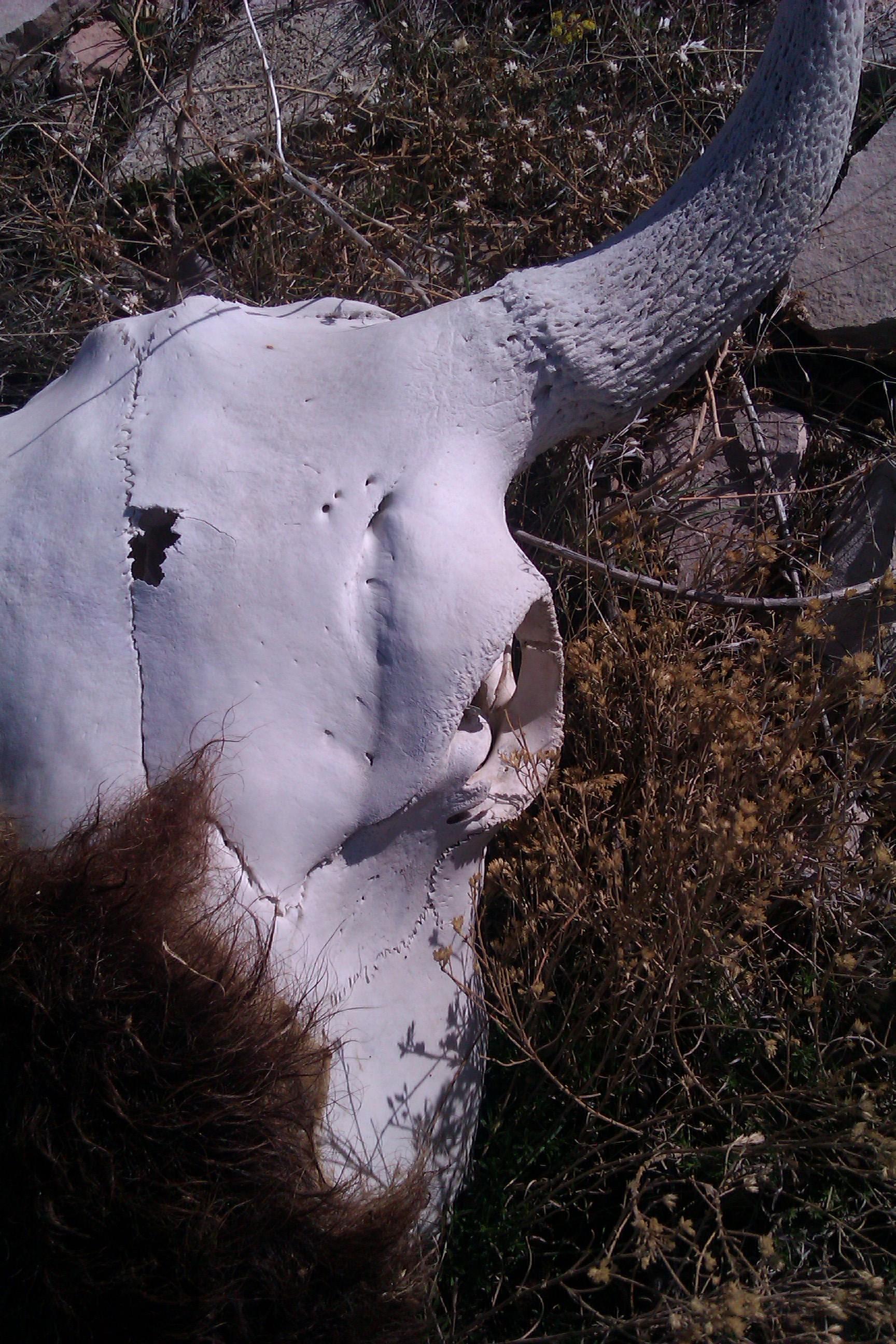
of the cow’s skull
white on dark sand

What right has a man

And the snake’s
quivering tongue tasting
what the air brings to him

file0001288673865

Originally posted in December 2014. One of my earliest published pieces, this first appeared in Taurus, in 1984. Curiously, this is not the piece that I remembered having been published in Taurus. I wonder if that poem still exists somewhere? Such is memory…

Video: Mr Blue Footed Booby

Need a lift from a dreary day? Watch this two-minute film.

Vox Populi's avatarVox Populi

.

From the director: “This short film is an invitation to a lucid dream. Let’s take dinner together!”

Written and directed by Gino Imagino

Email subscribers may click on the title of this post to watch the video.

.

View original post

Palinode (Hands, Hours, Light)

xhand

P A L I N O D E ( H A N D S , H O U R S , L I G H T)

Consider the hand, its breadth, its history in mathematics and limitation. 27 bones, two strokes. Distal phalanges spanning gaps.  You turn and wave at the winnowed tunnel and the drops feathering the glass. The sinister endures tasks of life; right blesses power and assuages guilt. Presuming inflection, I use both hands to tally the absent. Later as we drive through the checkpoint, our way greased by fluency in the language of coin, heaven’s oblique arch recedes and I praise the passage of hours.

I praise the passage of hours measured in terms unknown to some: beyond two, many. Returning, we see streets guided by lampposts, bent trees and the uneven drizzle of sidewalk mendicants blurring through their days. A hanged man’s dessicated hand (pickled in salt and the urine of man, woman, dog and mare) forms the Hand of Glory, unlocking any portal the bearer desires opened: a direct tool of consciousness. Lacking the fat of a gibbeted felon, I cannot properly light the way.

I cannot properly light the way, but we  observe facets in differing terms: the hand, lips, and mouth claim more neural innervation than the rest of the body combined, perhaps a consequence of the primacy of making and sounding. Candles smolder and yield to shadow through dancing hand stories. The wave of acknowledgment, a finger across the lips, the open hand proclaiming innocence, expressing, grasping, creating, constraining, releasing. Extinguishing.

​

This first appeared in Hermeneutic Chaos, Issue 11.

 
OLYMPUS DIGITAL CAMERA

3 Poems in Posit: A Journal of Literature and Art

I’m delighted to have three poems appearing in Posit: A Journal of Literature and Art. Many thanks to editor Susan Lewis for taking these oddities.

To get a taste of what Posit is about, read the Editor’s Notes.