But your breath could melt a glacier at three
miles, she says, and then we might consider
the dirt under your nails, the way you slur
your sibilants, and how you seldom see
the cracked eggs in a carton, a downed tree
branch in front of you, the ripened blister
of paint in the bedroom, or your sister
lying drunk on the floor in her own pee.
Back to your armpits. Do you realize
we could bottle that aroma and make
a fortune? I inhale it and forgive
your many faults. The odor provokes sighs
and tingles, blushes I could never fake.
Ain’t love grand? Elevate those arms. Let’s live!
Never in my wildest dreams did I envision writing a poem about armpits. But the August 2015 Tupelo Press 30-30 challenge, and Plain Jane, the title sponsor, provided that opportunity. This first appeared here in April 2016, and was subsequently published in Algebra of Owls. Many thanks to editor Paul Vaughan for taking it.
Some days the drive takes twenty minutes,
on others, thirty or more. Seems I might pass
myself on the right morning if time flexed its
biceps or looped me into a dimensional shift
thick with donuts and tires and lost minutes.
How odd it would be to wave and say “see ya,”
knowing that tendered frustration grows in
distance, until it takes over the entire mirror.
Looking back, I see my frown diminishing
to a lone point in that shrinking van at the
hill’s crest. Will we meet in the parking
garage? Should I wait? You know the rules.
Stephanie L. Harper’s THIS BEING DONE is now available for pre-publication order! I have ordered multiple copies because I know I’ll want to give copies to friends. It’s that good.
It’s officially official! My debut poetry collection, This Being Done, is now available for prepublication order! RESERVE YOUR COPYHERE:Finishing Line Press!
Thank you to my son, Matthew Harper, for contributing his gorgeous photograph, “Beesiness as Usual” for use on the cover of THIS BEING DONE. According to the timeline I received from Finishing Line Press, the graphic designer should have my cover design completed sometime this week! I’ll be sharing it here as soon as it’s ready!
I’m so grateful to my WordPress Poetry Posse for your interest in, enthusiasm for, and support of my work! I can’t emphasize enough the difference you make in my life as a poet, artist, and human being, in general.
I must also give a shout-out to poet and human extraordinaire, Robert Okaji, whose guidance has been instrumental in this venture. Thank you, Bob, for sharing your many talents with our community…
Placing the dead is seldom arbitrary.
The Marquis de Sade’s grave in the forest at Malmaison
was planted with acorns so that he might be consumed by
trees, but my wife desires a shady plot in rural Texas,
where no one will claim her. In old Christian
graveyards the unclean were buried at the gospel side for
sinners. When her best friend died, she and his former lover
split a bottle of Johnny Walker Black and listened to Puccini.
The Nuer of Sudan place deformed dead babies by the river,
returning them to their true fathers, the hippos. After the fog
crushed Stevie Ray’s helicopter, I played Texas Flood on the juke
box and quit my job. In China, bones channel feng shui, becoming
part of the active landscape. Though she wanted her ashes to drift
in the Pacific, my mother’s body lies in a national cemetery in
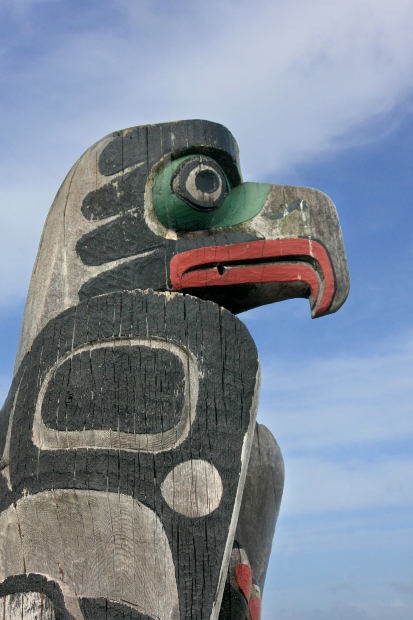
San Antonio. On the northwest coast of Canada, the Kwakiutl
left their dead to the ravens, and my father has proposed
on numerous occasions that we shove a hambone up his ass
and let the dogs drag him off. I do not believe we’ll follow his
suggestion. In old England, suicides were often interred at
crossroads, impaled, to impede their restless wandering spirits.
The Torajans sometimes keep bodies wrapped in layers of absorbent
cloth in their homes for years. I’d like my incinerated, pulverized
remains released in the jet stream, if only to escape economy class for
once. Jellyroll Morton’s grave is in Section N, Lot 347, #4, in the northwest
quadrant of Calvary Cemetery, but some villagers bury stillborn
near a dwelling’s outer wall. Hugh Hefner is rumored to have acquired
the spot next to Marilyn Monroe. Custom in protocol, repetition.
* * *
Originally published in Middle Gray in 2013, “Ritual” was reprinted in the anthology Heron Clan III, and is included in The Circumference of Other, my offering in IDES: A Collection of Poetry Chapbooks.It also appeared here in July 2015 and October 2016 – the poem that refuses to die…
In spring 1983 I enrolled in a poetry writing course thinking it might help improve my short fiction. I was a history major by default, had never taken a course in poetry, but believed, with absolutely no evidence, that I could write fiction. At the time I would have been hard-pressed to name five contemporary poets, even counting my professor. To be honest, the class struggled to hold my attention. Only about a quarter of the students seemed interested in writing, and the instructor was a bit, uh, tired. But for the first time in my life I read, really read, poetry. I fell in love with Galway Kinnell, Ai, James Wright and Carolyn Forche, to name just a few of my early enthusiasms. I wanted to write like them. So I wrote. And wrote. And wrote. Most of it was laughably bad, but somehow I managed to win an undergraduate poetry contest, which suggested that hope existed. Maybe someday, I thought, one of my poems will be published. This radical idea had never occurred to me before. Publication seemed to be the privilege of special people, and a lifetime of gathered fact revealed that I was unequivocably nothing special.
Early on in the semester, perhaps even in the first class, the professor asked how many of us thought we’d still be writing poetry in twenty years. I didn’t raise my hand. I didn’t know where I’d be in six months, much less what I’d be doing in twenty years. Since I’d realized late in the game that teaching was not for me, I had no job prospects, and few marketable skills, despite experience in chugging beer, manning sound-powered phones on a ship’s helicopter tower, scraping barnacles and bending rules. The world was limited. The world was limitless.