And: A Mythology


And: A Mythology

Balancing the chair on two legs,
you claim no past,
and gravity,
though complicit in the future,
aligns itself with the mass.
No connections fuse the two.
Or, lying there, you bridge gaps,
clasping hands with distant cousins,
awake in the moment
yet ready to drift and continue,
a solitary seed awaiting nourishment,
steady, existing only between.


“And: a Mythology” first appeared in May 2020 at Literati Magazine. Many thanks to editor Renée Sigel for taking this and several other pieces.

.
In Praise of Rain (with recording)

file00093561951


In Praise of Rain

Which is not to say lightning or hail.
Sometimes I forget to open the umbrella

until my glasses remind me: Wake up, you’re
wet! If scarcity breeds

value, what is a thunderhead worth
in July? A light shower in August?

Even spreadsheets can’t tell us.

***

“In Praise of Rain” is included in my recently released chapbook, Buddha’s Not Talking, available from the publisher, Slipstream Press. Signed copies may be purchased exclusively from Loud Bug Books in Indianapolis. Simply type in “Okaji” to view all of my available books, or just add the title. $10 plus shipping and tax (where applicable).

file8541339345592

Bent


Bent

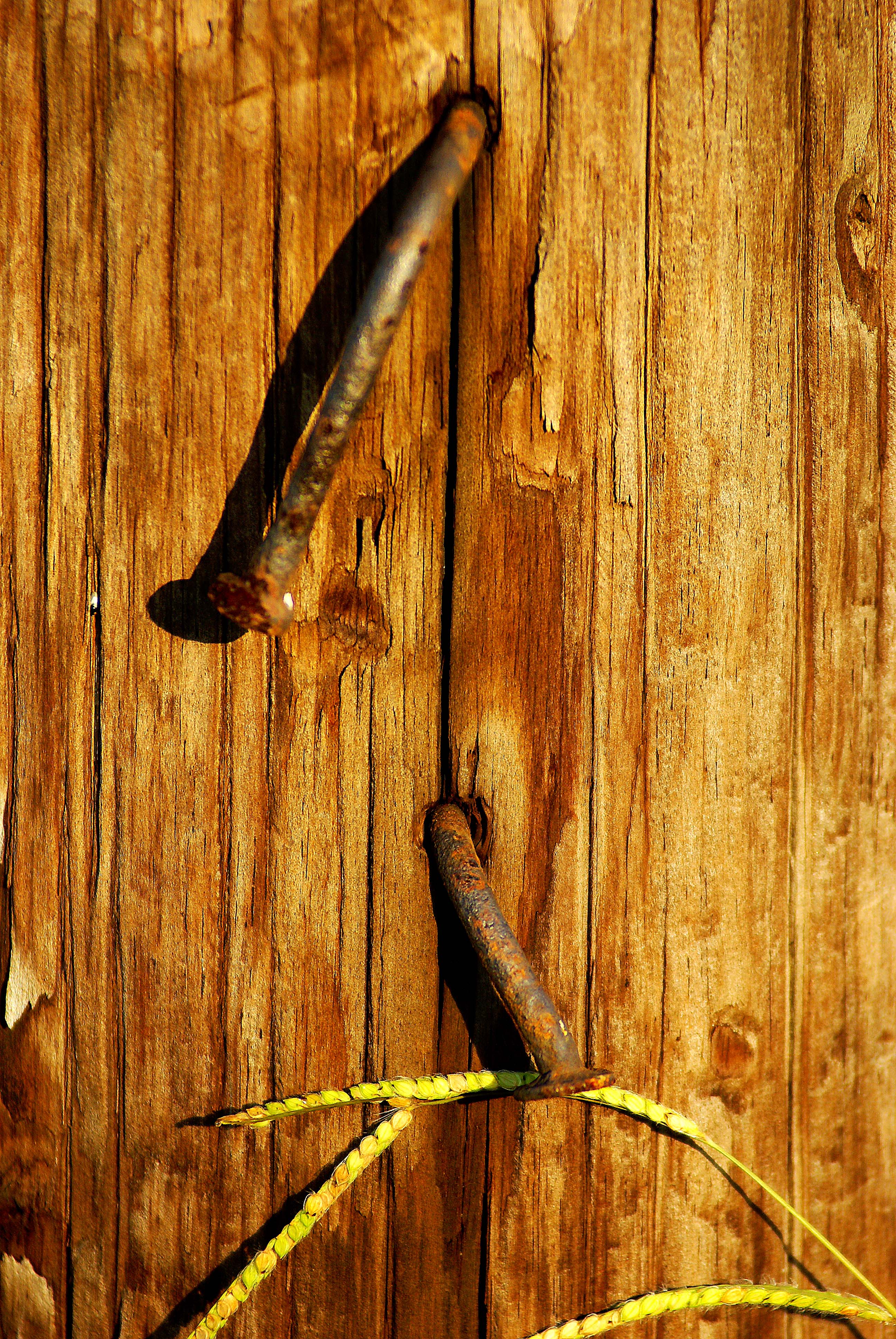
We’ve seen some version of the nail
curled over, the head angled at 90 degrees
or parallel to its body, just above

the penetration point. Three years ago
a tornado powered a single straw stem
through the oak’s bark and into its trunk,

illustrating the Old English beonet, for
“stiff grass,” and sadly conjuring the image
of a blade affixed to a firearm’s muzzle, the

etymology of which lies elsewhere, in Gascony.
And when we consider mental inclination,
signifying deflected, turned, or not straight,

we might also include an earlier past participle
meaning “directed in course.” But even the
tree’s armor could not deter the twister’s

wrath, and the hammer, no matter my aim
or purpose, seems intent upon glancing off
the nail, twisting it, leaving us, again, bent.


“Bent” first appeared in the print publication Ristau: A Journal of Being in January 2018.


Lament for Five White Cat (after Mei Yao-ch’en)

file3461249385398

Lament for Five White Cat (after Mei Yao-ch’en)

Five White cat always made sure
no rats gnawed my books,
but this morning Five White died.

On the river I offered up rice and fish,
and buried you in its lazy currents,
chanting my lament. I could never neglect you.

One time you caught a rat
and carried it squealing around the yard
to frighten all the other rats
and keep my cottage clear of them.

We’ve shared space aboard this boat,
and although the food is meager
it’s free of rat piss and droppings
because you were so diligent,
more so than any chicken or pig.

Some people speak highly of horses,
saying nothing compares to them or donkeys.
But we’re done with that discussion!

My tears prove it so.

* * *

The transliteration from Chinese-poems.com:

Self have 5 white cat
Rat not invade my books
Today morning 5 white die
Sacrifice with rice and fish
See off it at middle river
Incantation you not you neglect
Before you bite one rat
Hold in mouth cry around yard remove
Want cause crowd rat frightened
Thought will clear my cottage
From board boat come
Boat in together room live
Dry grain although its thin
Evade eat drip steal from
This real you have industriousness
Have industriousness surpass chicken pig
Ordinary person stress spur horse drive
Say not like horse donkey
Already finish not again discuss
For you somewhat cry

A Song Dynasty poet, Mei Yao-ch’en (or Mei Yaochen) died in 1060. His great poems live on.

DSC_1646

This Turning

turning


This Turning

what one says
depends not on
words the wind

begins it does
not end but
lends itself to

an end this
turning may be
an answer the

sound of intent
so concealed a
word displayed is

only a word
not an end
nor the beginning


magnets

Another oldie from the eighties. It seems that even my poetry was thinner then.

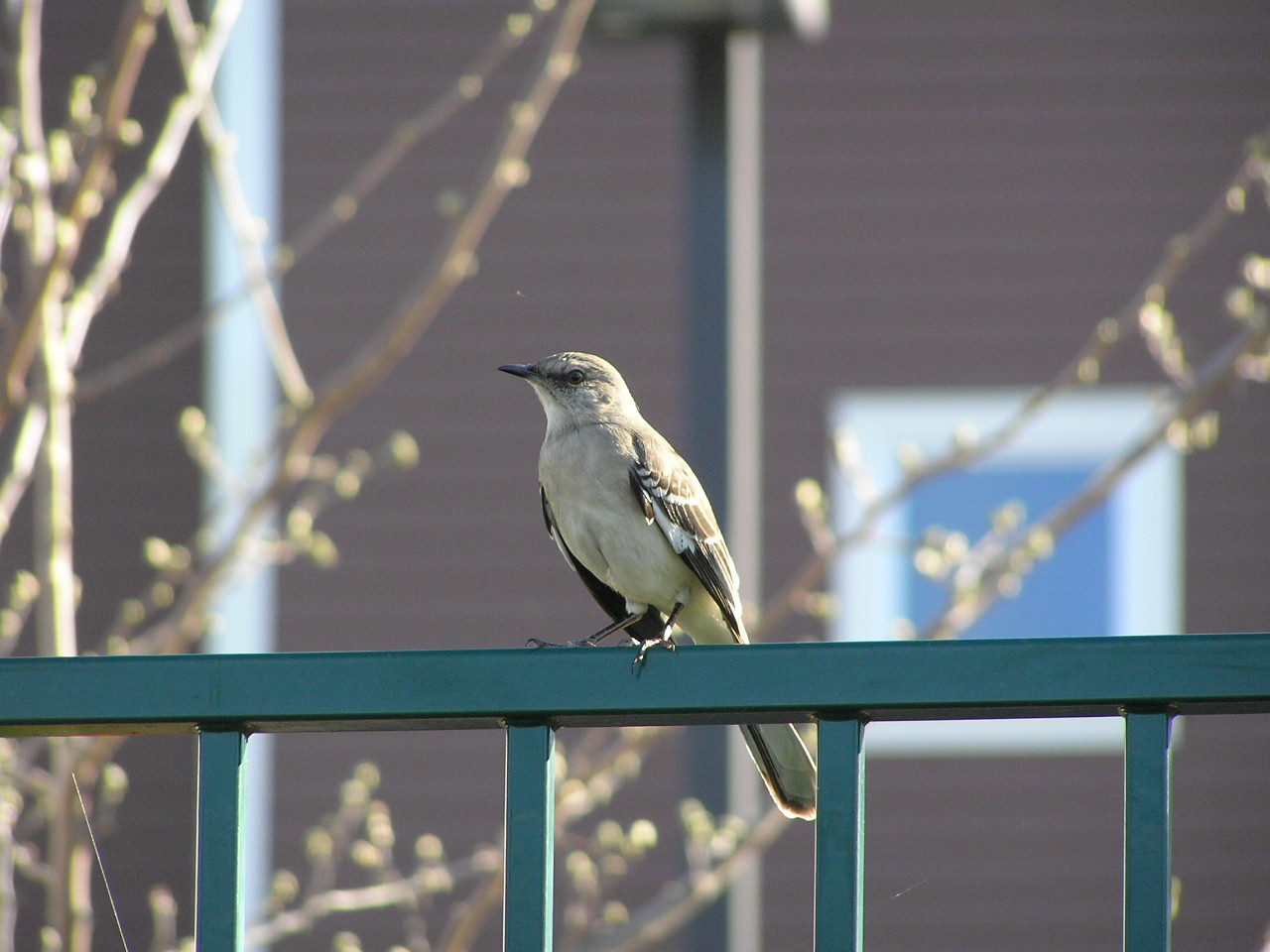
Mockingbird III

OLYMPUS DIGITAL CAMERA


Mockingbird III

Songs, returned
to their space

within the sphere of
movement, the patterns inscribed
as if to touch the face of every

wind: here one moment, then
gone. This quickness delights us.
How, then, do we so often forget

those things we share? Night
comes and goes to another’s
phrase, yet each note is so precisely

placed, so carefully rendered
that we hear only the voice, not its source.


* * *

Another piece from the 80s. This first appeared here in March 2015, and would likely be a much longer poem if I were to write it today.


20131129_140442


What Feet Know (with recording)

feet


What Feet Know

The earth and its subterfuge.
Gravity and the points between here and there.

And sometimes the rasp of grainy mud
clenched between toes,
or a rock under the arch,
an explanation too pointed
for display on a page,
too hard, too much for flesh to bear.

No constellations foment underground.
Nothing there orbits a companion.

No light but for that darkness the heel scrapes away.


“What Feet Know” was featured on Postcard Poems and Prose Magazine in December 2016, and is included in my  chapbook, From Every Moment a Second, available Available at Amazon.Com and Here.


Mockingbird

 OLYMPUS DIGITAL CAMERA


Mockingbird

Withdrawn, it unfolds
to another
voice, like that

of a child lost in the wind.
Or, lonely, it rises from its place

and sings, only
to return and start again.
The pleasure we accept derives from

the knowledge that we are not alone.
Each morning we walk out and sit
by the stones, hoping to observe some

new patterns in his life. What we
see is an answer. What we hear is no song.


* * *

file5231249687751

“Mockingbird” made its first appearance here in January 2015. It was written
in the 1980s, probably around 1987-1989.


Love, Scattered (Cento)

image


Love, Scattered (Cento)

I cull and offer this and this,
and these last definite whorls

or later star or flower, such
rare dark in another world,

outdistancing us, madness
upon madness, the crest

and hollow, the lift and fall,
ah drift, so soft, so light,

where rollers shot with blue
cut under deeper blue as the

tide slackens when the roar of
a dropped wave breaks into it,

and under and under, this
is clear—soft kisses like bright

flowers— why do you dart and
pulse till all the dark is home?

I am scattered in its whirl.


* * *

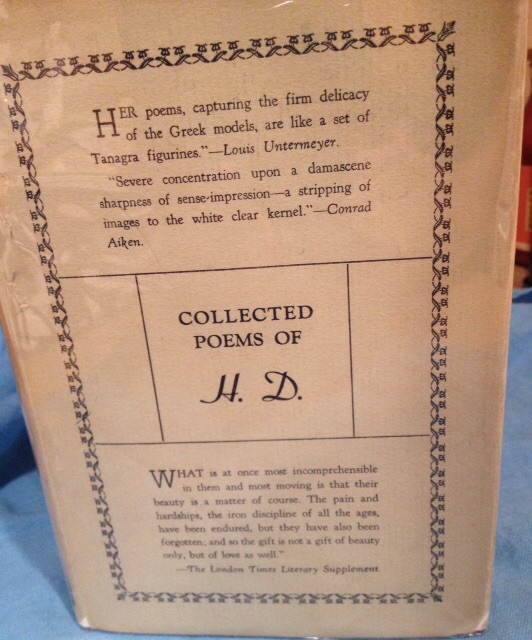
This cento is composed exclusively of lines taken from fifteen pages in the Collected Poems of H.D., 6th printing, 1945. Hilda Doolittle is a fascinating figure in 20th century American poetry. You might look at the Poetry Foundation’s biography for further information:

http://www.poetryfoundation.org/bio/h-d

image


The Color of Water

SONY DSC

The Color of Water

Eyes the color of water. The tree I cut down
returns: fallen leaves, smoke, the missing

shade, memory come to reflect
emotion. Once the blue grosbeak

hid in its branches, calling but refusing
to appear, the voice our only consolation.

Now rain streaks the empty space.
Those things we touch often bruise,

but to leave them untouched may harm us
even more. Two days ago the sky cleared.

Changes, how often we see them for what
they are not. An essential falsity. Those eyes.

Words, ever-changing. Shadows of lovers
whose bodies merge but never touch.

file731340645452

This first appeared on the blog in March 2015.