It was 10 A.M. When the Angel Said You Have to Go Now

OLYMPUS DIGITAL CAMERA

It was 10 A.M. When the Angel Said You Have to Go Now

Forgive me for seeking clarity, but do you have a specific
destination in mind, or are you saying, with a little less
force, get lost, go away, I’m done with you, or might you
merely be suggesting that I go forth? And what exactly is
your position on, oh, let’s just say the afterlife and the
journey there? As for turning, you certainly did,
offering both in sequence, again and yet again, to my
great appreciation. Butter. You must explain your fetish
and how the room exuded pale gold and sweet after
one little death, as if a honeyed light had oozed in beneath
the door, and, in kissing the carpet, released endorphins
and cool warmth, and love-moths frantically flapping
to dry our sweat without the slightest chill. It’s the little
things, my mother always said, never considering size,
but meaning those thoughtful touches, the fresh flowers,
a plate of cheese and fruit, and yes, the tenor sax moaning
in the alcove. I’ll go, but you know this is my apartment.

“It was 10 a.m. When the Angel Said You Have to Go Now” was originally drafted during the August 2016 Tupelo Press 30-30 fundraiser, thanks to d. ellis phelps, who sponsored and provided the title. It was subsequently published in Atlanta Review in May 2020. 

Lament for Five White Cat (after Mei Yao-ch’en)

file3461249385398

Lament for Five White Cat (after Mei Yao-ch’en)

Five White cat always made sure
no rats gnawed my books,
but this morning Five White died.

On the river I offered up rice and fish,
and buried you in its lazy currents,
chanting my lament. I could never neglect you.

One time you caught a rat
and carried it squealing around the yard
to frighten all the other rats
and keep my cottage clear of them.

We’ve shared space aboard this boat,
and although the food is meager
it’s free of rat piss and droppings
because you were so diligent,
more so than any chicken or pig.

Some people speak highly of horses,
saying nothing compares to them or donkeys.
But we’re done with that discussion!

My tears prove it so.

* * *

The transliteration from Chinese-poems.com:

Self have 5 white cat
Rat not invade my books
Today morning 5 white die
Sacrifice with rice and fish
See off it at middle river
Incantation you not you neglect
Before you bite one rat
Hold in mouth cry around yard remove
Want cause crowd rat frightened
Thought will clear my cottage
From board boat come
Boat in together room live
Dry grain although its thin
Evade eat drip steal from
This real you have industriousness
Have industriousness surpass chicken pig
Ordinary person stress spur horse drive
Say not like horse donkey
Already finish not again discuss
For you somewhat cry

A Song Dynasty poet, Mei Yao-ch’en (or Mei Yaochen) died in 1060. His great poems live on.

DSC_1646

When to Say Goodbye (with recording)

dried


When to Say Goodbye

 If all goes well it will never happen.
The dry grass in the shade whispers

while the vines crunch underfoot,
releasing a bitter odor. A year ago

I led my dog to his death, the third
in five years. How such counting

precedes affection, dwindles ever
so slowly, one star winking out after

another, till only the morning gray
hangs above us, solemn, indefinite.

Voiceless. If I could cock my head
to howl, who would understand? Not

one dog or three, neither mother nor
mentor, not my friend’s sister nor her

father and his nephews, the two boys
belted safely in the back seat. No.

I walk downhill and closer to the creek,
where the vines are still green.

In the shade of a large cedar, a turtle
slips into the water and eases away.


* * *


“When to Say Goodbye,” drafted during the August 2015 Tupelo Press 30-30 challenge, was published by Oxidant | Engine in May 2017, and subsequently nominated for a Best of the Net 2017 award.


The End of Something


The End of Something

I would never pin this silence
to a board, but her anger tempers
sunset, and my response remains
contained. The paper stars
I nailed to the bookcase rustle
when the door opens. She
swallows wine, I sip tea
and offer no explanations.


“The End of Something”  first appeared in Volume 3 of Lamplit Underground. Thank you, Janna Grace, for taking these pieces.

Lamplit Underground is a beautifully illustrated publication. Please take a look!


Letter from Austin

perfection


Letter from Austin

Michael, when you say moons do you see
cold stone floating in the firmament
or phrases frayed in the mouth and spat on paper?
And does the Spanish moon simmer at a similar
pace to mine or yours? Which embers blush brighter?
But let’s turn to estuaries, to salt and clamor and gun-
running poets and interrupted words sold in stalls
between parenthetical gates, to incomparable cavas
and the deterioration of envy and intervening years.
Or perhaps mislaid passion – a friend claims love
is merely a bad rash, that we scratch and scratch
and inflame but never truly cure what ails us. Sounds like
politics to me. Or sports. And business. Or neighborhoods.
On my street people should cook and play music together,
laugh, raise chickens and read good books. They should
brew beer, swap tomatoes, recite each other’s poetry and sing
in tune. But we’re different here, preferring instead electronics
glowing in dimly lighted rooms. I reject this failure, as I also
reject the theory of centrifugal force spinning off the moon’s
body from the earth’s crust, preferring to imagine a giant
impact blasting matter into orbit around what morphed into the
earth, and somehow accreting the stuff into this orb we
sometimes worship. This, to me, is how good relationships
form: explosions of thought and emotion followed by periods
of accretion. But what I mean is I hope this finds you well
by the river of holy sacrament. Remember: brackish water
bisects our worlds. Turn. Filter. Embrace. Gotta run. Bob.


Originally published in Heron Clan 3, this first appeared on the blog in July 2015.

My friend Michael occasionally sends hand-written notes or letters to me, and I respond with poems. This is one. You might read some of his writing at Underfoot Poetry.

OLYMPUS DIGITAL CAMERA

Letter to Geis from This Side of the Glass


Letter to Geis from This Side of the Glass

Dear Greg: I can’t help but think about windows, their
function, their meanings, intended and otherwise, how
they block some entities but allow others entrance. A
black vulture feather lies just on the other side of this
pane, but the laws of material and physics prevent me
from reaching through and claiming it. Maybe I’d
sharpen the end, dip it into squid ink and write letters.
Or not. Cephalopods are scarce in the hill country,
unlike carrion birds, wild hogs and scorpions, and frankly,
ballpoint pens require less maintenance. Lately, the
opaque has redirected my attention — no matter which
government agency speaks, I feel surrounded by their
pseudomorphs, those little indistinct clouds of mucus and
dark pigment released to confuse and numb me. A common
occurrence, I hear, and all the more frightening for it. I
think of where we’re headed, collectively and individually,
and even knowing that our destination remains unchanged
offers small comfort. One foot at a time, the steps matter,
and though it appears we won’t share those planned brews
in Bandera, I’ll chuckle over our last meeting there and
dream up a conversation about futility and compromise,
and yes, success. I’ve just spent twenty minutes trying to
help a yellow jacket escape. It wouldn’t leave the glass even
after I left the door ajar, allowing a fly to enter. Instead,
it gazed out at the hazy morning, seeking a way through
refraction’s oblique path. Finally, shepherded with my bare
hand, it reluctantly skittered to the jamb, and I coaxed it
the final few inches by pushing it with the door. Such
are my days. A little faith, some hope, luck and a great
unknowing. This window seems cloudy, or is it just
my eyes? I miss you, buddy, as do the hills and the sky
and everything nestled and bustling between.  Bob


This first appeared in May 2020 in the Taos Journal of International Poetry & Art. D.G. Geis was a friend, a larger than life  poet, and a fellow Texan. We were both finalists for the Slippery Elm poetry prize in 2017, and after learning that we didn’t win, decided to have a “losers’ lunch” in Bandera, Texas, the closest town to our respective rural properties. Much laughter ensued, and we made plans to get together for a beer in the coming months. Alas, that was not to be.


The Politics of Doors


The Politics of Doors

With every doorway, decisions.
Accept, deny. Turn.

How to resist the ajar,
the barely closed?

Is what emerges
expelled or escaped,

free or released?
Resistant as always,

I swivel,
pause to inhale.


This Turning

turning


This Turning

what one says
depends not on
words the wind

begins it does
not end but
lends itself to

an end this
turning may be
an answer the

sound of intent
so concealed a
word displayed is

only a word
not an end
nor the beginning


magnets

Another oldie from the eighties. It seems that even my poetry was thinner then.

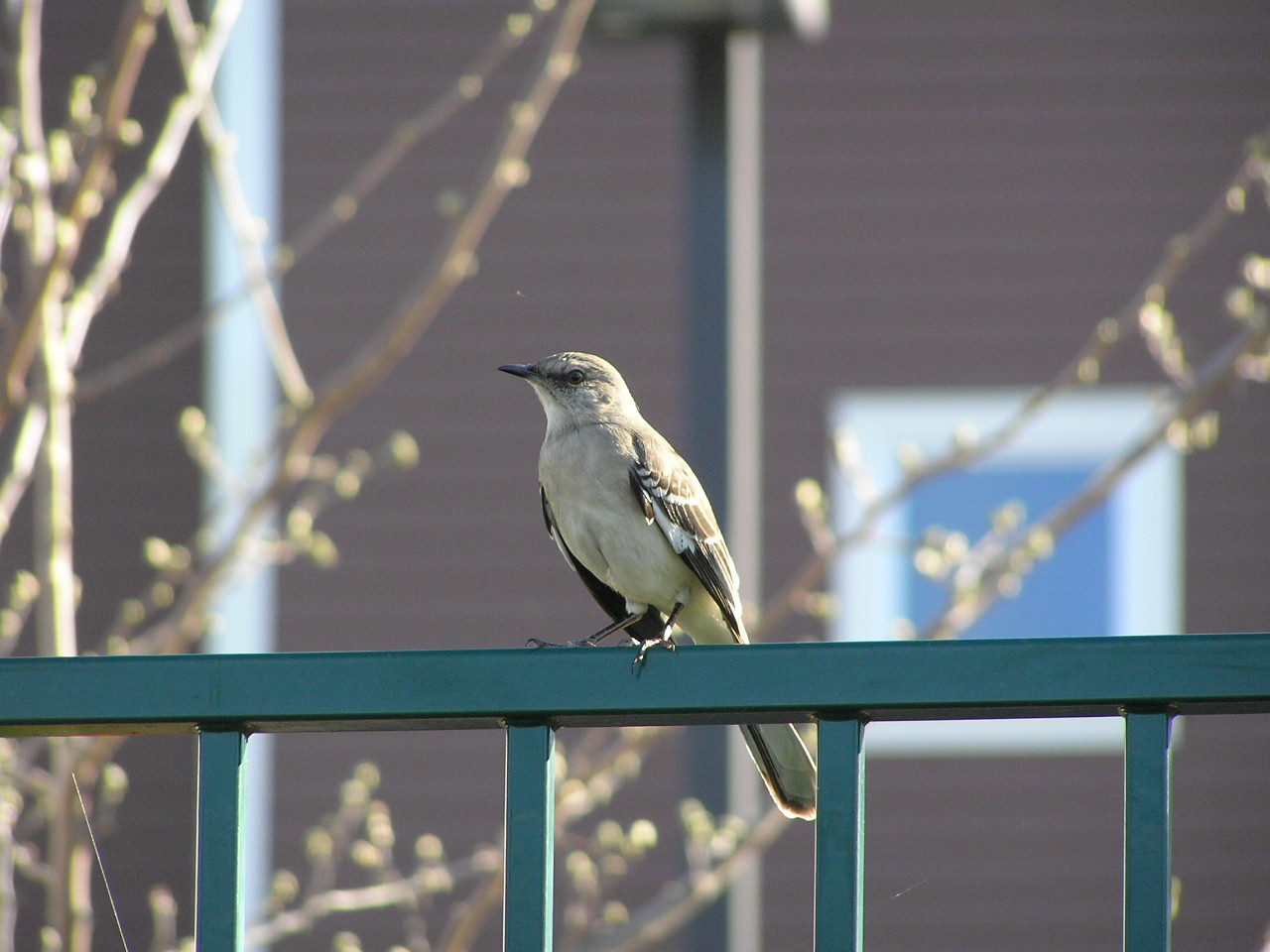
Mockingbird III

OLYMPUS DIGITAL CAMERA


Mockingbird III

Songs, returned
to their space

within the sphere of
movement, the patterns inscribed
as if to touch the face of every

wind: here one moment, then
gone. This quickness delights us.
How, then, do we so often forget

those things we share? Night
comes and goes to another’s
phrase, yet each note is so precisely

placed, so carefully rendered
that we hear only the voice, not its source.


* * *

Another piece from the 80s. This first appeared here in March 2015, and would likely be a much longer poem if I were to write it today.


20131129_140442


Arthritis

photo(10)


Arthritis

If at night I stray in thought,
dreaming of nimble fingers

and my departed dog’s walk,
will you smile

when I scratch his absent ear
and apologize for the times

I failed him? Even combined,
all the words in these unread books

could never soothe the guilt
of leisure and complacency, nor

match the joy of jumping
for the kicked ball, no matter the

outcome, despite the consequences.


image

“Arthritis” is included in Indra’s Net: An International Anthology of Poetry in Aid of The Book Bus, and has appeared on the blog as well.

All profits from this anthology published by Bennison Books will go to The Book Bus, a charity which aims to improve child literacy rates in Africa, Asia and South America by providing children with books and the inspiration to read them.

Available at Amazon (UK) and Amazon (US)