Dobie’s Desk

Dobie’s Desk

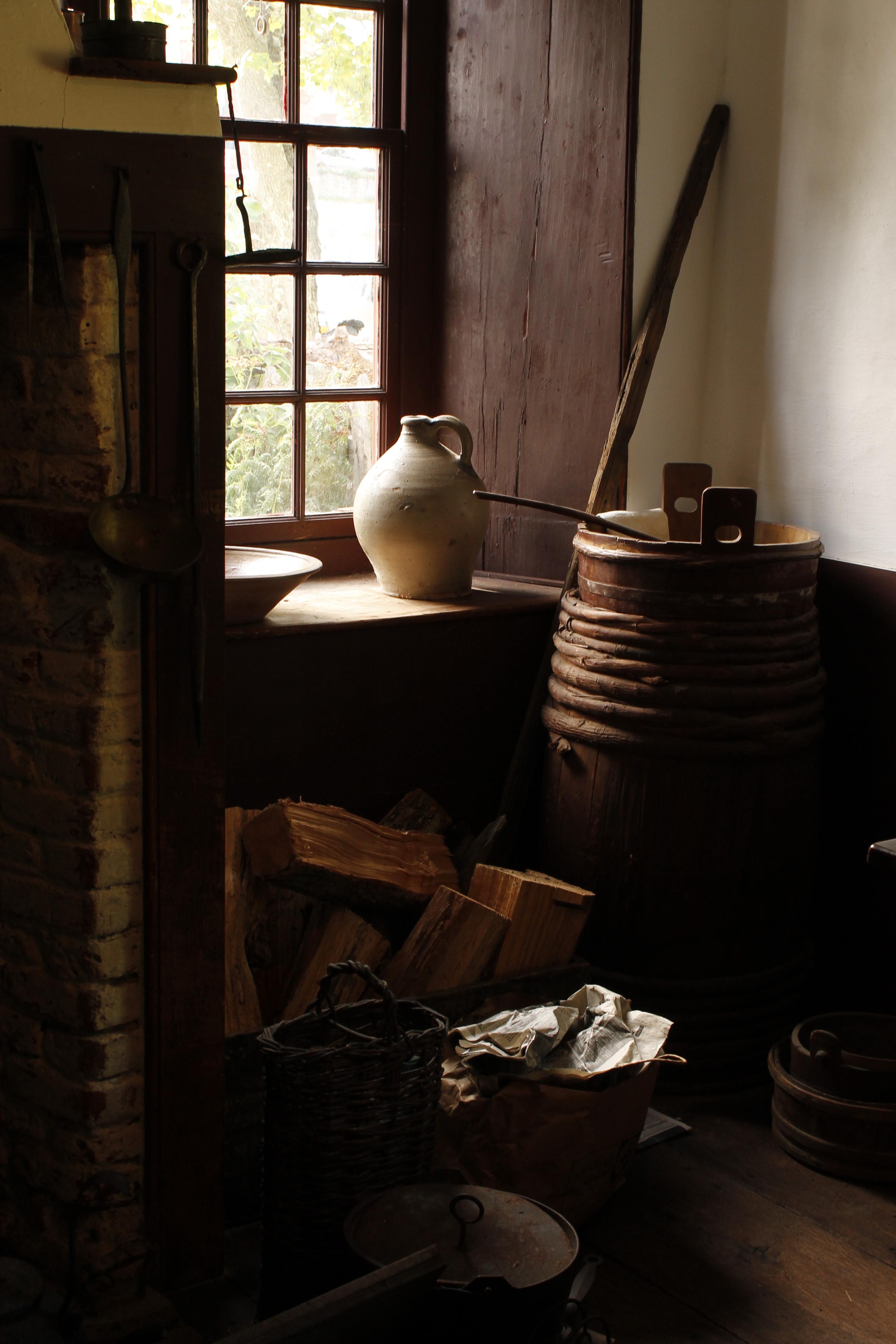
Sitting at this desk, I wonder
whose words will emerge

from the stained wood,
its whorls and cracked surface

detailing a specific language
of the inert and precious.

Earlier I rapped the cistern
to verify water level,

and a week ago startled
a cottonmouth sunning its lengthy

self at the crossing. The door
just blew open, perhaps,

or a ghost wished to offer its
voice, neither malice

nor approval imbedded
in the gesture. History

shadows me despite my best
efforts. I walk, drink water,

write, think of friends left
behind or gone ahead,

reading between the grains
and dark spaces, looking for rain

in the blue, for light and benediction
and the secret poetry of furniture.

Recording of “Forgetting Charm”


Forgetting Charm

Even your bones remember what you’ve long discarded.

This field of stone grows beyond sight.

In our house the tang of burnt sugars.

You say I love you in four languages I do not speak,
but never in the one I claim.

We light fires with stolen paper.

Douse them with stored rain.

Fragmented memories fill our cupboards.

Did I once know you?

Take these words from me.
Bury them in daylight.

* * *

“Forgetting Charm” was published in The Icarus Anthology in August 2017.

Music: “Crypto” Kevin MacLeod (incompetech.com)
Licensed under Creative Commons: By Attribution 3.0 License
http://creativecommons.org/licenses/by/3.0/

Thirty-Five Years Later, I Raise My Hand

Thirty-Five Years Later, I Raise My Hand

In spring 1983 I enrolled in a poetry writing course thinking it might help improve my short fiction. I was a history major by default, had never taken a course in poetry, but believed, with absolutely no evidence, that I could write fiction. At the time I would have been hard-pressed to name five contemporary poets, even counting my professor. To be honest, the class struggled to hold my attention. Only about a quarter of the students seemed interested in writing, and the instructor was a bit, uh, tired. But for the first time in my life I read, really read, poetry. I fell in love with Galway Kinnell, Ai, James Wright and Carolyn Forche, to name just a few of my early enthusiasms. I wanted to write like them. So I wrote. And wrote. And wrote. Most of it was laughably bad, but somehow I managed to win an undergraduate poetry contest, which suggested that hope existed. Maybe someday, I thought, one of my poems will be published. This radical idea had never occurred to me before. Publication seemed to be the privilege of special people, and a lifetime of gathered fact revealed that I was unequivocably nothing special.

Early on in the semester, perhaps even in the first class, the professor asked how many of us thought we’d still be writing poetry in twenty years. I didn’t raise my hand. I didn’t know where I’d be in six months, much less what I’d be doing in twenty years. Since I’d realized late in the game that teaching was not for me, I had no job prospects, and few marketable skills, despite experience in chugging beer, manning sound-powered phones on a ship’s helicopter tower, scraping barnacles and bending rules. The world was limited. The world was limitless.

Another gray day

dividing the old and young

Oh, this aching hip!

A song from that time:

Letter to Wright from Between Gusts

pickles

Letter to Wright from Between Gusts

Dear Tami: The wind here speaks an undiscovered language:
diffident, it lurks in the background, stuttering, fingering
everything, shifting directions, mocking us, barely noticeable
until it gets pissed off and BLOWS! Then, shit happens. Pickle
jars appear in purses. Love notes remain unwritten. Shingles
flap across the lawn and idiots are elected to office (nothing new,
I know). When I was a kid I marveled at those fortunates who
lived under the same roof for years, for decades, entire lives, while
my family rolled around the globe, collecting vaccination scars
like postcards or nesting dolls. How interesting, I thought then,
to know and be known, to avoid the perpetual newcomer’s
path. Having shared this house with my wife and various dogs,
birds, rodents, insects and arachnids for thirty-three years, I now
know this – home is not a stationary edifice. No cornerstone
defines it any better than fog rubbing the juniper’s tired back,
or courting mayflies announcing warmth’s arrival in their brief
pre-death interludes. Desire is a feckless mistress; after obtaining
the prize, we miss the abandoned and wonder what might have
been. When you arrive at your new town remember this: no one
is stranger to you than yourself. I speak from experience, having
absorbed differences at one end only to watch them emerge
hand-in-hand at the other, like newborn twins or nearly forgotten
reminders of an uncle’s kindness in a year of typhoons and sharp
replies and rebuilt lives. Home is a smile, a lover’s sleepy touch
at 3 a.m., or the secret knock between childhood friends reunited
after decades. It lives in soft tissue, not steel, and breathes water
and air, flame and soil and everything between. But it can’t exist
without your mind and body lugging it around. I would like to
tell you what the wind is saying, but it’s singing different tunes
these days, and my translation skills begin and end in that still
place between gusts, floating in the twilit air like so many empty
pockets. These are the only words I have. Not much to hang a hat
on, and I apologize for my shortcomings and inability to expound
with clarity. I speak in poetry, but mean well. May your moons
be bright and your winds wild yet gentle, even if you can’t fathom
their meaning. I’ll keep trying if you will. All the best, Bob.

“Letter to Wright from Between Gusts” was published at The Lake in August 2017. Many thanks to editor John Murphy for accepting this piece, and to T.S. Wright for inspiring it.

Call for Submissions: Poems for Peace: Anthology

Some of you might be interested in submitting poems to this anthology. I know I am.

poems for peace: an anthology to uplift encourage & inspire

This anthology, poems for peace (forthcoming, fall 2018), is the love-child of a group of poets and listeners who have been gathering quarterly in San Antonio, Texas since Nov. 11, 2017 in association with the San Antonio peaceCENTER.  This anthology will be published as a peaceCENTERbook, with all proceeds going to support the CENTER.

While we are aware that many horrors occur in our world and that, as a people, we seem to be in turmoil and conflict on many fronts, our aim is to provide respite from the apparent problems and to purposefully turn our attention to the good, the Whole, the Holy, that which is full of peace and comfort.

For this inaugural issue of poems for peace, we seek work that is metaphysical, celebratory, fun, funny, lighthearted, playful, thoughtful, warm, tender, beautiful, compassionate, heart-opening, or spiritual without proselytizing, nostalgic without being overly sentimental, empowered without being politically charged and rich with imagery and story but not with graphic insensibility or dealing with overtly, hot topics that may trigger anxiety or anger in the listener (like abuse issues, natural disasters, or tragedy in general).

Rather, we seek work that uplifts, encourages and inspires.  We are especially interested in the metaphysically broad; we look for the profound, real, fearless, gender-inclusive, curious voice.

Guidelines:

Please send 3-5 previously unpublished poems of up to ten pages in length and in any form in a single Word document, making sure that no identifying information appears within the document.  Include a brief, bio (100 words or less) in your cover letter.  Submissions are being hosted by Moon Shadow Sanctuary Press via Submittable only (see link below).

The book will be perfect bound and available online through the  peaceCENTERbook link and other online venues plus locally in bookstores TBA.  Poets included in the anthology may be invited to participate in future poets for peace events.  For more information or to ask questions about poets for peace or submissions, look for us on Face Book, or send us a message here:  fb.me/poetsforpeaceSA

Deadline: August 1, 2018

Click here to submit: https://moonshadowsanctuarypress.submittable.com/submit

Forgetting Charm


Forgetting Charm

Even your bones remember what you’ve long discarded.

This field of stone grows beyond sight.

In our house the tang of burnt sugars.

You say I love you in four languages I do not speak,
but never in the one I claim.

We light fires with stolen paper.

Douse them with stored rain.

Fragmented memories fill our cupboards.

Did I once know you?

Take these words from me.
Bury them in daylight.

* * *

“Forgetting Charm” was published in The Icarus Anthology in August 2017.

Heroes

splash


Heroes

And the rain, again, takes up our day,
folds it into threes, and watches
as the world wraps up its gift,
first at the edges, then centered,
with more confidence and force
than justified. Who will forget
the hollow horse and its stifled
coughs, the stench of men too
long unbathed and drenched
in fear. Or the small girl running
naked, arms outstretched, skin
peeling, her life become a litany
of pain embroidered across
the unfeeling sky. Do not thank me
for your freedom, the mortgage
and its tax breaks, your designer
shoes. We didn’t bleed for you.

“Heroes” first appeared in Blue Fifth Review. Many thanks to editor Sam Rasnake for accepting this piece.

The Resonance of No

dishes

 The Resonance of No

Yes, yes, we’ve heard. The dishwasher wastes less
and cleans better. But Kenk­ō believed in the beauty
of leisure, and how better to make nothing
while standing with hands in soapy water, thoughts
skipping from Miles Davis’s languid notes to the spider
ascending to safe shelter under the sill (after I blow
on her to amuse myself), washing my favorite knife
and wondering if I should hone it, not to mention
my skills on the six-string or the potato peeler.
And if I linger at the plates, even the chipped one,
admiring their gleam after hot water rinses away
the soap residue, who could question the quick gulp
of ale or the shuffle of an almost-but-not-quite
dance step-or-stumble while arranging them on the
ribbed rack, back-to-back, in time to Coltrane’s
solo. Then the forgotten food processor’s blade
bites my palm, and I remember that I’ve outgrown
the dark suit, the cut branches still need bundling
and none of the words I’ve conjured and shaped
over decades and miles will extend their comfort
when I stand at my father’s grave this week or next.

“The Resonance of No,” was published in December 2016 in Gravel, and is included in my chapbook, From Every Moment a Second.

Daniel Schnee wrote about this poem here.

Music Credit: Cool Vibes Kevin MacLeod (incompetech.com)
Licensed under Creative Commons: By Attribution 3.0 License
http://creativecommons.org/licenses/by/3.0/

Which Poet, Which Beer?

file6671234665917

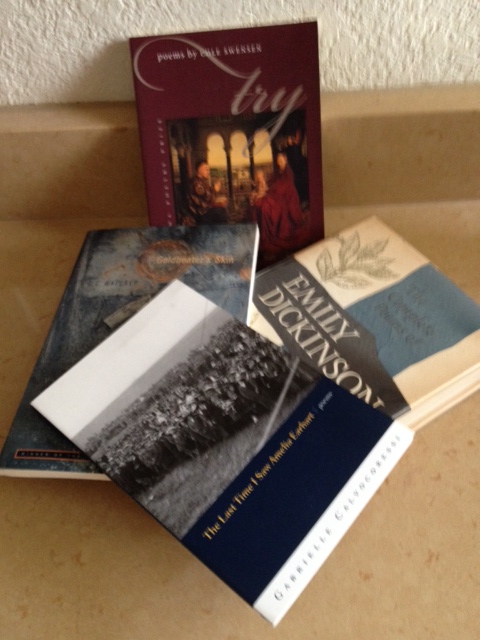
I’m staring at the flight of beers that Jon has placed in front of me. On the left I find Real Ale Brewing Company’s Phoenixx Double ESB. Next to it rests Ranger Creek’s Saison Oscura, followed by Revolver Brewing’s High Brass Golden Ale, and finally, Southern Tier Brewing’s Creme Brulee Stout. I sip the Phoenixx ESB, and am delighted to find it just as I remembered: dry, but sweet, without being overly bitter. Rich, deceptive, caramely odor, amber color. Overtones, hidden layers. I immediately think of Cole Swensen and her book Try, my real introduction to her work, how she reflects tone and imagery, perception and language, intricately weaving them into patterns, into narrative bits to be experienced and savored. “There’s a world out there that isn’t there,” the Phoenixx, evidently a fan of Cole Swensen, whispers.

I linger over the last sip of the ESB, and move on to the Saison Oscura, which quite frankly, surprises me. And that’s good. My preferences edge towards the bitter, and most of the saisons I’ve tried have finished a tad fruity and sweet for my palate. Not so with Ranger Creek’s rendition. Its beguiling light body, with notes of pepper and spice, end with just the right note of bitterness. But which poet, which book would I pair with this dark saison? Someone who juggles the lyrical with harsh realism, whose voice blends and releases the bitter, the forsaken, in distilled snippets of striking clarity. Ah, yes. I have just the book, The Last Time I Saw Amelia Earhart, by Gabrielle Calvocoressi, and the line:

The whole world tastes like salt,

crows overhead shout, Gone, gone
gone. She can’t help me any more.
I’ll have to walk.

It’s much more difficult to pair the Revolver Brewing High Brass Golden Ale with a favorite poet, because, sadly, I find it lacking. It’s light in the mouth, and, to take Gertrude’s quote totally out of context, there is no there there. If I’m to choose a blonde ale, I’d much prefer Real Ale Brewing’s Fireman’s #4. But waste not, want not. I down it, and consider which poet would not only transcend this disappointment, but also hand it a one-way ticket to, perhaps, Stein’s lost Oakland? Easy. G.C. Waldrep, whose Goldbeater’s Skin sets its barbed hooks into my flesh each time I open it. And for this particular occasion, I find no poem more appropriately titled than “What Begins Bitterly Becomes Another Love Poem,” in which he writes:

We stood without shadows on asphalt at midday.
What we call patience is only fire again, compressed.

And fire should accompany Southern Tier’s Creme Brulee Stout. A crackling fire fending off the icy, shingle-ripping wind, with Miles Davis echoing in the background, an exquisite meal resting comfortably in the belly, and the pleasure of knowing that the book you’re about to dip into is an endless well. Quite simply, it’s a liquid dessert. Light coffee, a tad chocolatey, with big vanilla. Medium body, sweet. Smells like creme brulee. Tastes like it. But it’s beer. It tells the truth, but tells it slant! And who better to accompany this frothy delight than Emily Dickinson?

Tell all the truth but tell it slant,
Success in circuit lies,
Too bright for our infirm delight
The truth’s superb surprise…

Onward to the next flight, and more truth. More poetry. More beer. More surprise!

photo(14)

This last appeared on the blog in November 2015.

Scarecrow Dreams

Scarecrow Dreams

If by night I move without aid,
what then? Precious flesh, precious
bone, never mine to lose – the difference
between nothingness and no thing. A
pity that my friends fly at the merest
movement, but when the air’s breath
stills, they sing and rattle among the
grain, scribing their days in song
and footprints, seeking the available
on the ground. And what scrolls lower
than the sound of sunflowers turning?
The laughing daughter runs around
my lattice spine, scattering joy like so
many seeds, and when my hollow
fingers clench, the earth quivers, or
so it seems. Then midnight returns
and I disengage and stalk about,
scaring rodents and their predators,
hooting in harmony with the owls
reveling in the night air, remembering
the holy shirt, a yellow glove, corn
silk’s gleam at noon and the warmth
of your fingers against my burlap skin.
I do not breathe, I say, but I exist. By
morning what joins me but the tune
of yet another bird, unseen, melodious,
the pulse of morning’s dew. Eternity.
How my straw tongue longs to sip it.

“Scarecrow Dreams” first appeared in the summer 2017 edition of Eclectica. Many thanks to poetry editor Jen Finstrom, for publishing several of my scarecrow poems.