Recording of “Ode to Bacon”

Ode to Bacon

How you lend
yourself
to others,

enhancing even
the sweetest fig
in your embrace
over coals,

or consider
your rendered
self, how it

deepens flavor
with piggish
essence, coating

or absorbed,
blended or
sopped. O belly
of delight, o wonder
of tongues,

how could I not
love you
and your infinite
charms, even

when you resist
my efforts and
shoot sizzling bits

of yourself
onto my naked
hands? I pay

this toll
gladly,
today and

next year
and all those
days to follow,

till the last piece
is swallowed
and our sun
goes dark.

Hyperbole
becomes you,
smoked beauty,
salted love,

and I shall never
put you down
or leave you
behind

on a plate
to be discarded
or forgotten,

unloved.

“Ode to Bacon” first appeared here in July 2017, thanks to T.S. Wright’s challenge.

That Number Upon Which the Demand Lieth


That Number upon Which the Demand Lieth

Overcoming duality, yet binding: the trinity.
Beyond the contrast of two, it initiates the concept of many.
Albertus Magnus claimed that three lives in all things.

Becoming; being;
disappearing.

In Old Saxon, the month of May is named trimilki, season of three milkings.
Number as quality depends upon the visual field.
The ancient Egyptian sign for the plural requires three strokes.

Points; lines;
angles.

Lao-tzu said the triad produces all.
Acronyms, sports, and traffic lights reflect our ternary culture.
The devil may appear in the form of a three-legged hare.

Witness; testament;
tribute.

Representing the unknowable: I, you, and the beyond.
The figure of completion, the number of the cube.
A Sumerian number sequence began “man, woman, many.”

Curse; liturgy;
blessing.

The scale as a succession of thirds.
Imperfection implies the concealment of perfection.
Shiva’s number, his eyes, his braids, his place.

Root; third;
fifth.

The triangle in Euclidean space.
I walk the three roads to the commonplace, preferring rhetoric.
Three to through, it penetrates the personal, unhinges that door.

The law; the land;
the world to come.


“That Number upon Which the Demand Lieth” was published in Posit: A Journal of Literature and Art in September 2017. I am grateful to editor Susan Lewis for taking this piece.


Musing on My New Chapbook

From where do these poems come?

Beats me. I can’t explain how I write poetry. It just happens, generally at a desk, word by word, without prior planning.

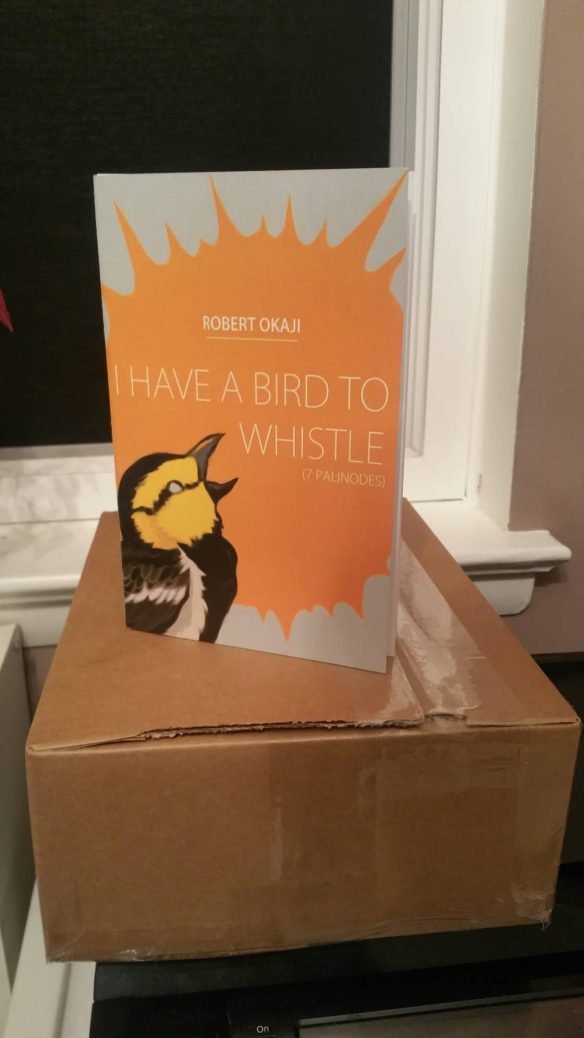
So it was with the pieces in I Have a Bird to Whistle (7 Palinodes), my latest chapbook. I was staring out the shack’s window, through the bird imprint (months earlier, a dove had smacked into the glass, leaving its body’s smudged outline behind), when the first words of the poem came to me: “What falters in translation?”  Which of course led to thoughts about assumptions and traitorous actions, passageways, Robert Johnson, slide guitar, truth, perception, flight, refraction, etymology, deflection, Jung, and much, much more. Thus the book’s title is taken directly from Robert Johnson’s lyrics, inspired by a dove’s misperception, and filtered through my mind’s colander, with the residue dumped out on the page. Not en elegant process, nor a quick one, but there you have it.

The book is available here to U.S. residents for $7.50, shipping included.

Non-U.S. purchasers can order it directly from me by emailing aBirdtoWhistle@yahoo.com.


Pre-Order Links to My New Chapbook

I have a bird box


My copies of I Have a Bird to Whistle: 7 Palinodes are on the way! The publication date is February 25, and Luminous Press is offering them for $7.50, shipping included, to U.S. addresses. Unfortunately, Luminous doesn’t ship internationally, but I will take care of those orders myself.

Order link for U.S. shipping addresses.

Contact me at aBirdtoWhistle@yahoo.com for orders to be shipped outside the U.S.


Empty Cup

I wrote this last year, a week after my father died.

Empty Cup

I set down my cup, pour
tea and think this day, too,
may never end.

With what do we quantify love? How does grief measure us? Nine days ago I wrote “My father is dying and I’m sipping a beer.” More words followed, but I did not write them, choosing instead to let them gather where they would – among the darkening fringe at light’s edge, in that space between the shakuhachi’s notes, in the fragrance of spices toasting in the skillet. In unwept tears. Everywhere. Nowhere.

Seven days ago I wrote “My father is dead.” Again, I chose to let the unwritten words gather and linger, allowing them to spread in their own time, attaching themselves to one another, long chains of emptiness dragging through the days.

If experience reflects truth, sorrow’s scroll will unravel slowly for me, and will never stop. I feel it beginning to quiver, but only the tiniest edge emerges. I am nothing, I say. I am voice, I am loss, I am name. I am memory. I am son.

I have fifty-nine years
and no wisdom to show for it.
Never enough. Too much.

* * *


My father died one year ago today.  We miss you, Dad.


Runaway Bus (with recording)

tickets

Here’s a recording of my poem “Runaway Bus,” which was featured on Postcard Poems and Prose Magazine in January 2017 and is included in my chapbook, From Every Moment a Second, available for order via Amazon.com and Finishing Line Press.


Runaway Bus

Wishing for pristine airways
and unfeathered dreams, I lie
on my right side, and wait.

Again, the bellows flex and pump.

The relentless tickle, exploding,
another round of gasps and mucus retained,
one droplet among others,
spread across the night.

Comfort’s runaway bus never slows,
and I watch it pull away, shrinking in time.

Wait, wait, I say. I bought a ticket.


Diverting Silence


Diverting Silence

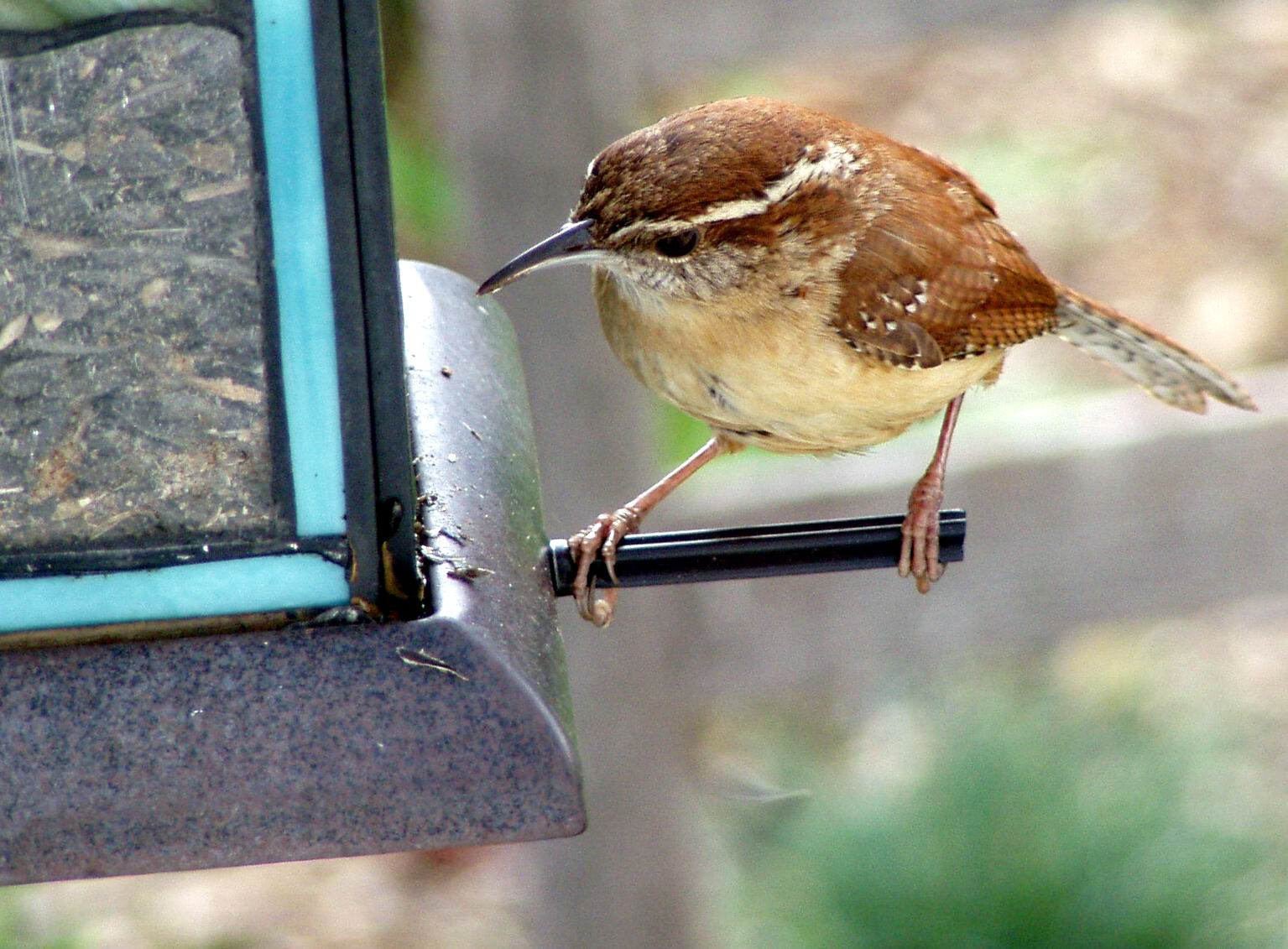
Wren canyons down the morning’s edge, proclaiming dawn.
Unpapered, unfettered, fearless, he abides.

I say “he,” but sexual dimorphism is not apparent in the species.
Accepting signals, we process and choose, freighting gender aside.

Listening requires contextual interpretation, as does belief.
Shrilling to the porch screen, he spears a moth, veers outward.

An acquaintance claims birds are soulless, existing only to serve God.
As temple bells exist solely to announce, and rain, to water lawns.

Faith’s immensity looms in the absence of proof.
Spherical and hollow, suzu bells contain pellets.

The search for truth without error does not preclude fact.
Even tongueless bells ring.


“Diverting Silence” was published in Taos Journal of International Poetry & Art in February 2017.

Letter to Marshall from the Scarecrow’s Pocket


Letter to Marshall from the Scarecrow’s Pocket

Dear Daniel: How fortunate we are to tap into this medium of ether
and zeros and ones and all the combinations employed in our paperless
context. I am drawn to the concept of text as textile, as an entity
woven into the fabric of communication. Who knew that simple lines,
dots, dashes and squiggles would someday depict so well our
abstract beginnings and fingered desires, from counted goats and
jars of oil to the tattoo on a beloved’s inner thigh. The gap between
thought and graphic representation, whether on paper or glowing
screen, seems heightened these days, in spite of their ubiquitous
presences. I scratched my name onto the frozen creek’s surface,
only to watch it subsume as the mercury rose. I report this only
because you’ve scribed too well that feeling of treading on uncertain
surfaces, of words expanding in meaning and dragging us along
separate byways, fork into fork, under and through what we
never considered. That is our fate – to emerge from the pocket,
folded, wrinkled and smudged, smelling of makkoli and fish
markets and unwritten phrases stored in rice jars, our personal
creases expanding as we inspect the characters found there, some
crimped, others elongated, still others nearly invisible but apparent
through indentation. Translate these and what have you but a history
of glorious failures and unfelt victories in marks, on white,
somehow of note, if only to oneself. Success is a stranger’s smile,
an omelet cooked to order and eaten with gusto. It pulses
in the doing, in the unsteady drip from the faucet with a desiccated
washer, and the ink staining the page symbol by line. I know only
what I know, which ain’t much, but I keep trying to learn, to
cobble together these odd symbols into assemblages greater than
myself. As if anyone would notice. Say hello to the marred, the
cracked and disheveled of Jeju, and I’ll return the favor from
my hideaway in the Texas hills. As always, believe. Bob.


“Letter to Marshall from the Scarecrow’s Pocket” first appeared on Vox Populi in July 2018. I am grateful to Michael Simms for publishing this piece (and others).


New Chapbook from Luminous Press


Luminous Press will be releasing my chapbook I Have a Bird to Whistle: 7 Palinodes later this month. I’ll post links when available. Many thanks to editors Iskandar Haggarty and Julia Ortiz for publishing this collection.


A Brief History of Edges

map


A Brief History of Edges

This road leads nowhere. I live at its end where breezes
wilt and the sun still burns my darkened skin.

I’ve sailed to Oman, but have never seen the Dakotas.
My friend searches for the concealed parable in this truth.

An early clay map depicted Babylon surrounded by a bitter river,
and an island named the sun is hidden and nothing can be seen.

Fitting the limitless within boundaries, she remembers no one.
The lighted sign says boots, but I see books.

Venturing from the shadows, she offers an accord: intersecting borders,
we must retain ourselves, deliver what calls
.

In our place between the hidden and the invisible, consider
that neon gas possesses neither color nor odor.

What lives in creases and at the periphery? The isle called beyond
the flight of birds 
has crumbled from the lower edge.

Where I stand defines my portion of the spherical earth.
Crossing lines, I look to the sky, its bisected clouds.

mapman

“A Brief History of Edges” first appeared here in April 2016.