Mockingbird

 OLYMPUS DIGITAL CAMERA

Mockingbird

Withdrawn, it unfolds
to another
voice, like that

of a child lost in the wind.
Or, lonely, it rises from its place

and sings, only
to return and start again.
The pleasure we accept derives from

the knowledge that we are not alone.
Each morning we walk out and sit
by the stones, hoping to observe some

new patterns in his life. What we
see is an answer. What we hear is no song.

* * *

file5231249687751

“Mockingbird” made its first appearance here in January 2015. It was written
in the 1980s, probably around 1987-1989.

Shadow

image

Shadow

walking,
crushing juniper berries
at dusk

the dog shadows me
in his absence

* * *

“Shadow” first appeared here in April, 2015. It could be considered a companion piece to “Mother’s Day,” which is included in the July 2016 edition of The Lake.

image

Bone to Bone

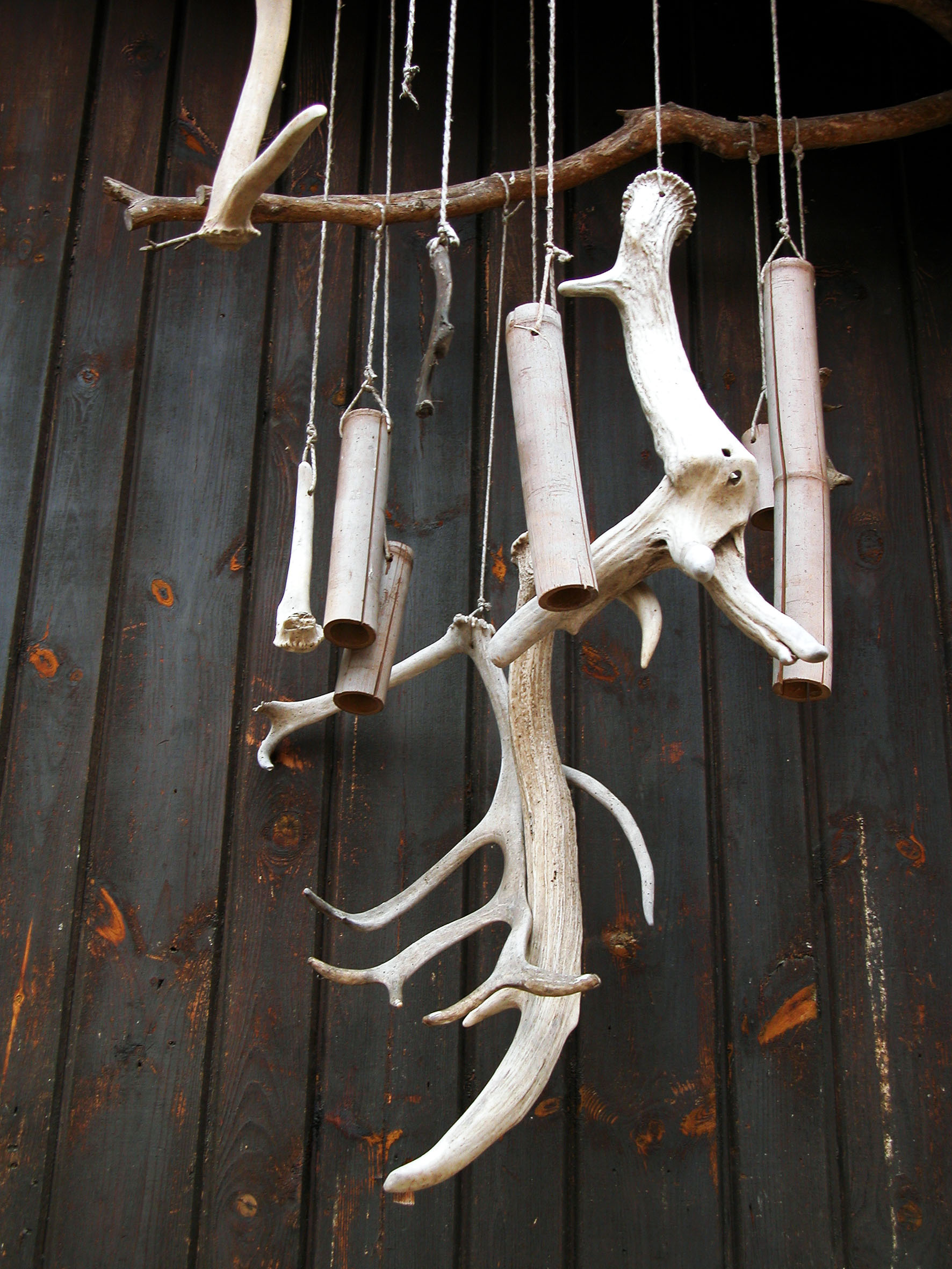
chimes


Bone to Bone

He claims two sides frame every story.

I count three,      sometimes more,

believing in          multiplicity,

threats                concealed

but never

buried.      A dust devil twists across the path.
What ascends, what dies?

Heat, ashes.       A shadow’s flesh.

The earth, restraining all.

small town

“Bone to Bone” first appeared here in June 2016.

In Praise of Darkness

P1460193

In Praise of Darkness

Night falls, but day
breaks. A raw deal,

no doubt, but fairness
applies itself unevenly. Who

chooses weeds over
lies, flowers over truth?

Last night’s rain fell, too,
but didn’t crack the drought.

Again, we think injustice!
Again, we consider falls.

file000313199234

“In Praise of Darkness” last appeared here in March, 2016, and is included in my chapbook If Your Matter Could Reform. 

The Resonance of No

dishes

 The Resonance of No

Yes, yes, we’ve heard. The dishwasher wastes less
and cleans better. But Kenk­ō believed in the beauty
of leisure, and how better to make nothing
while standing with hands in soapy water, thoughts
skipping from Miles Davis’s languid notes to the spider
ascending to safe shelter under the sill (after I blow
on her to amuse myself), washing my favorite knife
and wondering if I should hone it, not to mention
my skills on the six-string or the potato peeler.
And if I linger at the plates, even the chipped one,
admiring their gleam after hot water rinses away
the soap residue, who could question the quick gulp
of ale or the shuffle of an almost-but-not-quite
dance step-or-stumble while arranging them on the
ribbed rack, back-to-back, in time to Coltrane’s
solo. Then the forgotten food processor’s blade
bites my palm, and I remember that I’ve outgrown
the dark suit, the cut branches still need bundling
and none of the words I’ve conjured and shaped
over decades and miles will extend their comfort
when I stand at my father’s grave this week or next.

“The Resonance of No,” was published in December 2016 in Gravel, and is included in my chapbook, From Every Moment a Second.

Daniel Schnee wrote about this poem here.

Music Credit: Cool Vibes Kevin MacLeod (incompetech.com)
Licensed under Creative Commons: By Attribution 3.0 License
http://creativecommons.org/licenses/by/3.0/

Two Poems In Ristau: A Journal of Being

My poems “Bent” and “Because You Cook” have been published in Ristau: A Journal of Being, available for purchase here. A great deal for $3!


In the Fifth Chamber Lies the Hour’s End

pump

In the Fifth Chamber Lies the Hour’s End

To fairly allocate irrigation resources, the Persians measured time with water,
sinking a bowl in a larger vessel and tallying the count with pebbles.

And what is time but counting, determining the number of units within a set?

The sum of beats between silences and their diminishing echoes?

Its symbol in the West grew from fig and ivy leaves, while early medical
illustrations depicted pine cone-shaped organs.

In most reptilians, the aorta receives only oxygenated blood.

Qanats pump by gravity. The hagfish’s second resides in its tail.

Recognize the empty as full. Squeezed shut, we open.
Contraction and flow, ejection, inflow, relaxation.

Emotion as electrical impulse. Murmuring valves. The color red.

The fifth chamber remains silent and undetected.

The primitive fish’s chambers are arranged sequentially, but in an S-shape.
Ancients believed arteries transported air through the body.

The Buddhist figure, too, originated in leaves, symbolizing not love

but enlightenment. The ache of failure confounds us.

mechanical heart

“In the Fifth Chamber Lies the Hour’s End” was first posted here in May 2016.

What Are You Going To Do?


What Are You Going To Do (Cento)

Not everything can be set to music,
you have to understand that.

If I went to the end of the street,
would I be at the center of myself?

Now ends. Now begins.
Still, we sing the same songs;

we live in the sound – no love
of miracle or numbers helps.

I wonder if my body
is outline. A far point rendezvous.

A smoke plume taken, but not
into a hot, dark mouth.

Or perhaps it never had a name.
Bruising’s not the end of it.

* * *

Credits: Maggie Smith, Michael Chitwood, Carol Frost, CM Burroughs, Aimee Nezhukumatathil, Dan Beachy-Quick, Willis Barnstone, Lauren Camp, Ruth Ellen Kocher, Maggie Smith, Lawrence Raab, Natasha Saje.

“What Are You Going To Do” was drafted during the August 2016 Tupelo 30-30 challenge, and was published in the February 2017 issue of Taos Journal of International Poetry & Art.

A Brief History of Edges

map


A Brief History of Edges

This road leads nowhere. I live at its end where breezes
wilt and the sun still burns my darkened skin.

I’ve sailed to Oman, but have never seen the Dakotas.
My friend searches for the concealed parable in this truth.

An early clay map depicted Babylon surrounded by a bitter river,
and an island named the sun is hidden and nothing can be seen.

Fitting the limitless within boundaries, she remembers no one.
The lighted sign says boots, but I see books.

Venturing from the shadows, she offers an accord: intersecting borders,
we must retain ourselves, deliver what calls
.

In our place between the hidden and the invisible, consider
that neon gas possesses neither color nor odor.

What lives in creases and at the periphery? The isle called beyond
the flight of birds
has crumbled from the lower edge.

Where I stand defines my portion of the spherical earth.
Crossing lines, I look to the sky, its bisected clouds.

mapman

“A Brief History of Edges” first appeared here in April 2016.

Which Poet, Which Beer?

file6671234665917

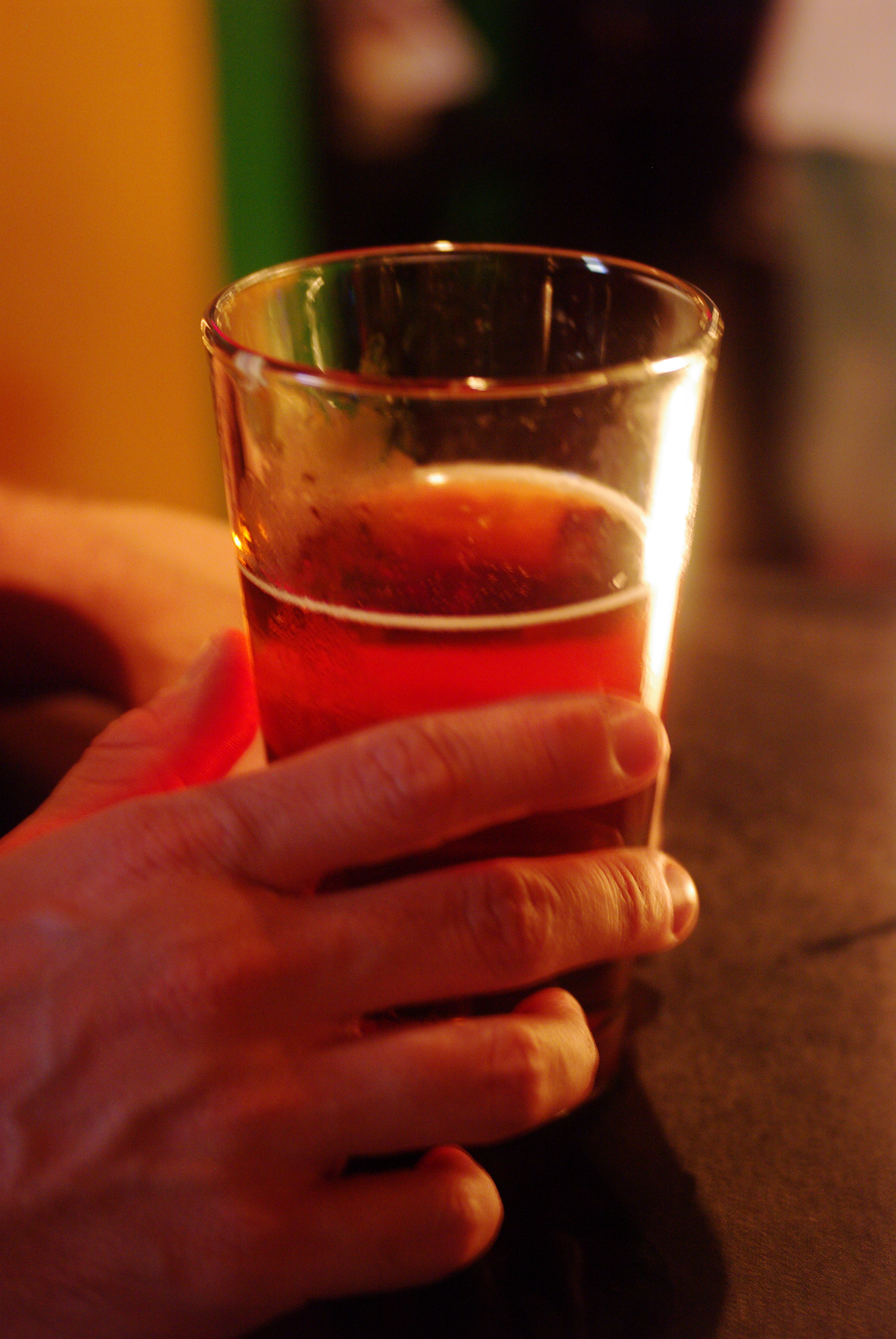
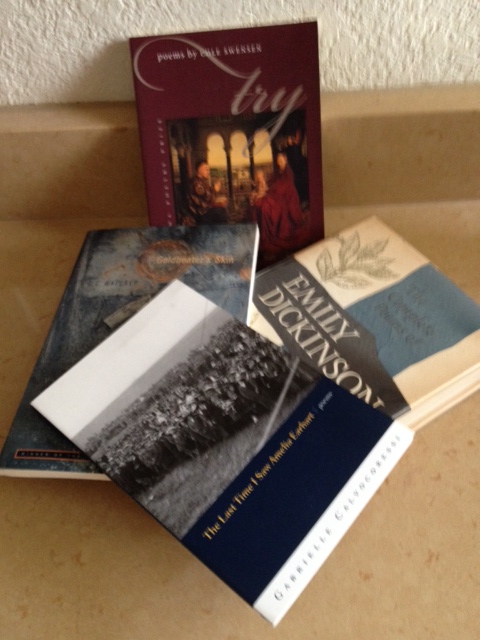
I’m staring at the flight of beers that Jon has placed in front of me. On the left I find Real Ale Brewing Company’s Phoenixx Double ESB. Next to it rests Ranger Creek’s Saison Oscura, followed by Revolver Brewing’s High Brass Golden Ale, and finally, Southern Tier Brewing’s Creme Brulee Stout. I sip the Phoenixx ESB, and am delighted to find it just as I remembered: dry, but sweet, without being overly bitter. Rich, deceptive, caramely odor, amber color. Overtones, hidden layers. I immediately think of Cole Swensen and her book Try, my real introduction to her work, how she reflects tone and imagery, perception and language, intricately weaving them into patterns, into narrative bits to be experienced and savored. “There’s a world out there that isn’t there,” the Phoenixx, evidently a fan of Cole Swensen, whispers.

I linger over the last sip of the ESB, and move on to the Saison Oscura, which quite frankly, surprises me. And that’s good. My preferences edge towards the bitter, and most of the saisons I’ve tried have finished a tad fruity and sweet for my palate. Not so with Ranger Creek’s rendition. Its beguiling light body, with notes of pepper and spice, end with just the right note of bitterness. But which poet, which book would I pair with this dark saison? Someone who juggles the lyrical with harsh realism, whose voice blends and releases the bitter, the forsaken, in distilled snippets of striking clarity. Ah, yes. I have just the book, The Last Time I Saw Amelia Earhart, by Gabrielle Calvocoressi, and the line:

The whole world tastes like salt,

crows overhead shout, Gone, gone
gone. She can’t help me any more.
I’ll have to walk.

It’s much more difficult to pair the Revolver Brewing High Brass Golden Ale with a favorite poet, because, sadly, I find it lacking. It’s light in the mouth, and, to take Gertrude’s quote totally out of context, there is no there there. If I’m to choose a blonde ale, I’d much prefer Real Ale Brewing’s Fireman’s #4. But waste not, want not. I down it, and consider which poet would not only transcend this disappointment, but also hand it a one-way ticket to, perhaps, Stein’s lost Oakland? Easy. G.C. Waldrep, whose Goldbeater’s Skin sets its barbed hooks into my flesh each time I open it. And for this particular occasion, I find no poem more appropriately titled than “What Begins Bitterly Becomes Another Love Poem,” in which he writes:

We stood without shadows on asphalt at midday.
What we call patience is only fire again, compressed.

And fire should accompany Southern Tier’s Creme Brulee Stout. A crackling fire fending off the icy, shingle-ripping wind, with Miles Davis echoing in the background, an exquisite meal resting comfortably in the belly, and the pleasure of knowing that the book you’re about to dip into is an endless well. Quite simply, it’s a liquid dessert. Light coffee, a tad chocolatey, with big vanilla. Medium body, sweet. Smells like creme brulee. Tastes like it. But it’s beer. It tells the truth, but tells it slant! And who better to accompany this frothy delight than Emily Dickinson?

Tell all the truth but tell it slant,
Success in circuit lies,
Too bright for our infirm delight
The truth’s superb surprise…

Onward to the next flight, and more truth. More poetry. More beer. More surprise!

photo(14)

This last appeared on the blog in November 2015.