Scarecrow Takes a Holiday


Scarecrow Takes a Holiday

Having neither organs nor neural impulses,
I no longer ask why or how I hear and smell,
taste and see, feel. This morning I woke
to magpie song and onion breeze, in
a body not mine, yet mine, at peace
on Jeju Island, far from my crows, yet
still among friends singing the same
language. I know this: home lives
within, and no matter where we travel,
it rides with us. Like the man who
spoke to me, bald, bearded, a pale
foreigner in this land, comfortable
here, at home. He listened for my reply,
but unfortunately I’d not been given
a mouth, and my words dropped to the
ground and were rolled away by
beetles before he noticed them.
Perhaps I should have written a note,
but he wished to gamble and how
could I refuse? I am hollow, but not
empty, whole, yet not complete,
away but here. He took a coin
from his pocket, flipped it. I saw…


A response to Daniel Paul Marshall’s “Scarecrow Travels (after Robert Okaji)”

This first appeared in May 2017.

Ghazal to the Night


Ghazal to the Night

The sun carries this river to the night.
Balmless flesh, lies. A letter to the night.

What folly, your mineral dream of power.
I inhale your bones, oh smoky altar to the night.

A stump is neither owl nor island, lifeboat
nor storm. This resin, a gift of myrhh to the night.

My email disappeared to emerge a year later.
Why? Remember what we were to the night.

Hey, winged smile, describe yourself in colors!
Empty your veins and pockets, donor to the night.

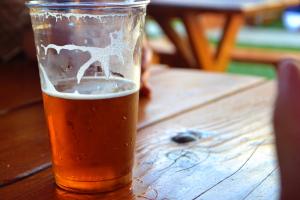
This cup, that glass. The song of empty bottles.
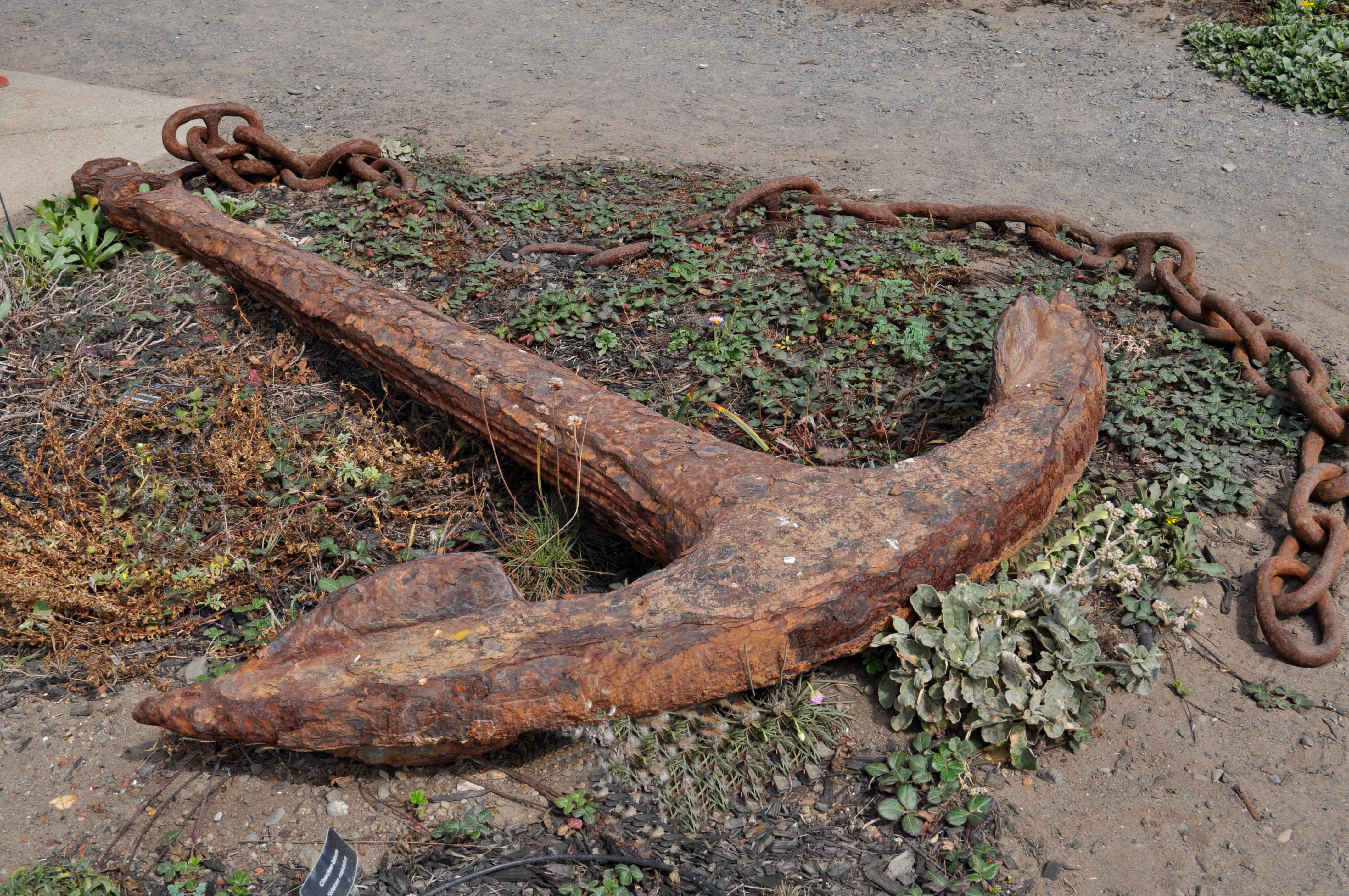
Casting off, Bob hands his anchor to the night.


* * *

“Ghazal to the Night” first appeared in Eclectica in July 2018. I am extremely grateful to editor Jen Finstrom for publishing my poetry over the years.

I enjoy working with this form. It’s a bit challenging, but ultimately rewarding. For a little information on ghazals, you might read this article at poets.org. Superb examples abound in Ravishing DisUnities: Real Ghazals in English, edited by Agha Shahid Ali. The introduction alone is worth the cover price.


Deadfall


Deadfall

Clouds capture the moon.
The shifting branch cracks,
as if shedding thought.
I add words to the kindling, a few notes.
The tune flares against the wall.
Though I hum, no one hears.
Night muffles our song.
Abandoned, the flame reaches out.


“Deadfall” first appeared at Red Eft Review in June 2018. Thanks to editor Corey D. Cook for taking this piece.


Poem Published in Ink in Thirds

My poem “Inscrutable” has been published in Volume 3, Issue 1 of Ink in Thirds. Thank you, Grace Black, for taking this piece!


Poem Up at Kissing Dynamite


My poem “Self-Portrait as Wave” has been published in the first issue of Kissing Dynamite. Many thanks to editor Christine Taylor for taking this piece.


Countdown, #3: Thirty-Five Years Later, I Raise My Hand

My last five posts of 2018 are reruns of five of the most viewed posts on this site during the year.


Thirty-Five Years Later, I Raise My Hand

In spring 1983 I enrolled in a poetry writing course thinking it might help improve my short fiction. I was a history major by default, had never taken a course in poetry, but believed, with absolutely no evidence, that I could write fiction. At the time I would have been hard-pressed to name five contemporary poets, even counting my professor. To be honest, the class struggled to hold my attention. Only about a quarter of the students seemed interested in writing, and the instructor was a bit, uh, tired. But for the first time in my life I read, really read, poetry. I fell in love with Galway Kinnell, Ai, James Wright and Carolyn Forche, to name just a few of my early enthusiasms. I wanted to write like them. So I wrote. And wrote. And wrote. Most of it was laughably bad, but somehow I managed to win an undergraduate poetry contest, which suggested that hope existed. Maybe someday, I thought, one of my poems will be published. This radical idea had never occurred to me before. Publication seemed to be the privilege of special people, and a lifetime of gathered fact revealed that I was unequivocably nothing special.

Early on in the semester, perhaps even in the first class, the professor asked how many of us thought we’d still be writing poetry in twenty years. I didn’t raise my hand. I didn’t know where I’d be in six months, much less what I’d be doing in twenty years. Since I’d realized late in the game that teaching was not for me, I had no job prospects, and few marketable skills, despite experience in chugging beer, manning sound-powered phones on a ship’s helicopter tower, scraping barnacles and bending rules. The world was limited. The world was limitless.

Another gray day

dividing the old and young

Oh, this aching hip!


A song from that time:

Two Poems Up at Defuncted

file0001138262091

I’ve two poems up at Defuncted, a journal dedicated to reprinting pieces from defunct publications. All too often our work simply disappears when a publication ceases operating, so I’m particularly grateful to editor Roo Black for providing writers with the opportunity to rejuvenate their work.

Which Poet, Which Beer (4)

I come here to sit quietly, emerging from my shack, if only briefly, to eavesdrop and observe, to sip beer and participate in the world of commerce. Ah, yes. The grocery store. If only all of them housed craft-beer bars. I place cilantro and shallots in my basket, add arugula, asparagus and a lime, and wander over to the fish case where two small fillets of Chilean sea bass, the commercial name for Patagonian toothfish, catch my eye.

Finally at the bar, I order Lone Pint Brewery’s Zeno’s Pale Ale, and overhear a disquisition on hydration and landscaping, and a conversation on war and snipers and gratitude. The ale arrives with a light, lacey head, exudes a bready malt profile upfront, and a pine-citrus punch at the back. I can’t quite uncover the truth of the flavor, but enjoy the search, and amidst the swirling combination of voices and beer I somehow think of Veronica Golos’ “Snow in April,” a ghazal in her stunning book Vocabulary of Silence.

“Has my flock of flowers died? An ambush, a bullet-shot
of cold. Undone beneath the snow, what’s truth, in April?”

What is the sniper’s truth? What gratitude might we find within April’s layers? I have no answers, only more questions, and with more questions comes thirst.

My second beer is a curious blend of old and new – a Belgian-style quadrupel that, don’t laugh, smells a bit like a cola, but in a good way. Unibroue’s Trois Pistoles is dark brown, let’s call it mahogany, with a fruity but mellow flavor and a toasty malt finish. And well balanced – with an alcohol content of 9%, it’s strong, but not too strong. Historical undercurrents flow through this brew, yet it also brings with it an appreciation of the new and popular, which leads to thoughts of one of my favorite poets, Frank Bidart, whose work often refers to and resonates with historical figures (in the book at hand, Watching the Spring Festival, Tu Fu and Catullus come to mind), and his poem “Sanjaya at 17,” referencing an American Idol contestant:

“There is a creature, among all others, one,
within whose voice there is a secret voice
which once heard
unlocks the door that unlocks the mountain.”

Today the mountain does not swing open for me. Perhaps a second Trois Pistoles might have done the trick, but instead, knowing I have to prepare dinner, starting with a compound butter of shallot, cilantro, garlic and lime zest, I request a mere taste of Founder’s Breakfast Stout, because, well, the idea of stout for breakfast has a certain appeal, though in my case would not be practical, as it would likely put me to sleep. And yes, it contains both chocolate and coffee (Sumatra and Kona), tastes a bit smoky, is smooth and luxurious in the mouth, and makes me long for a lonely, cold winter’s night in a far-off country, a fire crackling with just a hint of madness, and the full moon leering down at all of us, but particularly the dead genius that was Thomas James, whose poem “Wild Cherries,” from his one and only book Letters to a Stranger, ends:

I watch you eat, tasting yourself perhaps,
Some bitterness that is a part of you,
And I accept it gratefully. When you smile,
I see you dying in that single instant.
Walking back home, into ourselves, we enter
A far-off country neither of us wanted.”

Oh, those things we want and don’t want. To feel. To write. To cook, to sing. To share. To love. To be alone. To be numb. To do nothing. To do everything…

This first appeared on the blog in September 2017.

May You Find Peace and Joy in the Coming Year


May you find peace and joy in the coming year.

Summer 1966: After France & Remembering Bobby, Who One Day Would Learn to Multiply and Divide, Write Love Poems, Define Home, Fight Unfairly and Live with as Much Gusto as a 7-Year Old. Perhaps.

Summer 1966: After France & Remembering Bobby,
Who One Day Would Learn to Multiply and Divide,
Write Love Poems, Define Home, Fight Unfairly and
Live with as Much Gusto as a 7-Year Old. Perhaps.

From left coast to right, or the wide arc between,
which place claimed you? In New York you marveled
at the building’s backs scratched by clouds, and all your
pale cousins in Baltimore spoke strangely and couldn’t fathom
your nuclear family’s private lingo, while the drive to Texas
and its red ants and iced tea blossomed into adventures between
pages in the back seat of the VW bug. By the second week you
learned that Texans sweat as much as the French, and swear even
more, that you couldn’t fight one twin without taking on the other,
sometimes both at once. There was no question of fairness then,
just brotherhood, but the librarian would slip you the choicest
donated fiction, and you played baseball every day in the vacant lot
until sundown called the players home to black and white body
counts and cigarette commercials on the three channels received.
Sometimes you lay in bed under the half-light of the whirring
fan blades, and dreamt of heroes and ornithopters, zebras
and the scent of chocolate chip cookies in the oven. Other nights
you wondered how words could rest so calmly on one page yet
explode off the next, or why a man would climb a tower in Austin
to kill fourteen people when opportunities for mayhem and murder
burgeoned across the sea. Wasn’t living a matter of simple
subtraction? One by one the days parted and you walked through
that dwindling heat, eyes squinting, questions in hand, emerging
fifty years later having suffered additions and division and the
cruelties of love and success, honor and truth, still asking why
and how, home or house, where it went, your shoulders slumping
under the heft of those beautiful, terrible summers stacked high
like so many life-gatherings of unread books awaiting a bonfire.

This was first published in theSilver Birch Press “Moving” series, and an earlier version titled “Bonjour, Texas” appeared on the blog A Holistic Journey.