Poem Published in Wildness

I am grateful that my poem “Yellow, Lost” has been published in wildness, Issue no. 10. wildness is an imprint of Platypus Press, which published my work Interval’s Night, a mini-digital chapbook, last December in their 2412 series. If you’re not familiar with wildness, check it out. Last fall Poets & Writers named it in their article Nine New Lit Mags You Need to Read.


Recording of “I Have Answers”


I Have Answers

But the questions remain.

A little pepper, some salt,
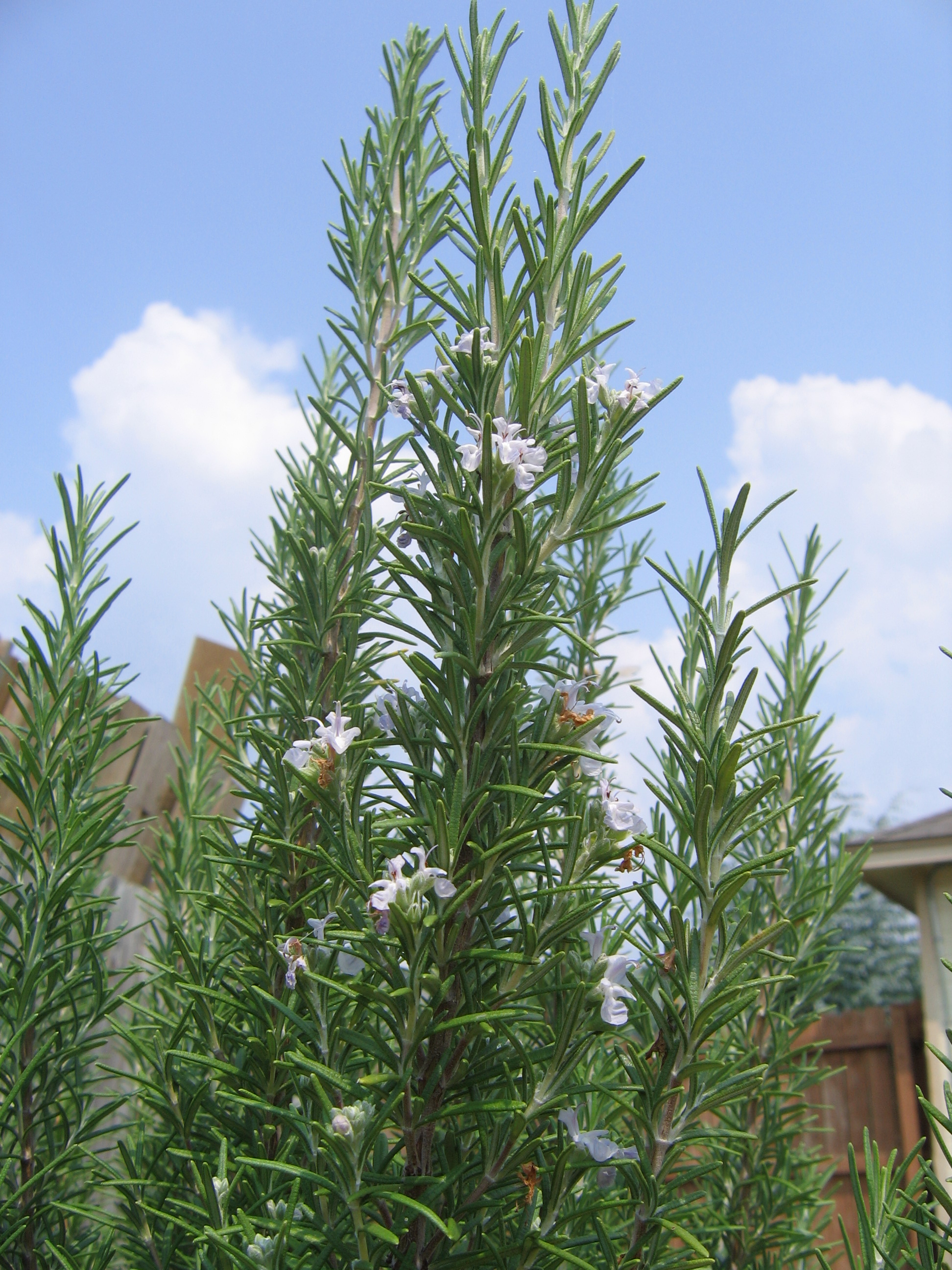
butter. Our rosemary needs pruning
and the music’s too loud

to hear. The lizard basks in sunlight
eight minutes old, but I forget to ask

what else we need. Or want. Just this,
she says. Red, like your favorite sky,

 the in-between, the misplaced one.


“I Have Answers” is included in From Every Moment a Second, which will be published by Finishing Line Press this fall. The publisher has informed me that the publication date has been pushed back five weeks, which suggests a mid-November release.


Another Bird, Rising

Another Bird, Rising

The shadow behind you slides over
the ceiling, up and gone,

a wingless silence. The drafted swirl.
One morning shifts into two, and still

you won’t give in, each moment’s
gasp another one earned, a measurable

notch on the table’s edge, quarters
in the magic purse. They all count.

Pills, chemo, radiation. Ocean to sky.
Houses to ash. Your eyes see black.

“Another Bird, Rising” first appeared in deLuge in fall 2016.

I Have Answers


I Have Answers

But the questions remain.

A little pepper, some salt,
butter. Our rosemary needs pruning
and the music’s too loud

to hear. The lizard basks in sunlight
eight minutes old, but I forget to ask

what else we need. Or want. Just this,
she says. Red, like your favorite sky,

 the in-between, the misplaced one.


“I Have Answers” is included in From Every Moment a Second, which will be published by Finishing Line Press this fall. The publisher has informed me that the publication date has been pushed back five weeks, which suggests a mid-November release.


Laolao Pavilion (after Li Po)

file0001681287329

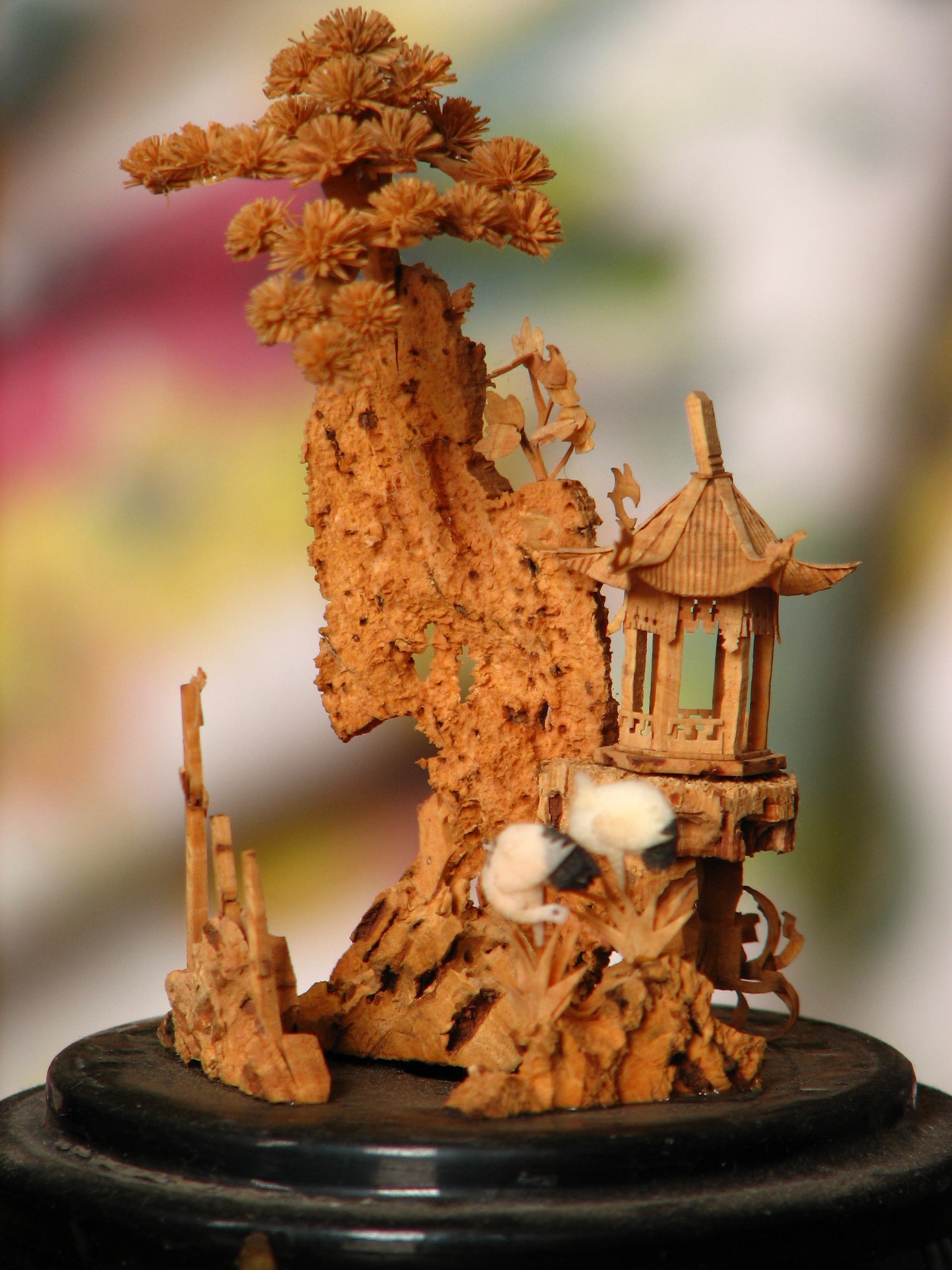
Another attempt at adapting Li Po. A note on Chinese-poems.com stated “at this time, the breaking of a willow twig was part of formal leave-taking.”

Laolao Pavilion (after Li Po)

Where do more hearts break under heaven?
This sad pavilion, where visitors part,
the spring wind whispers bitter goodbyes
and willow twigs never mend.

Transliteration from Chinese-poems.com:

Heaven below damage heart place
Laolao see off visitor pavilion
Spring wind know parting sorrow
Not send willow twig green.

file000171156221

First posted here in June 2014.

Letter from Insomnia

image

Letter from Insomnia

Accepting Li Po’s tragedy,
apocryphal or not,

we embrace her imperfect
reflection
rippling in the breeze,

but manage to surface.

I once thought I would name a child Luna
and she would glow at night

and like Hendrix, kiss the sky.
But that was whimsy

and only candles light this room
at this hour
on this particular day
in this year of the snake.

And what fool would reach for a stone orbiting at
1,023 meters per second?

There are clouds to consider, the stars
and the scattering rain

and of course wine
and the possibilities within each glass
and the drops therein.
We must discuss these matters

under her gaze, where smallness gathers.

* * *

This originally appeared in Middle Gray in October, 2013. It was written in response to a poem my friend Michael sent me, replying to this poem.

image


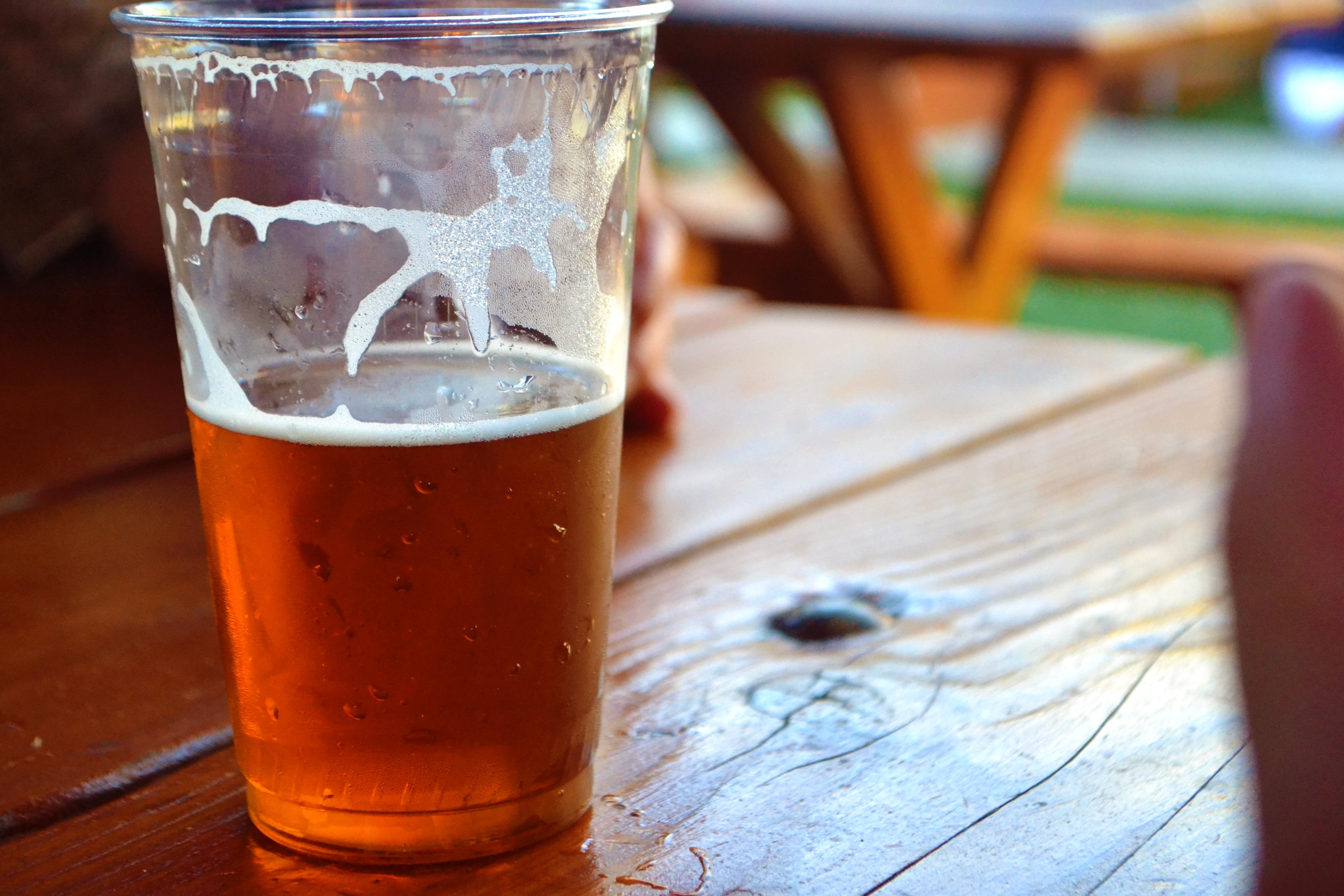
Which Poet, Which Beer (4)

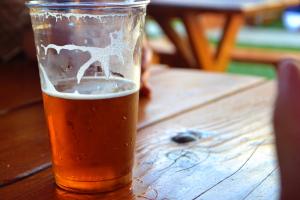
I come here to sit quietly, emerging from my shack, if only briefly, to eavesdrop and observe, to sip beer and participate in the world of commerce. Ah, yes. The grocery store. If only all of them housed craft-beer bars. I place cilantro and shallots in my basket, add arugula, asparagus and a lime, and wander over to the fish case where two small fillets of Chilean sea bass, the commercial name for Patagonian toothfish, catch my eye.

Finally at the bar, I order Lone Pint Brewery’s Zeno’s Pale Ale, and overhear a disquisition on hydration and landscaping, and a conversation on war and snipers and gratitude. The ale arrives with a light, lacey head, exudes a bready malt profile upfront, and a pine-citrus punch at the back. I can’t quite uncover the truth of the flavor, but enjoy the search, and amidst the swirling combination of voices and beer I somehow think of Veronica Golos’ “Snow in April,” a ghazal in her stunning book Vocabulary of Silence.

“Has my flock of flowers died? An ambush, a bullet-shot
of cold. Undone beneath the snow, what’s truth, in April?”

What is the sniper’s truth? What gratitude might we find within April’s layers? I have no answers, only more questions, and with more questions comes thirst.

My second beer is a curious blend of old and new – a Belgian-style quadrupel that, don’t laugh, smells a bit like a cola, but in a good way. Unibroue’s Trois Pistoles is dark brown, let’s call it mahogany, with a fruity but mellow flavor and a toasty malt finish. And well balanced – with an alcohol content of 9%, it’s strong, but not too strong. Historical undercurrents flow through this brew, yet it also brings with it an appreciation of the new and popular, which leads to thoughts of one of my favorite poets, Frank Bidart, whose work often refers to and resonates with historical figures (in the book at hand, Watching the Spring Festival, Tu Fu and Catullus come to mind), and his poem “Sanjaya at 17,” referencing an American Idol contestant:

“There is a creature, among all others, one,
within whose voice there is a secret voice
which once heard
unlocks the door that unlocks the mountain.”

Today the mountain does not swing open for me. Perhaps a second Trois Pistoles might have done the trick, but instead, knowing I have to prepare dinner, starting with a compound butter of shallot, cilantro, garlic and lime zest, I request a mere taste of Founder’s Breakfast Stout, because, well, the idea of stout for breakfast has a certain appeal, though in my case would not be practical, as it would likely put me to sleep. And yes, it contains both chocolate and coffee (Sumatra and Kona), tastes a bit smoky, is smooth and luxurious in the mouth, and makes me long for a lonely, cold winter’s night in a far-off country, a fire crackling with just a hint of madness, and the full moon leering down at all of us, but particularly the dead genius that was Thomas James, whose poem “Wild Cherries,” from his one and only book Letters to a Stranger, ends:

I watch you eat, tasting yourself perhaps,
Some bitterness that is a part of you,
And I accept it gratefully. When you smile,
I see you dying in that single instant.
Walking back home, into ourselves, we enter
A far-off country neither of us wanted.”

Oh, those things we want and don’t want. To feel. To write. To cook, to sing. To share. To love. To be alone. To be numb. To do nothing. To do everything…

Three Cinquains under the Moon (for Adelaide Crapsey)

file0001462341793

These were originally written for a “Full Moon Social” celebration hosted by Jeff Schwaner in October 2014..

October 8, 1914

Listen…
three silences
none harsher than your breath
dissipating into the night’s
bright mouth.

Later

Rainfall
and wind. How I
would like to have touched you
if only with words trembling from
my lips.

October 8, 2014

A moon
that we might share
from mountain to the sea
a gift belonging to no one
but you.

Adelaide Crapsey’s last full moon lit the skies on October 4, 1914. She died four days later, at age 36. A poet well ahead of her time, she created the American cinquain, a five-line form of 22 syllables which I have followed in these three poems.

I discovered only after-the-fact that the Full Moon Social Jeff Schwaner hosted on October 8, 2014 fell on the 100th anniversary of Adelaide’s death. These poems were written with that particular evening still looming brightly in mind, to honor Adelaide Crapsey and the moon, whose separate but entwined lights we still share and celebrate.

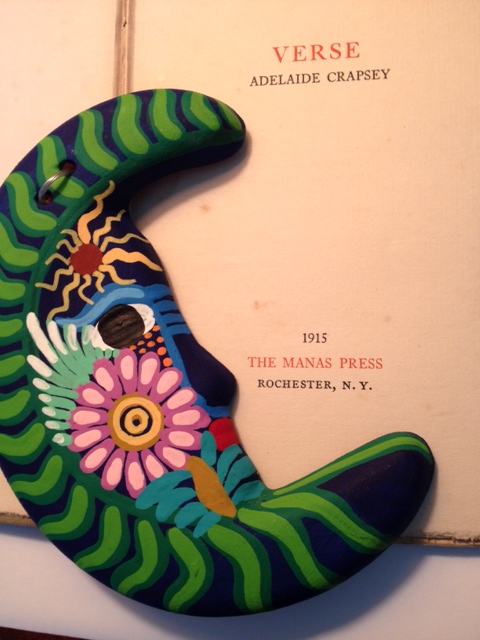
In my hand is a copy of a slim volume of her poetry, titled Verse and published posthumously in 1915. The following cinquain is from this book:

Moon-Shadows

Still as
On windless nights
The moon-cast shadows are,
So still will be my heart when I
Am dead.

Those interested in further details on Adelaide Crapsey might look here: http://www.poetryfoundation.org/bio/adelaide-crapsey

photo(21)

Ghazals

Steph Burt writes about the ghazal form, in particular Agha Shahid Ali’s “Tonight.” An illuminating article.

And here’s a link to Kazim Ali discussing the poem: Poetry Off the Shelf

Poem Up at MockingHeart Review

I’m delighted that my poem “This Island is a Stone” has been published in the latest issue of MockingHeart Review. I am grateful to editor Clare Martin for accepting this piece.